


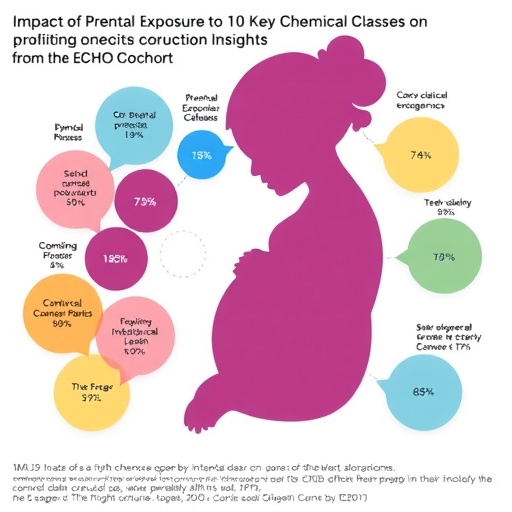
A comprehensive new study published in JAMA Network Open has revealed pervasive exposure among pregnant individuals in the United States to multiple classes of environmental chemicals, highlighting critical concerns about their impact on fetal development. This groundbreaking longitudinal cohort investigation evaluated a large and ethnically diverse sample of U.S. pregnancies, systematically analyzing exposures to ten distinct categories of environmental pollutants. Many of these chemicals showed significant associations with measurable shifts in gestational age and reductions in birth weight-for-gestational age z-scores, parameters essential for assessing neonatal health and predicting long-term outcomes.
The research employed advanced biomonitoring techniques to quantify the presence of environmental toxicants including phthalates, alternative plasticizers, and polycyclic aromatic hydrocarbons (PAHs) in maternal biological samples during gestation. Phthalates and plasticizers are commonly used in consumer products and medical devices, yet their biochemical interactions during crucial windows of fetal development remain underappreciated. The study’s detailed exposure profiling allowed for unprecedented insights into how these compounds may disrupt endocrine functions or trigger inflammatory processes, potentially precipitating premature labor or impaired fetal growth.
One of the most striking findings was the widespread detection of phthalates and substitute plasticizers within this population, indicating ubiquitous contact despite regulatory efforts to limit their use. These chemicals, integral to plastics and personal care products, demonstrated compelling correlations with shortened gestation periods. Such alterations in gestational length can increase risks for adverse neonatal outcomes, including respiratory complications and neurodevelopmental disorders, underpinning the urgency to reassess public health policies concerning these ubiquitous agents.
Likewise, exposure to polycyclic aromatic hydrocarbons, a class of organic compounds generated through the incomplete combustion of organic matter including fossil fuels and tobacco, was found to be significantly linked with lower birth weight-for-gestational age z-scores. Lower birth weight relative to gestational age is a well-established risk factor for morbidity and mortality in infancy and has been implicated in chronic diseases later in life, such as cardiovascular disorders and diabetes. This association reaffirms concerns about air pollution-related health disparities during pregnancy.
The study’s robust methodology involved careful adjustment for confounding factors, such as maternal age, socioeconomic status, preexisting health conditions, and lifestyle habits, ensuring that the observed effects were primarily attributable to chemical exposures. Such meticulous analytical rigor strengthens causal inferences and enhances the generalizability of findings across the heterogeneous U.S. population.
Beyond the immediate neonatal impacts, the findings underscore the broader implication that gestational exposure to environmental chemicals may foreshadow developmental trajectories affecting cognitive function, metabolic programming, and immune competence. The data suggest a pressing need to incorporate environmental risk assessments into prenatal care and to advocate for more stringent regulation and replacement of harmful chemical additives in manufacturing and consumer goods.
Experts involved in the study emphasize the translational significance of these findings. Reducing prenatal exposure to harmful environmental agents, particularly those involved in plastic manufacturing and combustion byproducts, could be a modifiable risk factor to optimize pregnancy outcomes and subsequent child health. The research calls for collaborative efforts between scientists, clinicians, policymakers, and industry stakeholders to develop safer alternatives and to implement public health strategies aimed at exposure mitigation.
In addition to environmental monitoring, the study highlights the potential of biomarker-driven surveillance in clinical settings to identify at-risk pregnancies earlier. The adoption of such precision health approaches could enable timely interventions designed to minimize chemical-induced developmental insults and promote resilience in vulnerable populations.
Overall, this research project represents a pivotal contribution to reproductive environmental epidemiology, providing compelling evidence on how everyday chemical exposures reverberate at the earliest stages of human life. Such insights fuel the momentum toward integrating environmental considerations into obstetric practice and public health frameworks, ultimately aiming to safeguard the next generation from preventable neurodevelopmental and somatic diseases linked to toxic exposures.
The detailed chemical classes examined in this investigation span commonly encountered substances with diverse structural and functional properties, illuminating the pervasive nature of industrial and urban pollutants. The interdisciplinary approach combining toxicology, epidemiology, and molecular biology sets a new standard for environmental health research, encouraging future explorations into underlying biological mechanisms and potential gene-environment interactions.
As global urbanization and chemical manufacturing continue to expand, the relevance of these findings grows, underscoring an urgent collective responsibility to address environmental determinants of health from conception onwards. By spotlighting the critical window of gestation as vulnerable to chemical insults, this study not only informs clinical guidelines but also energizes advocacy for environmental justice, particularly in frequently marginalized communities disproportionately burdened by pollution exposure.
In summary, the research establishes a clear and compelling connection between gestational exposure to multiple classes of environmental chemicals—including phthalates, plasticizers, and hydrocarbons—and adverse birth outcomes such as shortened gestation and reduced fetal growth metrics. Addressing these exposures presents a tangible opportunity to improve neonatal health indicators and foster lifelong wellbeing, heralding a paradigm shift in how society approaches prenatal environmental risk.
Cite Scienmag News
Harold Sullivan. (June 17, 2026). Impact of Prenatal Exposure to 10 Key Chemical Classes on Birth Outcomes: Insights from the ECHO Cohort. Scienmag. https://scienmag.com/impact-of-prenatal-exposure-to-10-key-chemical-classes-on-birth-outcomes-insights-from-the-echo-cohort/
Harold Sullivan. "Impact of Prenatal Exposure to 10 Key Chemical Classes on Birth Outcomes: Insights from the ECHO Cohort." Scienmag, 17 June 2026, https://scienmag.com/impact-of-prenatal-exposure-to-10-key-chemical-classes-on-birth-outcomes-insights-from-the-echo-cohort/. Accessed 4 September 2026.
Harold Sullivan. "Impact of Prenatal Exposure to 10 Key Chemical Classes on Birth Outcomes: Insights from the ECHO Cohort." Scienmag. June 17, 2026. https://scienmag.com/impact-of-prenatal-exposure-to-10-key-chemical-classes-on-birth-outcomes-insights-from-the-echo-cohort/


