


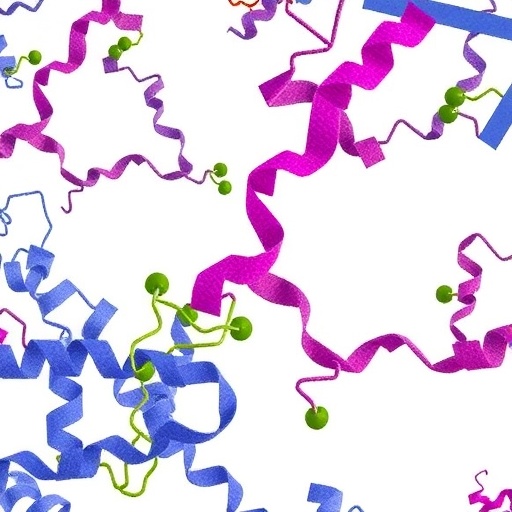
In an extraordinary leap forward for mitochondrial biology and peptide therapeutics, a research team led by Hendgen-Cotta and colleagues has unveiled a groundbreaking discovery that could revolutionize our understanding of cellular resilience and mitochondrial protection. Their pioneering work, published in Nature Communications, delineates the methodical reverse engineering of BNIP3, a protein previously implicated in cell death pathways, to isolate a potent mitochondrial protective peptide. This revelation not only challenges longstanding paradigms about mitochondrial vulnerability but also highlights a promising avenue for therapeutic interventions aimed at mitigating mitochondrial dysfunction, which lies at the heart of numerous degenerative diseases.
Mitochondria, often celebrated as the powerhouses of the cell, orchestrate a plethora of essential functions, including energy production, regulation of apoptosis, and metabolic signaling. Yet, their susceptibility to diverse stressors triggers cascading cellular damage frequently culminating in disease. BNIP3, a vital component of the Bcl-2 family of proteins, has historically been recognized for its role in promoting hypoxia-induced programmed cell death, often exacerbating mitochondrial impairment. However, Hendgen-Cotta et al.’s nuanced approach to deconstructing BNIP3’s functional domains illuminates a fascinating duality in its biological repertoire, revealing a concealed mitochondrial protective segment.
The research harnessed cutting-edge biochemical and structural biology techniques to dissect BNIP3’s complex architecture. By meticulously reverse engineering the protein, the team identified a previously uncharacterized peptide sequence embedded within BNIP3 that confers significant resilience to mitochondrial membranes against diverse insults. This peptide appears to function as a mitochondrial safeguard, preserving membrane integrity, modulating mitochondrial permeability, and ultimately safeguarding cellular viability. These findings invert traditional views of BNIP3 solely as a mediator of cell death, positioning it as a source of inherent mitochondrial protection.
A pivotal aspect of this study involved characterizing how the newly discovered peptide modulates mitochondrial dynamics under stress. Experimental models demonstrated that treatment with this peptide alleviated mitochondrial swelling and prevented cytochrome c release, processes intimately linked with apoptotic cascades. The protective activity of the peptide was remarkably robust across varied cellular contexts, including hypoxic environments and oxidative stress conditions, signaling broad therapeutic potential. This discovery opens exciting vistas for targeting mitochondrial dysfunction in cardiovascular, neurodegenerative, and metabolic disorders.
To elucidate the peptide’s mechanistic properties, the investigators employed high-resolution imaging and spectroscopic assays, revealing its intimate interaction with the mitochondrial outer membrane. The peptide’s amphipathic nature enables it to embed within lipid bilayers, stabilizing membrane curvature and preventing permeabilization. This stabilization appears to disrupt the pathological signaling that culminates in mitochondrial-driven apoptosis. Importantly, the peptide does so without impairing mitochondrial bioenergetics, preserving cellular metabolism and function even in hostile environments.
The translational implications of this research are profound. By leveraging the endogenous peptide sequence derived from BNIP3, the development of synthetic analogs or peptide-based therapeutics becomes a tangible goal. Such compounds could be engineered to enhance cellular resistance to mitochondrial injury, offering new hope for patients afflicted with diseases where mitochondrial compromise is a central element. The biocompatibility and evolutionary conservation of the peptide further bolster its candidacy as a therapeutic agent, potentially reducing immunogenicity and off-target effects.
Moreover, the researchers explored the peptide’s effects in in vivo models, observing marked improvements in tissue resilience following ischemic injury. These findings highlight the peptide’s capacity to mitigate the deleterious effects of oxygen deprivation, a common pathological feature in heart attacks and strokes. The peptide facilitated rapid recovery of mitochondrial function post-injury, enhancing cellular survival and functional restoration. Such protective properties could profoundly influence clinical approaches to acute tissue damage, ushering in innovative treatments that safeguard organ integrity.
A striking feature of this discovery is its methodological ingenuity. The reverse engineering approach championed in the study exemplifies a paradigm shift in protein research: rather than seeking novel proteins, scientists delve into existing molecules to mine hidden therapeutic elements. By focusing on BNIP3’s latent protective peptide, the team exemplifies how dissecting complex proteins can yield minimalistic yet potent bioactive agents. This strategy sets a precedent for exploring other multifunctional proteins, potentially unearthing new peptide therapeutics embedded within known cellular machinery.
The interplay between mitochondrial dysfunction and human disease is a well-documented nexus, underpinning pathology in conditions including Alzheimer’s, Parkinson’s, diabetes, and heart failure. Current therapeutic strategies targeting mitochondria are limited by the organelle’s complexity and diverse roles. Thus, the identification of a natural mitochondrial protective peptide heralds a new class of mitochondrial-directed therapies. These therapies promise specificity, efficacy, and safety by harnessing nature’s own molecular designs to restore mitochondrial function under pathological stress.
Underlying this breakthrough is a sophisticated integration of multidisciplinary methodologies. The team employed proteomic analyses, peptide synthesis, cellular bioassays, and in vivo functional studies to validate their findings comprehensively. Such an integrative approach exemplifies modern biomedical research’s trajectory, where cross-disciplinary collaboration accelerates discovery and translation. The success of this endeavor demonstrates how molecular biology, structural biochemistry, and translational medicine converge to transform fundamental insights into therapeutic possibilities.
The broader scientific community stands to gain invaluable insights from this landmark study. It illuminates a new dimension of mitochondrial biology, where proteins conventionally associated with damage or death also harbor protective capacities. This dual functionality invites a reevaluation of cellular stress response mechanisms and encourages more nuanced models of mitochondrial regulation. Furthermore, it underscores the potential of peptides as modulators of intracellular organelles, widening the scope of drug discovery beyond conventional small molecules and biologics.
Future investigations inspired by these findings will no doubt focus on refining the peptide’s therapeutic profile, optimizing delivery systems, and unraveling its interactions with mitochondrial and cellular partners. Uncovering its receptor(s), downstream signaling pathways, and potential synergies with existing therapies will pave the way for clinical development. Additionally, exploring its role across diverse pathophysiological contexts may reveal broader applications, reinforcing its utility in mitochondrial medicine.
In essence, Hendgen-Cotta et al.’s discovery encapsulates the promise of modern science—unraveling intricate biological puzzles to yield solutions for some of the most intractable health challenges. By revealing a mitochondrial protective peptide within BNIP3, they chart a path to enhanced cellular resilience. This work heralds a new frontier where molecular relics within known proteins become blueprints for innovative therapies, transforming biomedical research and offering hope for millions affected by mitochondrial diseases worldwide.
As the field continues to explore the therapeutic landscape unveiled by this research, one can anticipate a surge of interest in peptide-based mitochondrial modulators. The inherent specificity, reduced toxicity, and evolutionary conservation of such peptides position them as ideal candidates for next-generation therapeutics. Coupled with advanced delivery modalities, these discoveries will likely shift current paradigms in managing mitochondrial dysfunction, moving from symptomatic treatment to strategic cellular fortification.
Until now, mitochondrial protective strategies have largely focused on broad-spectrum antioxidants or gene therapies with significant challenges regarding specificity and delivery. This mitochondrial peptide provides a naturally optimized molecular tool, precisely targeting key aspects of mitochondrial resilience. Its compact size facilitates cellular uptake and bioavailability, attributes that are often lacking in larger protein-based therapies. Importantly, its endogenous origin suggests favorable integration within existing cellular frameworks, minimizing unforeseen side effects.
In conclusion, the reverse engineering of BNIP3 to identify a mitochondrial protective peptide represents a seminal advance that not only reshapes our fundamental understanding of mitochondrial biology but also charts a forward-looking course for therapeutic innovation. With mitochondrial dysfunction implicated in a vast spectrum of diseases, the potential impact of this discovery spans from laboratory benches to clinical wards. As research progresses, the translation of this peptide into viable medical applications may soon mark a transformative chapter in the fight against mitochondrial diseases and cellular degeneration.
Cite Scienmag News
Denise Maddox. (June 17, 2026). Reverse Engineering BNIP3 Reveals Mitochondrial Protector. Scienmag. https://scienmag.com/reverse-engineering-bnip3-reveals-mitochondrial-protector/
Denise Maddox. "Reverse Engineering BNIP3 Reveals Mitochondrial Protector." Scienmag, 17 June 2026, https://scienmag.com/reverse-engineering-bnip3-reveals-mitochondrial-protector/. Accessed 4 September 2026.
Denise Maddox. "Reverse Engineering BNIP3 Reveals Mitochondrial Protector." Scienmag. June 17, 2026. https://scienmag.com/reverse-engineering-bnip3-reveals-mitochondrial-protector/


