

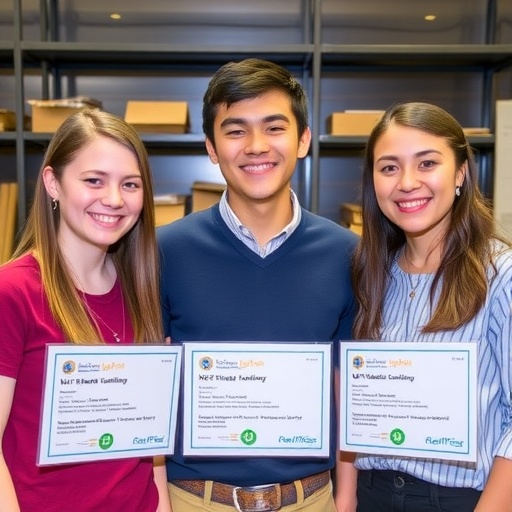
In a landmark achievement underscoring the vitality of materials science and engineering education, three students from Lehigh University’s Department of Materials Science and Engineering have been awarded the prestigious National Science Foundation Graduate Research Fellowships for 2026. This fellowship is among the most competitive accolades in the United States, aimed at nurturing the next generation of pioneering STEM researchers by funding their research-based master’s and doctoral endeavors for three years. This accomplishment highlights not only the exceptional promise of the recipients but also the caliber of mentorship and education provided by Lehigh’s MSE program.
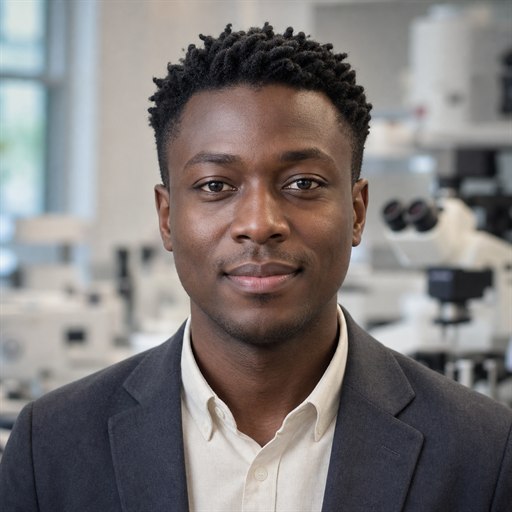
Matthew O’Connell, Thomas Theiner, and Metri Zughbi represent this remarkable cohort. While Zughbi continues his doctoral studies at Lehigh University, focusing on advanced ceramic materials, Theiner is advancing his PhD research at the California Institute of Technology, and O’Connell is set to begin his graduate research at the University of Florida. Their focus on materials science instantiates the multidisciplinary nature of the field, whereby chemistry, physics, and engineering converge to solve some of the most pressing technological challenges.
Ricardo H.R. Castro, Chair of Lehigh’s Department of Materials Science and Engineering, emphasizes the significance of this achievement. He notes that securing three National Science Foundation fellowships in one year is a testament to the students’ exceptional research potential, creativity, and scientific prowess. Such recognition positions these students at the forefront of emerging materials scientists set to influence future technological innovations dramatically.
Central to their success was a rigorous professional development course at Lehigh, tailored to equip students with advanced skills in scientific communication and proposal writing. This specialized course helps undergraduates and graduate students craft compelling research proposals while honing their abilities to articulate complex scientific ideas clearly and convincingly—a crucial skill set judged heavily by fellowship committees. The course’s co-instructors, associate professors Nicholas Strandwitz, Siddha Pimputkar, and Lesley Chow, provide expert mentorship throughout the demanding proposal preparation journey.
The course’s emphasis on developing meaningful, feasible research questions prepared the students to critically evaluate existing literature and carve out novel investigative pathways. O’Connell points out the intellectual challenge in crafting a research question that balances innovation with practicality, underscoring a rigorous academic process that requires deep engagement with current scientific knowledge and methodological precision.
Metri Zughbi’s doctoral research targets the intrinsic limitations of nanocrystalline ceramics, materials noted for their extraordinary hardness but susceptibility to catastrophic failure due to poor toughness. These ceramics are composed of ultra-fine grains, which endow them with superior strength but also result in brittle fracture mechanisms. Zughbi’s objective is to engineer grain boundaries to accommodate mechanical stress more effectively, thereby enhancing the material’s toughness and expanding its applicability in harsh environments such as aerospace engines or high-performance energy systems.
By strategically manipulating the grain boundary chemistry and structure, Zughbi aims to unlock new deformation and energy dissipation mechanisms at the nanoscale. The ability to fortify ceramics through grain boundary engineering holds transformative promise for industries requiring materials that withstand extreme thermal and mechanical stress without failure. This approach exemplifies how fundamental research in materials science can drive transformative innovations with wide-reaching technological and economic implications.
The fellowship application process also required Zughbi to sharpen his scientific writing, ensuring every sentence in his research proposal was deliberately crafted to justify experimental plans and validate the research’s feasibility. This meticulous approach to proposal development is vital to communicating complex technical ideas precisely and persuasively, a skill increasingly indispensable not only for fellowship applications but also for scientific publishing and collaborative research efforts.
Beyond writing, the course culminates in a rigorous oral presentation requirement, wherein students must present their work clearly and effectively to an audience. This practical training enables the students to master the art of visually and verbally communicating science, incorporating principles of graphic design and typographic clarity into their scientific figures and slides—an often underappreciated but critical aspect of scientific dissemination.
Zughbi reflects on the transformation in his perceptions of scientific presentations, noting that the course recalibrated his understanding of what makes a presentation engaging and comprehensible. Such skills are essential across academic and industrial settings, empowering researchers to advocate persuasively for their work and secure funding, collaboration, and broader public understanding of their scientific contributions.
Despite the challenges of multiple proposal drafts and stringent feedback cycles, the fellowship award has galvanized these scholars’ ambitions. With this recognition, they not only enjoy financial support but also valuable credibility that bolsters their trajectories toward impactful careers—whether in academia, industry, or national research laboratories. Their journey underscores the importance of structured support systems in training competitive, well-rounded researchers.
Importantly, the recipients advocate for widespread incorporation of scientific communication training within engineering curricula. Irrespective of a student’s ultimate career path, the ability to clearly and professionally convey technical information is indispensable. Their experience suggests such education should be a foundational component of STEM training, fostering scientists and engineers equipped to navigate the multifaceted demands of modern research environments.
Lehigh University’s concerted efforts to integrate research mentorship and communication skills training exemplify a holistic educational model that facilitates significant academic achievements like those of the NSF fellows. This model fosters not just scientific innovation but also personal growth and professional readiness, ensuring that graduates can translate their technical expertise into tangible societal benefits.
In sum, the awarding of three NSF Graduate Research Fellowships to Lehigh University’s MSE students in a single year stands as a testament to the university’s academic environment, the students’ dedication, and the power of combining rigorous scientific training with exceptional communication skills. This milestone portends a promising future for materials science research and its transformative potential in addressing some of the world’s most challenging engineering problems.
News Publication Date: Not Provided
Web References:
- National Science Foundation: Graduate Research Fellowship Program
- Faculty Profile: Ricardo H.R. Castro
- Lehigh News: Matt O’Connell ’26 Strives to Help Others Live Healthier Lives Through Research
Cite Scienmag News
Neil Sanderson. (June 16, 2026). Three Lehigh University Materials Science Students Awarded 2026 NSF Graduate Research Fellowships. Scienmag. https://scienmag.com/three-lehigh-university-materials-science-students-awarded-2026-nsf-graduate-research-fellowships/
Neil Sanderson. "Three Lehigh University Materials Science Students Awarded 2026 NSF Graduate Research Fellowships." Scienmag, 16 June 2026, https://scienmag.com/three-lehigh-university-materials-science-students-awarded-2026-nsf-graduate-research-fellowships/. Accessed 4 September 2026.
Neil Sanderson. "Three Lehigh University Materials Science Students Awarded 2026 NSF Graduate Research Fellowships." Scienmag. June 16, 2026. https://scienmag.com/three-lehigh-university-materials-science-students-awarded-2026-nsf-graduate-research-fellowships/


