


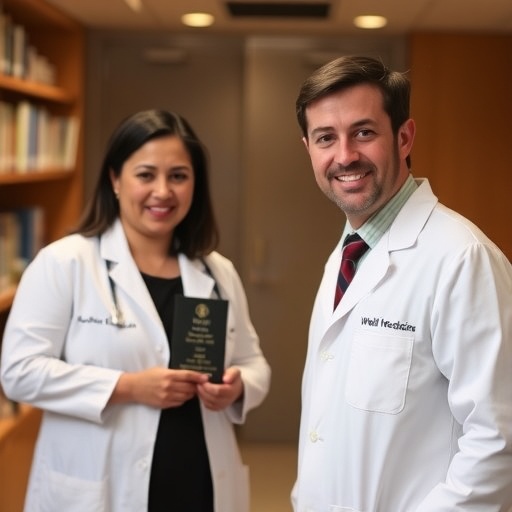
Dr. Dan Landau, a prominent figure in precision medicine and oncology at Weill Cornell Medicine, has recently been honored with a prestigious Lotus Award from the Pershing Square Foundation. This accolade recognizes his groundbreaking research focused on identifying new immunotherapy targets for ovarian cancer, a disease notorious for its silent progression and limited treatment options. As the Bibliowicz Family Professor of Medicine and a vital member of both the Sandra and Edward Meyer Cancer Center and the Englander Institute for Precision Medicine, Dr. Landau’s innovative work holds promise for transforming therapeutic strategies in this challenging field.
The Pershing Square Foundation, renowned for backing visionary cancer research endeavors, instituted the Lotus Awards in 2025 to propel advancements specifically in ovarian cancer research. These grants, which amount to $750,000 over three years, are allocated to scientists whose projects demonstrate scientific rigor, originality, and the potential to drive significant clinical impact. Among eight distinguished awardees this year, Dr. Landau’s project stood out for its ambitious approach toward exploiting molecular vulnerabilities unique to ovarian cancer cells.
Ovarian cancer remains a formidable adversary in oncology due to its insidious onset and the absence of distinct symptoms in early stages. This stealthy nature often results in diagnoses only when the disease has advanced, complicating treatment efforts. Despite recent gains made through targeted therapies and immunotherapies, the mortality rate remains stubbornly high. There is an urgent need for novel interventions grounded in a deeper molecular understanding of ovarian malignancies.
At the heart of Dr. Landau’s research lies the application of next-generation single-cell profiling technologies. These techniques enable the dissection of tumor heterogeneity and cellular dynamics at an unprecedented resolution. By analyzing individual cancer cells, the team aims to unravel the complex molecular transformations that facilitate oncogenesis in ovarian tissue. This granular perspective is essential for pinpointing alterations that could be exploited as therapeutic targets.
A central focus of the investigation is the dysregulation of gene-activity control mechanisms during malignant transformation. Normally, cells maintain tightly regulated gene expression patterns to preserve homeostasis. However, cancerous cells often exhibit a breakdown in these controls, leading to unchecked proliferation and additional anomalies. Among these are the aberrant activation of transposable elements—mobile DNA sequences colloquially known as “jumping genes”—and defects in RNA splicing machinery that adversely affect protein synthesis fidelity.
Transposable elements have long been regarded as genomic parasites, but their reactivation in cancer can generate novel molecular signatures recognizable by the immune system. This phenomenon offers a tantalizing opportunity to design immunotherapies aimed at these cancer-specific molecular markers. Parallel to this, changes in RNA splicing can produce cancer-specific protein isoforms that do not exist in normal cells, further enriching the pool of potential immunotherapeutic targets.
Dr. Landau’s team intends to harness their advanced profiling platforms to characterize these anomalies comprehensively. By delineating the cancer-specific variants derived from both transposable element dysregulation and aberrant splicing, they hope to create a catalog of unique molecular targets. These targets could be exploited by sophisticated immune-based therapies, such as T-cell receptor-engineered treatments capable of selectively eradicating ovarian cancer cells while sparing healthy tissue.
The implications of this research extend beyond mere identification of biomarkers. It represents a paradigm shift toward personalized immunotherapy strategies, utilizing the tumor’s own molecular idiosyncrasies against it. This precision approach may overcome the limitations of current therapies, which often struggle with tumor heterogeneity and immune escape mechanisms.
Dr. Landau emphasized the transformative potential of these discoveries for patients battling ovarian cancer, a disease that has seen relatively little progress compared to other malignancies. His laboratory’s integrated approach—combining cutting-edge genomics, molecular biology, and immunology—reflects the forward-thinking interdisciplinary efforts necessary to tackle complex diseases.
Moreover, his affiliation as a core faculty member at the New York Genome Center provides access to collaborative networks and technological resources crucial for this ambitious project. This synergy of expertise and infrastructure accelerates the translation of benchside discoveries to bedside applications.
Ultimately, this award not only acknowledges Dr. Landau’s scientific excellence but also highlights the critical need for renewed focus on ovarian cancer research. It serves as a beacon of hope for the development of innovative immunotherapies that could drastically improve patient outcomes and survival rates.
The study’s methodological rigor and innovative use of single-cell technologies to dissect genomic and transcriptomic abnormalities reinforce the growing consensus that precision medicine is the future of oncology. As these efforts progress, they could drastically reshape the therapeutic landscape of ovarian cancer, ushering in a new era of tailored and effective immunotherapeutic interventions.
Cite Scienmag News
Nathaniel Bowman. (June 15, 2026). Weill Cornell Medicine Scientist Honored for Breakthrough Research Identifying New Ovarian Cancer Targets. Scienmag. https://scienmag.com/weill-cornell-medicine-scientist-honored-for-breakthrough-research-identifying-new-ovarian-cancer-targets/
Nathaniel Bowman. "Weill Cornell Medicine Scientist Honored for Breakthrough Research Identifying New Ovarian Cancer Targets." Scienmag, 15 June 2026, https://scienmag.com/weill-cornell-medicine-scientist-honored-for-breakthrough-research-identifying-new-ovarian-cancer-targets/. Accessed 5 September 2026.
Nathaniel Bowman. "Weill Cornell Medicine Scientist Honored for Breakthrough Research Identifying New Ovarian Cancer Targets." Scienmag. June 15, 2026. https://scienmag.com/weill-cornell-medicine-scientist-honored-for-breakthrough-research-identifying-new-ovarian-cancer-targets/


