


In the specialized realm of pediatric cardiac intensive care, the precise administration of antibiotics is paramount to safeguarding the vulnerable infant population against life-threatening infections. A groundbreaking study published in Pediatric Research on June 11, 2026, spearheaded by Malehorn, Blumenthal, Miller, and colleagues, unveils critical insights into the pharmacokinetics of tobramycin, an aminoglycoside antibiotic commonly employed to combat severe gram-negative bacterial infections. This research not only challenges existing paradigms around dosing strategies but also underscores the imperative for tailored therapeutic approaches in infants with complex cardiac conditions.
Tobramycin, known for its bactericidal potency via inhibition of bacterial protein synthesis, demands meticulous dosing to maximize efficacy while mitigating nephrotoxicity and ototoxicity risks. The study focuses on infants in the cardiac intensive care unit (CICU), a subgroup notorious for altered drug disposition due to immature organ function, fluctuating fluid status, and the hemodynamic perturbations intrinsic to congenital heart disease and postoperative care. Standard dosing regimens, largely extrapolated from adult or older pediatric populations, may inadequately reflect these infants’ unique physiology, leading to suboptimal therapeutic concentrations.
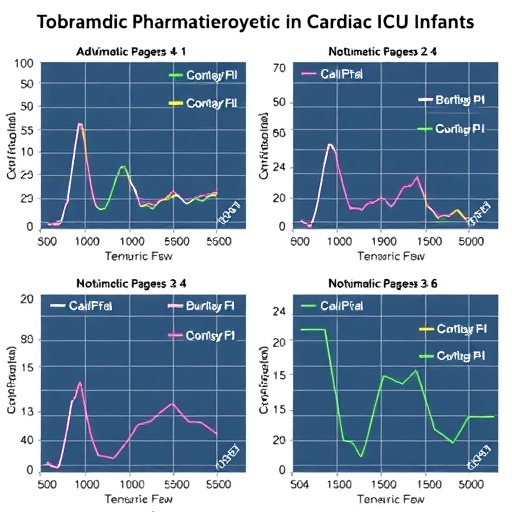
Employing advanced pharmacokinetic modeling and rigorous therapeutic drug monitoring, the researchers analyzed data gathered from a cohort of CICU infants receiving conventional tobramycin therapy. Their findings reveal remarkable variability in drug clearance and volume of distribution, illuminating the limitations of one-size-fits-all dosing strategies. The study highlights that many infants either failed to achieve target peak concentrations or were exposed to potentially toxic trough levels under current protocols, raising concerns about both efficacy and safety.
One critical aspect illuminated by the study is the impact of extracorporeal interventions, such as cardiopulmonary bypass and extracorporeal membrane oxygenation (ECMO), on tobramycin pharmacokinetics. These procedures, essential in managing complex congenital heart disease, profoundly affect drug kinetics by altering renal perfusion, inducing systemic inflammatory responses, and expanding the volume of distribution due to fluid shifts. The research delineates how these factors necessitate dynamic dose adjustments, rather than static dosing, to maintain therapeutic drug concentrations.
The authors further delve into the maturity-dependent changes in renal clearance, a pivotal pathway for tobramycin elimination. Neonatal kidneys exhibit progressive postnatal development, variably impacting glomerular filtration rates and tubular function. The study elucidates how this developmental trajectory correlates with tobramycin clearance, advocating for dosing algorithms that integrate biomarkers of renal function and maturation stage to personalize therapy.
Moreover, the investigation sheds light on the pharmacodynamic targets for tobramycin, emphasizing the importance of achieving optimal peak-to-minimum inhibitory concentration (MIC) ratios. These targets are critical for bactericidal activity and minimizing resistance emergence but remain challenging to attain in the fragile infant cohort with conventional dosing. The research argues for revisiting target drug exposures and individualizing dosing based on real-time pharmacokinetic data.
In addition to therapeutic considerations, the study assesses the implications for monitoring strategies, recommending more frequent and precise serum level measurements combined with Bayesian forecasting models to predict individual pharmacokinetic parameters. This approach promises to transform antibiotic stewardship in the CICU, enhancing outcomes by ensuring that each infant receives the right dose at the right time.
The authors also discuss the broader context of antimicrobial resistance, noting that inappropriate dosing regimens not only jeopardize individual patient outcomes but also contribute to the selection of resistant pathogens. Personalized pharmacokinetic-driven dosing protocols could thus serve as a frontline defense against the burgeoning threat of multidrug-resistant infections in these high-risk settings.
A pioneering element of this work is its integration of population pharmacokinetic models with real-world clinical data, allowing for simulation of various dosing scenarios under diverse physiological conditions encountered in the CICU. This integrative methodology marks a substantial advancement over previous empirical dosing approaches and sets the stage for future clinical trials aimed at validating these personalized strategies.
Importantly, the study does not shy away from addressing practical constraints—such as the workload implications of intensive therapeutic drug monitoring and the need for clinician education on pharmacokinetic principles—to ensure successful implementation. The authors advocate for the development of user-friendly decision support tools embedded within electronic health records to facilitate bedside application of their findings.
In summary, the meticulous pharmacokinetic analysis carried out by Malehorn and colleagues represents a paradigm shift in understanding and optimizing tobramycin therapy for infants in the cardiac intensive care unit. Their findings advocate for a departure from conventional, empiric dosing toward dynamic, individualized regimens that account for the complex and evolving physiology of these patients. This tailored approach holds promise not only for enhancing therapeutic efficacy but also for minimizing toxicities and combating antibiotic resistance.
As neonatal and pediatric critical care continues to evolve, such data-driven methodologies epitomize the future of precision medicine. By refining antibiotic dosing protocols with pharmacokinetic insights grounded in patient-specific factors, clinicians can enhance survival outcomes for some of the most vulnerable patients in modern medicine. This study thus lays a vital foundation for ongoing innovation in pediatric pharmacotherapy and critical care management.
The implications of this work extend beyond tobramycin and the cardiac population, serving as a template for revising dosing strategies across various drugs and pediatric subpopulations. Its call for integrated pharmacokinetic modeling, real-time monitoring, and adaptive dosing could herald a new era in pediatric drug administration, ensuring that therapy is as safe, effective, and individualized as possible.
The seamless collaboration between pharmacologists, intensivists, and clinical pharmacokineticists showcased in this research exemplifies the interdisciplinary synergy required to tackle the intricacies of pediatric drug therapy. Looking forward, such partnerships will be instrumental in translating these insights into standardized care protocols that improve patient outcomes on a broader scale.
Ultimately, as the CICU continues to manage increasingly complex cases requiring multifaceted therapeutic interventions, this pioneering study delivers a crucial blueprint for optimizing antimicrobial therapy. It reaffirms the necessity of precision dosing frameworks to meet the evolving challenges of modern pediatric critical care, promoting both science-driven practice and compassionate patient care.
Malehorn, E.N., Blumenthal, M., Miller, J.L. et al. Pharmacokinetic analysis of conventional tobramycin dosing for infants in the cardiac intensive care unit.
Pediatr Res (2026). https://doi.org/10.1038/s41390-026-05158-2
Cite Scienmag News
Denise Maddox. (June 11, 2026). Tobramycin Pharmacokinetics in Cardiac ICU Infants. Scienmag. https://scienmag.com/tobramycin-pharmacokinetics-in-cardiac-icu-infants/
Denise Maddox. "Tobramycin Pharmacokinetics in Cardiac ICU Infants." Scienmag, 11 June 2026, https://scienmag.com/tobramycin-pharmacokinetics-in-cardiac-icu-infants/. Accessed 6 September 2026.
Denise Maddox. "Tobramycin Pharmacokinetics in Cardiac ICU Infants." Scienmag. June 11, 2026. https://scienmag.com/tobramycin-pharmacokinetics-in-cardiac-icu-infants/


