


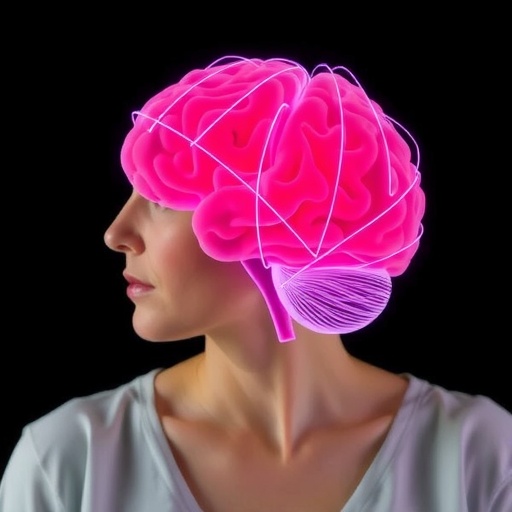
In a groundbreaking study from the Robert Larner, M.D. College of Medicine at the University of Vermont, scientists have unveiled compelling evidence that menopause extends far beyond being a mere reproductive milestone. This transformative phase also signifies profound neurological changes, reshaping our understanding of women’s brain health throughout midlife. Published recently in the esteemed journal Menopause, the research disrupts long-standing taboos by highlighting functional connectivity variations in the brain across menopausal stages.
The study was meticulously led by Dr. Julie Dumas, a seasoned neuropsychiatrist and associate director of the Clinical Neuroscience Research Unit, alongside Dr. Abigail Testo, a postdoctoral researcher specializing in hormone-brain interactions. Together, their investigation examined resting-state brain activity—a measure of intrinsic neuronal communication when the brain is not engaged in specific tasks—across women in premenopause, perimenopause, and postmenopause. They discovered that this intrinsic connectivity undergoes marked differences as hormonal landscapes shift during these stages, particularly influenced by fluctuations in estrogen levels.
Estrogen, a hormone critical for sexual and reproductive development, also plays an indispensable role in modulating neural networks throughout the brain. Its decline during menopause appears to recalibrate the brain’s functional architecture, influencing cognition and potentially accelerating neurodegenerative trajectories. The unique contribution of this research lies in its demonstration that these changes can be detected during resting states, a method reflecting the brain’s natural baseline function without the confounding effects of task performance.
With approximately 6,000 women in the United States entering menopause daily, understanding how this transition affects the brain is of paramount public health importance. The study illuminates how the neurological effects of diminishing estrogen might underpin commonly reported cognitive symptoms during menopause, such as memory lapses, difficulties with concentration, and altered executive function. These findings underscore menopause as a critical neurological phase deserving far more clinical and research attention than previously afforded.
Notably, this research bridges the gap between endocrinology and neuroscience by mapping hormonal dynamics onto brain connectivity patterns. Prior investigations predominantly focused on behavioral symptoms or structural brain changes, but Drs. Dumas and Testo’s approach quantifies neural circuitry function in vivo, offering a sophisticated window into the mechanisms of brain aging in women. This advancement paves the way for novel interventions aimed at preserving cognitive health during midlife and beyond.
The work is the culmination of over two years of rigorous analysis and collaboration, rooted in a five-year research partnership between Dumas and Testo. Employing state-of-the-art neuroimaging techniques combined with sophisticated data and statistical analytics, the team ensured that their findings reflect robust and reproducible neurological phenomena linked to hormonal variation. Their data suggest that brain networks related to memory, attention, and default mode connectivity undergo significant remodeling as estrogen declines.
Importantly, these results have significant implications for the development of hormone-based therapies. As ongoing research at the University of Vermont continues to unravel how both endogenous hormone fluctuations and exogenous hormone replacement treatments impact brain health, tailored approaches may emerge to mitigate menopausal cognitive decline. The nuanced understanding of functional connectivity changes during menopause could guide precision medicine strategies that optimize hormone therapy timing and formulations.
This research also challenges lingering cultural stigmas that have historically marginalized menopause as a private or inconsequential stage of life. By bringing scientific rigor and visibility to the neurological shifts accompanying menopause, the study fosters a more holistic paradigm where reproductive aging is integrated with brain health. This paradigm shift is critical as women live many decades post-menopause and their long-term cognitive wellbeing is a growing societal priority.
Moreover, the implications extend beyond individual health. Menopause-related cognitive changes have broad societal consequences—from workforce participation and productivity to healthcare burden. By characterizing the neural underpinnings, the study forms the scientific basis for public health initiatives focused on midlife women’s brain health, promoting informed policies and better support systems.
The study’s publication in Menopause, a leading peer-reviewed journal dedicated to menopausal research, further cements its importance and visibility within scientific and clinical communities. Supported by decades of prior work from Dr. Dumas’s team, this new evidence invites interdisciplinary collaborations to explore the interface between endocrinology, neurology, and psychiatry in women’s health.
As the field advances, future research will be critical to delineate individual variability in brain aging trajectories related to menopause, including genetic, environmental, and lifestyle factors. Such investigations will refine biomarkers for early detection and intervention, ultimately improving quality of life for millions of women worldwide experiencing menopause.
In summary, this pioneering research emphatically highlights menopause as a vital neurological transition characterized by significant remodeling of brain functional networks driven by hormonal modulation. It invites a transformative reevaluation of midlife women’s brain health, compelling both the scientific community and public to recognize menopause as a defining chapter in brain aging.
Cite Scienmag News
Cassandra Pierce. (June 9, 2026). New Study Reveals Brain Changes That Occur During Menopause. Scienmag. https://scienmag.com/new-study-reveals-brain-changes-that-occur-during-menopause/
Cassandra Pierce. "New Study Reveals Brain Changes That Occur During Menopause." Scienmag, 9 June 2026, https://scienmag.com/new-study-reveals-brain-changes-that-occur-during-menopause/. Accessed 4 September 2026.
Cassandra Pierce. "New Study Reveals Brain Changes That Occur During Menopause." Scienmag. June 9, 2026. https://scienmag.com/new-study-reveals-brain-changes-that-occur-during-menopause/


