


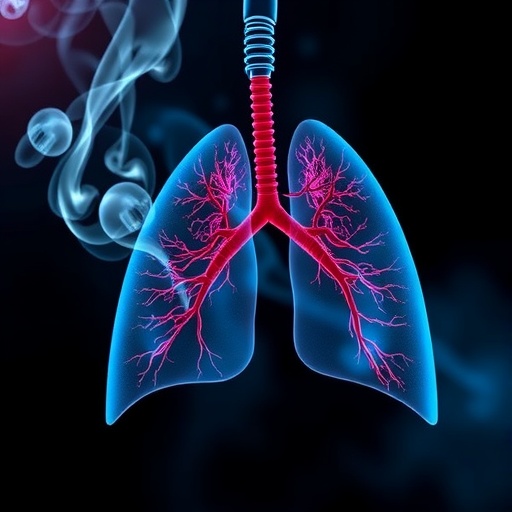
In a groundbreaking study published in Experimental & Molecular Medicine this June, researchers have unveiled new insights into how human lung cells adapt to chronic exposure to cigarette smoke. This pioneering investigation, led by Lee et al., offers a comprehensive look into the redox and mitochondrial dynamics that underlie cellular adaptation in the face of persistent oxidative assault induced by cigarette smoke. The research leverages both human lung epithelial cultures and organoid models, providing an unprecedented window into the cellular and molecular reprogramming triggered by chronic cigarette smoke extract (CSE).
Cigarette smoke remains one of the leading environmental threats to lung health worldwide, driving a host of respiratory diseases including chronic obstructive pulmonary disease (COPD) and lung cancer. While acute effects of smoking have been extensively documented, the nuanced cellular adaptations that enable survival and function despite ongoing insult have remained insufficiently understood. This study breaks new ground by employing a model that mimics prolonged exposure to whole cigarette smoke extract rather than isolated components, better capturing the complex and multifactorial nature of smoke toxicity.
The experimental approach focused on long-term exposure paradigms in primary human bronchial epithelial cells cultivated in air-liquid interface conditions, alongside three-dimensional lung organoids. These advanced model systems recapitulate important physiological features of the human airway epithelium, including mucociliary differentiation and intricate cell-cell interactions. By subjecting these models to repeated, chronic doses of whole cigarette smoke extract, the researchers simulated the persistent injury and adaptive responses typical of chronic smokers.
One of the key revelations of the study is the identification of redox reprogramming as a central feature of cellular adaptation. Cells exposed to prolonged cigarette smoke underwent significant shifts in their antioxidant defense machinery. Instead of succumbing to oxidative damage, epithelial cells and organoids enhanced their capacity to neutralize reactive oxygen species (ROS), effectively recalibrating redox homeostasis. These adaptations involved upregulation of enzymes such as superoxide dismutase, catalase, and glutathione peroxidases, orchestrating a robust antioxidant network that mitigated oxidative stress.
Moreover, mitochondrial remodeling emerged as a critical axis of adaptation. Detailed assessments of mitochondrial function revealed an increase in biogenesis, changes in mitochondrial morphology, and a shift towards more efficient oxidative phosphorylation. These mitochondrial changes are believed to empower cells to meet increased bioenergetic demands while maintaining cellular health under chronic stress conditions. Intriguingly, the study also noted alterations in mitochondrial dynamics proteins, suggesting a coordinated modulation of fusion and fission processes to optimize mitochondrial quality control.
The interplay between redox adaptations and mitochondrial reprogramming appears to be tightly interconnected. Enhanced antioxidant defenses likely protect mitochondria from oxidative damage, while mitochondrial adaptations support metabolic resilience. This coupling allows lung epithelial cells to not only survive but maintain critical functions despite ongoing exposure to cigarette smoke’s complex mixture of toxins, carcinogens, and free radicals.
Additionally, the use of lung organoids allowed the team to observe how tissue-level architecture and cellular heterogeneity influence and respond to smoke-induced stress. Organoids exposed to chronic cigarette smoke extract displayed adaptive changes in multiple cell types, including basal progenitors and secretory cells, pointing to a coordinated and community-level response within the epithelium. These findings underscore the importance of studying multicellular systems where cell-cell communication fosters robust tissue-wide adaptations.
Beyond the molecular and cellular insights, this study has profound implications for understanding the pathogenesis of smoking-related lung diseases. The elucidated redox-mitochondrial adaptations could represent a double-edged sword—while initially protective, sustained reprogramming may predispose cells to maladaptive changes such as inflammation, senescence, or neoplastic transformation. Consequently, these adaptive pathways might constitute promising targets for therapeutic intervention aimed at halting or reversing smoking-induced lung injury.
The authors also highlight the translational potential of their chronic CSE model for drug discovery and toxicity testing. Unlike traditional acute exposure models, this system faithfully recapitulates the slow trajectory and complex molecular shifts seen in chronic smokers. It thus provides a robust platform for screening compounds that could restore redox balance, improve mitochondrial function, or otherwise bolster lung epithelial resilience to smoke damage.
Technical rigor was ensured through the use of state-of-the-art techniques including high-resolution respirometry for mitochondrial assessment, comprehensive antioxidant enzyme activity assays, transcriptomics to profile gene expression changes, and advanced imaging modalities to visualize subcellular adaptations. This multidisciplinary toolkit enabled an integrative understanding of cellular responses at multiple biological scales, from genes to organoids.
Importantly, this research sheds light on why some smokers sustain lung function despite heavy exposure, hinting at intrinsic cellular capacities for adaptation. Understanding the molecular determinants that separate adaptive from pathological responses will be critical in personalizing interventions and predicting disease risk. Future investigations leveraging patient-derived cells with known clinical backgrounds could further correlate redox-mitochondrial adaptations with susceptibility or resistance to lung disease.
In summary, Lee and colleagues have provided a landmark contribution to pulmonary biology by illuminating how human lung epithelial and organoid systems dynamically rewire their redox and mitochondrial machinery to cope with chronic cigarette smoke exposure. These findings not only deepen our fundamental mechanistic understanding but also open exciting avenues for new therapeutic strategies aimed at mitigating the global health burden of smoking-induced lung conditions. As the tobacco epidemic continues to challenge public health, such sophisticated experimental models and molecular insights represent vital steps towards more effective treatments and prevention.
This study stands as a testament to the power of combining chronic exposure models with cutting-edge bioanalytical techniques. By unraveling the complex, adaptive landscape of lung epithelial cells confronting chronic cigarette smoke, it paves the way for a shift from merely characterizing injury to actively promoting resilience and repair at the cellular and tissue level. Moving forward, integrating these discoveries into clinical frameworks could ultimately transform patient care and improve outcomes for millions affected by smoking-related respiratory diseases.
With smoking remaining a leading cause of morbidity and mortality worldwide, advancing our molecular understanding of lung cell adaptation is a public health imperative. The innovative chronic whole cigarette smoke extract model introduced here provides the scientific community with an essential tool to decipher the redox-mitochondrial nexus underlying lung epithelial resilience and vulnerability. As follow-up research builds upon these findings, the hope is that novel therapeutic avenues will emerge to restore lung health in smokers and former smokers alike.
In conclusion, this remarkable work by Lee et al. underscores the intricate and dynamic nature of cellular adaptation to persistent environmental insults. It challenges prevailing notions that chronic cigarette smoke exposure leads to inevitable cell death, instead revealing a sophisticated biological balance enabling lung cells to persist. This new paradigm shifts the focus towards understanding and harnessing these adaptive mechanisms, with the ultimate goal of developing transformative therapies for smoking-related lung diseases.
Cite Scienmag News
Gavin Prescott. (June 8, 2026). Chronic Smoke Model Unveils Lung Cell Redox Adaptation. Scienmag. https://scienmag.com/chronic-smoke-model-unveils-lung-cell-redox-adaptation/
Gavin Prescott. "Chronic Smoke Model Unveils Lung Cell Redox Adaptation." Scienmag, 8 June 2026, https://scienmag.com/chronic-smoke-model-unveils-lung-cell-redox-adaptation/. Accessed 4 September 2026.
Gavin Prescott. "Chronic Smoke Model Unveils Lung Cell Redox Adaptation." Scienmag. June 8, 2026. https://scienmag.com/chronic-smoke-model-unveils-lung-cell-redox-adaptation/


