


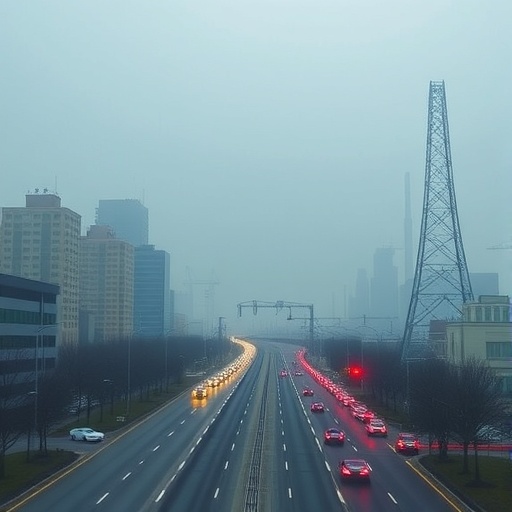
In a groundbreaking study published in Nature Communications in 2026, researchers led by Ma, Y., Jiang, Q., and Zhang, J. have unearthed compelling evidence pointing to the complex interplay between environmental air pollution and genetic factors in elevating the risk of aortic stenosis, a potentially fatal heart valve disease. This monumental piece of research leverages state-of-the-art epidemiological data alongside advanced bioinformatics techniques to reveal how invisible air pollutants and individual genetic predispositions amalgamate to impact aortic valve health at a population level.
Aortic stenosis, characterized by the narrowing of the aortic valve opening, impedes blood flow from the heart into the systemic circulation. It is responsible for significant morbidity and mortality worldwide, especially among the elderly. While traditional risk factors like age, hypertension, and hyperlipidemia have dominated clinical focus, this study pivots attention to less explored but increasingly relevant contributors—namely chronic exposure to airborne contaminants and intrinsic genetic susceptibility.
The authors employed extensive epidemiological datasets derived from multiple urban and rural cohorts, mapping incidences of aortic stenosis with meticulous air quality indices that describe concentrations of particulate matter (PM2.5 and PM10), nitrogen oxides (NOx), sulfur dioxide (SO2), and ozone. By stratifying populations based on their exposure duration and pollutant intensity, the researchers delineated a stark correlation between long-term exposure to high levels of particulate matter and elevated occurrence of aortic valve stenosis. This quantitative association serves as a compelling indicator that the ambient environment plays a previously underestimated role in the progression of valvular heart disease.
Going beyond observational correlations, the study delved deep into bioinformatics analyses, applying genome-wide association studies (GWAS) to identify genetic variants that modulate individual vulnerability to air pollution’s deleterious effects on cardiac structures. Employing sophisticated algorithms and machine learning models to sift through vast genomic datasets, they identified several loci with altered allele frequencies among high-exposure cohorts manifesting aortic stenosis, implicating pathways involved in inflammatory response, oxidative stress, and extracellular matrix remodeling as critical mediators.
One of the mechanistic insights uncovered relates to the role of inflammatory cytokines induced by particulate matter inhalation. Chronic exposure to air pollution triggers systemic inflammation, which exacerbates endothelial dysfunction in the aortic valve region. Such inflammation accelerates calcification cascades within the valvular tissue, a hallmark feature of stenosis. Genetic variants within genes governing immune regulation modulate this response, meaning people harboring particular polymorphisms experience heightened and more persistent inflammation that expedites valve degeneration.
Furthermore, oxidative stress pathways emerged as pivotal players in this intricate nexus. Atmospheric pollutants provoke excessive generation of reactive oxygen species (ROS), leading to cellular apoptosis and matrix degradation within the valvular interstitium. By identifying polymorphisms in antioxidant defense genes, the research highlights a subgroup of genetically susceptible individuals unable to adequately counteract ROS assault, thereby sustaining injury that precipitates stenosis.
The authors also detail how air pollution impacts epigenetic modifications, especially DNA methylation patterns and histone acetylation in valve interstitial cells. These epigenetic alterations, influenced by both environmental toxins and genetic background, contribute to aberrant gene expression profiles that favor pro-calcific and fibrotic phenotypes. This multi-layered regulatory disruption underscores the importance of integrative omics approaches in unraveling the pathophysiology of aortic stenosis beyond conventional paradigms.
Importantly, the study incorporates geospatial mapping techniques that overlay pollution hotspots with genetic data, revealing population clusters at disproportionately high risk. These findings have vast implications for public health policy, emphasizing the necessity for stringent environmental controls and prioritization of at-risk regions for cardiovascular surveillance and intervention.
The researchers also offer prognostic insights by integrating their findings into predictive models of aortic stenosis development. These models surpass traditional clinical risk scores by incorporating environmental metrics and genomic indicators, allowing for personalized risk stratification. Such precision medicine frameworks promise earlier detection and tailored therapies, potentially reducing the burden of late-stage disease requiring invasive valve replacement.
In the context of therapeutic innovation, the study suggests that mitigating systemic inflammation and oxidative stress through pharmacological agents might confer protection against pollution-induced valvular damage, especially in genetically predisposed individuals. The identification of specific genetic targets opens avenues for novel drug discovery and gene therapy applications to intercept disease progression at a molecular level.
The article also underlines the importance of lifestyle and policy interventions. Reducing exposure by limiting outdoor activity during peak pollution times, improving indoor air filtration, and advocating for cleaner energy alternatives emerge as practical measures. Coupled with genetic screening, these could collectively attenuate aortic stenosis incidence in vulnerable populations.
From a larger perspective, this research exemplifies the power of combining high-resolution environmental monitoring with cutting-edge genomic analytics to elucidate cardiovascular disease mechanisms that were previously opaque. It sets a precedent for investigations into other pollution-associated non-communicable diseases, encouraging a multidisciplinary approach involving epidemiologists, geneticists, bioinformaticians, and clinicians.
Moreover, this comprehensive study heightens awareness about the underestimated cardiovascular risks posed by air pollution. Its public health message transcends academic boundaries, calling for urgent global action to limit hazardous emissions that imperil heart health. As urbanization and industrialization continue apace, such integrative research becomes ever more vital in safeguarding populations from stealthy, chronic environmental insults.
Notably, the study also sparks important ethical considerations regarding environmental justice. Populations residing in areas with poor air quality often belong to socioeconomically disadvantaged groups, rendering them doubly vulnerable—due to environmental exposure and potentially limited access to healthcare or genetic screening. The intersectionality of pollution, genetics, and health disparities highlights a pressing need for equitable healthcare policies and education programs.
In conclusion, the landmark study by Ma, Y., Jiang, Q., Zhang, J., et al. pushes the frontier of cardiovascular research by intricately linking air pollution exposure with genomic susceptibility in the pathogenesis of aortic stenosis. It elucidates molecular pathways, identifies at-risk populations, and champions precision medicine and public health strategies as dual pillars in combating this debilitating disease. As the global burden of valvular heart disease escalates, such integrative efforts illuminate the path toward more effective prevention, diagnosis, and treatment paradigms in the 21st century.
Cite Scienmag News
Juliet Wilcox. (June 5, 2026). Air Pollution, Genetics Linked to Aortic Stenosis Risk. Scienmag. https://scienmag.com/air-pollution-genetics-linked-to-aortic-stenosis-risk/
Juliet Wilcox. "Air Pollution, Genetics Linked to Aortic Stenosis Risk." Scienmag, 5 June 2026, https://scienmag.com/air-pollution-genetics-linked-to-aortic-stenosis-risk/. Accessed 4 September 2026.
Juliet Wilcox. "Air Pollution, Genetics Linked to Aortic Stenosis Risk." Scienmag. June 5, 2026. https://scienmag.com/air-pollution-genetics-linked-to-aortic-stenosis-risk/


