


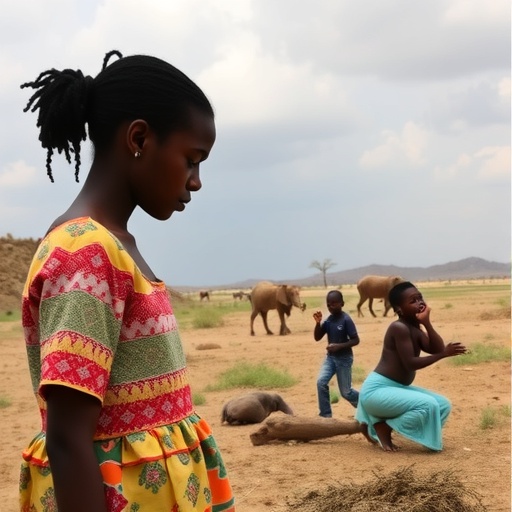
New research emerging from the University of Oxford marks a pioneering step in understanding the intricate connection between environmental stressors and social outcomes. Specifically, this groundbreaking study provides the first quantitative analysis linking prolonged drought exposure over the preceding year to a heightened risk of sexual, emotional, and physical violence against adolescents residing in Southern Africa. The findings highlight a distressing pattern where cumulative drought conditions over two years amplify the vulnerabilities faced by young people, underscoring a critical crisis driven by climate change and socio-economic instability.
Analyzing a vast dataset encompassing over 20,000 adolescents aged 13 to 24 from Zimbabwe, Mozambique, and Lesotho, the research sheds light on demographic segments disproportionately affected by drought-induced violence. Girls and young women emerge as the most vulnerable, alongside older adolescents within the upper age range of the cohort and those dwelling in rural environments. This nuanced understanding reveals the intersectionality of gender, age, and geographic location in shaping exposure to violence, mediated by the stresses induced by environmental scarcity.
Water scarcity is forecasted to become a defining challenge in Southern Africa, with projections estimating a decline in water availability by approximately 30% by the year 2050. This anticipated reduction exacerbates entrenched issues including poverty, food insecurity, and mental health disturbances. These factors converge to magnify existing inequalities and disrupt family structures, fostering environments where maladaptive coping mechanisms such as child marriage, child labor, and forced migration are more prevalent. Alarmingly, sub-Saharan Africa already grapples with historic levels of violence towards children, with estimates suggesting nearly 79 million girls have suffered sexual violence before reaching adulthood.
Published in the prestigious journal The Lancet Planetary Health, the research was led by Dr. Bothaina Eltigani, a DPhil student at Oxford’s Department of Social Policy and Intervention. Her team’s analysis quantifies the increases in violence during drought periods: a staggering 46% rise in sexual violence perpetrated by non-partners, a 51% increase in emotional violence by intimate partners, surging to 73% for emotional violence committed by non-partners, and physical violence increases of 39% and 41% by partners and non-partners respectively. These figures starkly illustrate the profound social repercussions of climatic shocks on adolescent safety.
The study also reveals that the risks are not uniform. Regions experiencing drought conditions over extended durations—up to 24 months—face the possibility of adolescents enduring bilateral increases in the risk of all forms of violence. This effect is particularly pronounced for female adolescents, who face disproportionate risks of sexual and emotional abuse from both partners and non-partners. Older adolescents, aged 18 to 24, show heightened vulnerability compared to their younger peers, a factor partly attributed to increased mobility, social exposure, and financial responsibilities that accompany this life stage.
Geographical disparities further compound the landscape of risk. Adolescents in rural areas, where reliance on rain-fed agriculture predominates and infrastructure resilience is minimal, encounter elevated dangers. The scarcity of adaptive resources and institutional support in these regions creates a breeding ground for violence, driven by heightened stress within households contending with drought’s multifaceted impact.
Dr. Eltigani’s observations bring a deeply human perspective to the data. Drawing from her medical experience in Sudan, she underscores how drought-induced water scarcity imposes substantial strain on families, especially in rural communities. The invisibility of youth safety concerns amid such crises calls for integrating violence prevention strategies focused on adolescents into climate resilience frameworks. She advocates for embedding gender-sensitive approaches within early warning systems and sustainable adaptation initiatives, recognizing that with climate models projecting increased drought severity and frequency, such integration is imperative rather than optional.
The research offers critical insight into why certain groups experience differential vulnerability during drought episodes. Gendered power imbalances limit girls’ access to crucial adaptation resources and decision-making platforms, simultaneously burdening them with increased unpaid domestic tasks such as water and fuel collection, which heightens their exposure to harm. Furthermore, older adolescents’ expanded social networks and responsibilities amplify their exposure to both intimate partner and non-partner violence. The infrastructural deficits and economic dependencies inherent to rural areas amplify exposure risks, reflecting a complex interplay between environmental, social, and economic dimensions of vulnerability.
Methodologically, this study synthesizes violence victimization reports with demographic data derived from the Violence Against Children Surveys (VACS) involving 20,290 adolescents across the three countries. To operationalize drought exposure, researchers applied a rigorous definition centered on prolonged intervals of below-average rainfall, leveraging meteorological data to align environmental conditions with violence incidence. This multidisciplinary approach reinforces the robustness of the findings and provides an empirical foundation for policy interventions targeting the nexus between climate and social vulnerability.
The implications of these findings resonate beyond the academic sphere, posing urgent challenges for policymakers, humanitarian organizations, and climate adaptation strategists. As water scarcity intensifies, its ripple effects exacerbate social inequalities, catalyze family destabilization, and increase the prevalence of harmful coping mechanisms. This calls for multi-sectoral approaches that not only address environmental sustainability but also integrate protective measures for at-risk youth populations, particularly in regions disproportionately burdened by poverty and limited infrastructure.
Given the complexity of drivers underpinning violence in drought settings, targeted interventions must reconcile the intersections of gender, age, and locality. Empowering adolescent girls through enhanced access to resources, education on rights, and community engagement can mitigate risks while reinforcing resilience. Simultaneously, infrastructure investments in rural regions and social safety nets can alleviate some of the socio-economic triggers for violence. By embedding these strategies within overarching climate adaptation frameworks, stakeholders can foster more holistic, equitable responses to the compounded crises faced by Southern Africa’s adolescents.
In conclusion, this seminal study spotlights a critical yet underexplored dimension of climate change impacts—its direct influence on the safety and well-being of young people. The quantitative association between drought exposure and elevated violence risk emphasizes the urgent need to align climate resilience efforts with social protection imperatives. As Southern Africa confronts escalating drought frequency and severity, prioritizing adolescent-focused, gender-sensitive violence prevention within climate policies is essential to safeguard the region’s youth and secure a more just and sustainable future.
News Publication Date: Not specified
Web References: Not provided
References: The study references Global Warming of 1.5°C by the IPCC (2018), UNICEF reports on violence against girls in sub-Saharan Africa (2024), and Hillis et al.’s systematic review on past-year violence against children (2016).
Cite Scienmag News
Courtney Benton. (June 2, 2026). Study Finds 46% Rise in Sexual Violence Among Southern African Adolescents Tied to Drought; Repeated Droughts Significantly Heighten Risk. Scienmag. https://scienmag.com/study-finds-46-rise-in-sexual-violence-among-southern-african-adolescents-tied-to-drought-repeated-droughts-significantly-heighten-risk/
Courtney Benton. "Study Finds 46% Rise in Sexual Violence Among Southern African Adolescents Tied to Drought; Repeated Droughts Significantly Heighten Risk." Scienmag, 2 June 2026, https://scienmag.com/study-finds-46-rise-in-sexual-violence-among-southern-african-adolescents-tied-to-drought-repeated-droughts-significantly-heighten-risk/. Accessed 4 September 2026.
Courtney Benton. "Study Finds 46% Rise in Sexual Violence Among Southern African Adolescents Tied to Drought; Repeated Droughts Significantly Heighten Risk." Scienmag. June 2, 2026. https://scienmag.com/study-finds-46-rise-in-sexual-violence-among-southern-african-adolescents-tied-to-drought-repeated-droughts-significantly-heighten-risk/


