


In the complex landscape of stigmatized illnesses, human immunodeficiency virus (HIV) stands as a poignant example where psychological factors critically influence healthcare engagement. Among these psychological dimensions, shame has emerged as a particularly insidious emotion that undermines patients’ willingness to seek and maintain medical care. Shame, a deeply self-conscious and often hidden emotion, triggers stress responses and promotes avoidance coping mechanisms that can compromise HIV treatment outcomes. Traditional assessments have struggled to capture the multifaceted nature of shame, largely relying on self-report measures which can be confounded by patients’ reluctance to disclose this vulnerable state. Recent advances point toward a multi-modal approach, integrating subjective, linguistic, and behavioral indicators, to attain a more accurate and predictive measurement of shame in individuals recently diagnosed with HIV.
Researchers at Boston University Chobanian & Avedisian School of Medicine have spearheaded a study illuminating the necessity of this multi-pronged assessment strategy. They argue that shame, frequently masked by denial or social desirability biases, manifests not only in what patients explicitly say about their feelings but also subtly through their choice of words and nonverbal communication. The study rigorously examined three dimensions: self-reported shame, linguistic markers of shame embedded within patients’ narratives, and observable bodily cues such as head posture and shoulder positioning. Each measurement independently contributed varying degrees of insight but revealed limitations when applied in isolation, underscoring the advantage of a comprehensive, convergent evaluation framework.
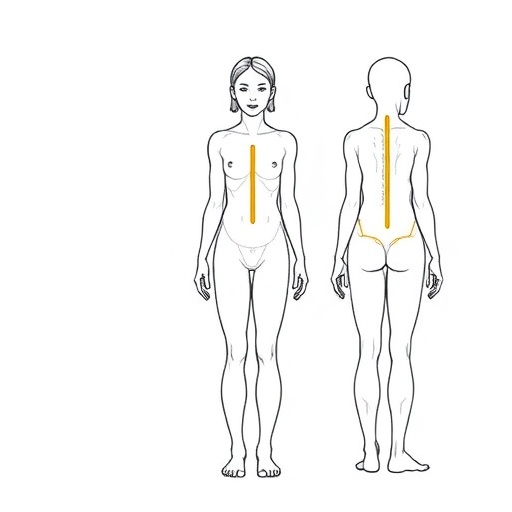
The research capitalized on archival data derived from two substantial cohorts of individuals freshly diagnosed with HIV. In these studies, participants engaged in recorded interviews describing their emotional experiences upon diagnosis. Immediate post-interview self-reports captured subjective emotional states, while the transcripts underwent lexical analysis employing the Linguistic Inquiry Word Count (LIWC) methodology. This technique quantifies the prevalence of specific shame-related words and expressions within patients’ verbal accounts, serving as a proxy for underlying affective states that patients might hesitate to label explicitly. Concurrently, behavioral coders analyzed the video recordings for three hallmark shame-associated postural features: downward head tilt, slumped shoulders, and a narrowed chest, movements previously linked to self-conscious emotions.
By applying confirmatory factor analysis, the investigators demonstrated that integrating these multi-modal shame indicators yields a latent construct with superior explanatory power for predicting psychological distress and avoidance behaviors related to healthcare engagement. Notably, patients who refrained from reporting feelings of shame nevertheless exhibited shame-inflected language or body language, suggesting dissociation between conscious recognition of shame and its subconscious expression. This discrepancy has profound clinical implications, emphasizing that reliance on self-report alone risks under-detection of patients at risk for disengagement from medical care. Multimodal indicators thus represent a crucial advance, offering a more nuanced and sensitive mechanism for detecting stigma-induced emotional distress.
Shame-related stress was shown to exacerbate maladaptive coping, including avoidance of medical appointments, nonadherence to treatment regimens, and withdrawal from social support systems. These behaviors compound the clinical complexity of HIV management by fostering psychological distress that undermines adherence and long-term disease control. The insights generated from multi-modal assessment equip healthcare providers with a more holistic understanding of patient emotional states, enabling tailored psychosocial interventions. Clinicians can employ these measures to identify patients who might benefit from psychotherapy or supportive counseling even in the absence of overt verbalized shame, thereby preemptively addressing barriers to retention in care.
The methodological rigor of this study also sets a novel precedent for future research on self-conscious emotions in stigmatized health conditions. By formalizing an observational coding scheme tied to objective nonverbal behaviors, the researchers have introduced an empirically validated repertoire for capturing shame beyond subjective reporting. This integration of psychological theory with rigorous behavioral quantification paves the way for exploring shame’s role in a variety of health contexts beyond HIV, including mental health disorders, chronic illness, and marginalized populations grappling with social stigma. It highlights the latent complexity embedded in emotional expression and the need for interdisciplinary methods to decode this complexity in clinical practice and public health research.
This advancement in shame measurement aligns with broader trends toward precision psychiatry and personalized medicine. As mental health assessments evolve, incorporating multi-modal data streams—from verbal content to facial microexpressions and biomechanical indicators—promises to refine diagnosis and prognostication. The current study exemplifies this trajectory by illustrating how subtle postural cues can serve as biomarkers for psychological distress states that influence health behavior. Moreover, the study bridges the gap between psychological constructs and observable phenomena, helping to anchor abstract emotions in tangible clinical indicators accessible during routine consultations.
Importantly, the findings underscore a critical communication gap often present in medical encounters with stigmatized populations. Patients may consciously avoid naming shame due to fears of judgment or internalized stigma, creating barriers to honest disclosure. The triangulation of emotional data through disparate channels thus becomes a form of emotional triangulation that transcends verbal articulation, allowing clinicians to ‘see’ shame that patients might not ‘say.’ This re-conceptualization of emotional fidelity in healthcare visits offers new avenues for enhancing therapeutic alliance and mitigating the hidden toll of stigma on patient health trajectories.
The implications for intervention development are far-reaching. Recognizing that shame operates at the behavioral and linguistic levels as well as the conscious cognitive sphere calls for integrated psychosocial interventions that address these layers synergistically. Therapeutic strategies might include narrative therapy aimed at reshaping shame-laden discourse, mindfulness practices to increase embodied awareness, and cognitive-behavioral approaches targeting negative self-conscious emotions. Furthermore, provider training could incorporate skills for detecting nonverbal shame signals, fostering a more empathetic and validating clinical environment that reduces patients’ stress and facilitates engagement.
Looking ahead, the study’s approach offers a scalable model for longitudinal monitoring of shame trajectories over the course of HIV disease management. Tracking changes in verbal, behavioral, and self-report markers could illuminate pathways of resilience or risk, enabling early intervention before maladaptive avoidance behaviors crystallize. The data analytic framework employed also suggests potential for leveraging machine learning to automate the detection of shame-related language and postural cues, enhancing the feasibility of implementing multi-modal assessment in busy clinical settings.
In conclusion, the study highlights the indispensable role of multi-modal assessment in accurately capturing the elusive emotion of shame among individuals newly diagnosed with HIV. By integrating subjective self-reports, computational linguistic analysis, and coded behavioral observations, the research delineates a comprehensive phenotype of shame that better predicts stress and avoidance coping than any single measure alone. These findings not only deepen our understanding of the psychosocial hurdles faced by people living with HIV but also chart a transformative path toward improving healthcare engagement through refined emotional assessment protocols. This holistic approach promises to enhance clinical outcomes by dismantling the silent barriers shame erects between patients and the care they need.
News Publication Date: 19-May-2026
Web References: http://dx.doi.org/10.1177/13591053261449651
Cite Scienmag News
Ophelia Keating. (May 20, 2026). Combining Self-Report, Language, and Body Posture to Measure Shame Could Enhance Clinical Assessments. Scienmag. https://scienmag.com/combining-self-report-language-and-body-posture-to-measure-shame-could-enhance-clinical-assessments/
Ophelia Keating. "Combining Self-Report, Language, and Body Posture to Measure Shame Could Enhance Clinical Assessments." Scienmag, 20 May 2026, https://scienmag.com/combining-self-report-language-and-body-posture-to-measure-shame-could-enhance-clinical-assessments/. Accessed 4 September 2026.
Ophelia Keating. "Combining Self-Report, Language, and Body Posture to Measure Shame Could Enhance Clinical Assessments." Scienmag. May 20, 2026. https://scienmag.com/combining-self-report-language-and-body-posture-to-measure-shame-could-enhance-clinical-assessments/


