


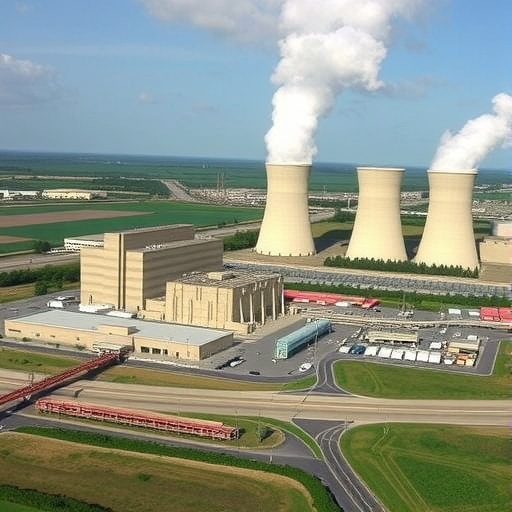
In a landmark study that intersects environmental science and oncology, researchers have unveiled new insights into the cancer mortality risks associated with living near nuclear power plants in the United States. Despite nuclear facilities emitting comparatively low levels of ionizing radiation—a known carcinogen linked to breast, colon, and lung cancers—the long-term public health implications of chronic exposure remain hotly debated. This comprehensive national analysis, covering data spanning two decades from 2000 to 2020, provides an unprecedented examination of cancer mortality outcomes relative to proximity to these energy sources.
Ionizing radiation is a well-established environmental hazard capable of damaging DNA and inducing carcinogenesis. However, the dose and exposure duration critically influence resultant health risks. Nuclear power plants, while heavily regulated and designed to minimize emissions, nonetheless release trace radioactive isotopes routinely during energy production. Previous localized studies have hinted at increased incidences of certain cancers in populations residing nearby, but results have been inconsistent and often confounded by socioeconomic and lifestyle factors.
The research team led by Alwadi, Schwartz, and Christiani leveraged an extensive dataset that integrates cancer mortality records from the Centers for Disease Control and Prevention with geospatial data pinpointing residential distances to nuclear plant sites. Employing advanced spatial epidemiological models, the study scrutinizes lung, breast, and colon cancer death rates while adjusting for a myriad of demographic and environmental covariates. This methodological rigor enhances confidence in isolating radiation exposure effects from other cancer risk influencers.
One striking dimension of this investigation is its temporal breadth, capturing contemporary nuclear power plant operations and demographic shifts. From 2000 to 2020, the nuclear energy landscape experienced policy changes, plant upgrades, and varied emission levels. Simultaneously, cancer diagnostic improvements and treatment modalities evolved, influencing overall mortality rates. The study’s longitudinal nature allows it to account for these dynamics, providing a nuanced understanding of radiation-related cancer risks over time.
The findings reveal subtle but statistically significant elevations in lung and breast cancer mortalities among populations residing within a defined radius of nuclear power installations. These associations, while not definitive proof of causality, prompt renewed scrutiny of environmental radiation standards. Interestingly, colon cancer mortality did not exhibit a consistent relationship with plant proximity, suggesting tissue-specific variations in radiation susceptibility or confounding influences warrant further investigation.
Crucially, the researchers emphasize the low-dose, chronic exposure nature of radiation from nuclear plants. Unlike acute, high-dose exposures such as those experienced by atomic bomb survivors, emissions from commercial nuclear operations are typically well below regulatory safety thresholds. However, even low-level exposures, when continuously accumulated over years or decades, may pose insidious health risks not fully captured in existing risk models.
The study further underscores the importance of spatial heterogeneity in exposure estimation. Residents closest to plants likely encounter the highest radiation levels, but factors such as local weather patterns, topography, and plant operational variables modulate actual dose absorption. Incorporating these nuances into risk assessments represents a critical advancement in exposure science.
Notably, lung cancer being prominently linked with proximity suggests potential compounding effects from inhaled radioactive particles, in addition to whole-body radiation doses. Given that lung tissue is particularly vulnerable to carcinogens, ionizing radiation from airborne pathways could partly explain observed mortality patterns. These insights call for enhanced environmental monitoring and airborne radionuclide tracking around nuclear facilities.
Equally important is the study’s exploration of breast cancer correlations. Breast tissue is known to be radiosensitive; however, the mechanisms of radiation-induced breast carcinogenesis remain incompletely understood. The study’s identification of mortality increases in this context fuels calls for mechanistic research to elucidate cellular and molecular pathways affected by chronic low-dose exposure.
While this research advances the understanding of cancer risks related to nuclear power plant emissions, the authors caution that findings should not be interpreted in isolation. Socioeconomic status, smoking rates, healthcare access, and genetic predispositions considerably influence cancer mortalities. The study employs multivariate adjustments to mitigate these confounders, but inherent limitations of observational epidemiology remain.
Beyond immediate public health implications, these results carry weighty policy and energy production considerations. Nuclear power remains a significant component of U.S. energy strategy, praised for low greenhouse gas emissions relative to fossil fuels. Balancing these climate benefits against potential long-term health risks requires nuanced, data-driven policymaking supported by ongoing scientific inquiry.
The study’s publication in the Journal of Exposure Science and Environmental Epidemiology signals its importance in environmental health literature. Its findings invite multidisciplinary dialogue among oncologists, epidemiologists, radiation physicists, and policymakers to refine risk assessment frameworks and ensure the safety of nuclear power operations.
Moreover, the analysis emphasizes the need for transparent communication with communities residing near nuclear plants. Public trust hinges on clear dissemination of scientific evidence regarding risks and safety measures. Engaging local populations in environmental monitoring initiatives could enhance awareness and foster collaborative risk mitigation strategies.
Future research directions inspired by this work include integrating personal dosimetry, biomarker studies, and genomic investigations to delineate individual susceptibility patterns. Advancements in wearable radiation detectors and molecular epidemiology provide promising avenues to deepen mechanistic understanding.
In sum, this national analysis punctuates the delicate balance between harnessing nuclear energy and safeguarding public health. While the increased cancer mortality signals caution, they also highlight opportunities for improving radiation protection standards and environmental surveillance. As energy demands and climate concerns escalate, the imperative to optimize nuclear safety intensifies.
This study represents a pivotal step toward elucidating complex interactions between environmental radiation exposure and cancer outcomes over extended periods. By contextualizing cancer mortality patterns proximate to nuclear power plants, it sets the stage for informed policy measures and personalized medicine strategies aimed at minimizing radiation-related health burdens.
As the global community strives to meet energy sustainability goals, research of this caliber underscores the indispensability of continuous epidemiological vigilance and adaptive regulation. The nuanced, data-rich insights delivered by this study will resonate across scientific, regulatory, and public spheres, shaping the trajectory of nuclear power’s role in a healthier future.
Cite Scienmag News
Nathaniel Bowman. (May 20, 2026). Nuclear Plant Proximity Linked to Cancer Deaths US. Scienmag. https://scienmag.com/nuclear-plant-proximity-linked-to-cancer-deaths-us/
Nathaniel Bowman. "Nuclear Plant Proximity Linked to Cancer Deaths US." Scienmag, 20 May 2026, https://scienmag.com/nuclear-plant-proximity-linked-to-cancer-deaths-us/. Accessed 3 September 2026.
Nathaniel Bowman. "Nuclear Plant Proximity Linked to Cancer Deaths US." Scienmag. May 20, 2026. https://scienmag.com/nuclear-plant-proximity-linked-to-cancer-deaths-us/


