


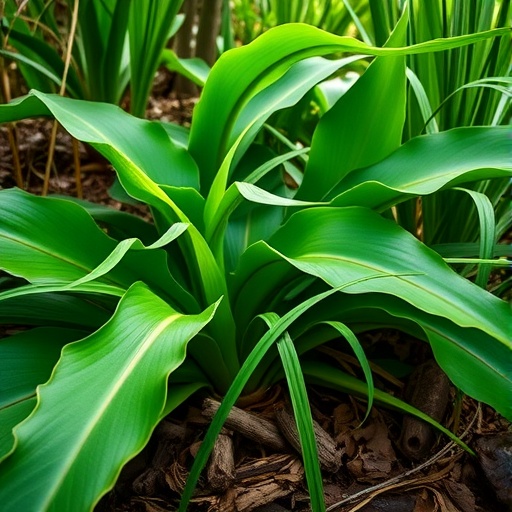
In a groundbreaking study published in Scientific Reports, researchers have uncovered promising new therapeutic potential in compounds derived from the invasive plant species Ambrosia trifida, commonly known as giant ragweed. The innovative research focuses on guaiane sesquiterpenoids, a class of naturally occurring terpenoid compounds extracted from this plant, and their remarkable effect on inflammatory bowel disease (IBD) via modulation of the JAK2/STAT3 signaling pathway. This discovery not only sheds light on novel molecular targets for IBD treatment but also highlights how bioactive substances from invasive species might be transformed into valuable pharmaceutical agents.
Inflammatory bowel disease, encompassing conditions such as Crohn’s disease and ulcerative colitis, affects millions globally and currently lacks a definitive cure. Characterized by persistent inflammation of the gastrointestinal tract, IBD significantly impairs patients’ quality of life through chronic pain, diarrhea, and other debilitating symptoms. Existing treatments primarily focus on managing inflammation and suppressing the immune response but often come with considerable side effects or insufficient efficacy. The innovative approach taken by Park, Kim, Choi, and their colleagues employs plant-derived guaiane sesquiterpenoids to target key intracellular signaling events implicated in IBD pathogenesis.
Central to this research is the JAK2/STAT3 signaling axis, a vital pathway involved in cell proliferation, survival, and immune regulation. Dysregulation of this pathway has been strongly linked to the development and perpetuation of chronic inflammatory states seen in IBD. The Janus kinase 2 (JAK2) and signal transducer and activator of transcription 3 (STAT3) molecules act in concert to propagate inflammatory signals inside immune cells and epithelial cells lining the gut. Hyperactivation of this pathway exacerbates inflammation and tissue damage in IBD, making it a compelling target for novel therapeutic agents.
The study meticulously isolated guaiane sesquiterpenoids from Ambrosia trifida and conducted a series of in vitro and in vivo experiments to assess their bioactivity and mechanism of action. Cellular assays demonstrated that these sesquiterpenoids effectively inhibited JAK2 enzymatic activity, subsequently reducing phosphorylation of STAT3. This inhibition led to a pronounced decrease in the expression of pro-inflammatory cytokines, molecules that drive the inflammatory cascade in IBD. Furthermore, animal models treated with these compounds showed significant amelioration of colitis symptoms, including reduced mucosal damage and suppressed inflammatory cell infiltration.
Employing advanced techniques such as western blotting, immunohistochemistry, and transcriptomic profiling, the authors provided compelling evidence delineating how guaiane sesquiterpenoids interfere with the JAK2/STAT3 signaling pathway at a molecular level. By blocking critical phosphorylation sites essential for JAK2 activation and STAT3 nuclear translocation, the compounds prevent the transcriptional activation of genes involved in inflammation and immune response amplification within gut tissues. This level of mechanistic insight is crucial for the rational design of new drugs targeting immune-mediated diseases like IBD.
Beyond its therapeutic implications, the study also pioneers a novel perspective on the use of invasive plants as sources of pharmacologically active compounds. Ambrosia trifida, often regarded as an ecological threat due to its rapid spread and allergenic properties, surprisingly harbors highly potent bioactive molecules. The successful repurposing of sesquiterpenoids extracted from this weed underscores a paradigm shift in natural product research, turning environmental nuisances into valuable reservoirs of medicinal chemistry.
The findings further suggest that guaiane sesquiterpenoids might serve as leads for the development of small-molecule inhibitors designed to selectively target JAK2/STAT3 without affecting other signaling cascades. This selective inhibition is especially significant given the adverse effects associated with broad-spectrum JAK inhibitors currently used in clinical settings, which can compromise immune surveillance and cause systemic toxicity. Plant-derived molecules offer a structural diversity and specificity that synthetic compounds often lack, potentially paving the way for safer and more effective therapies.
Additionally, the multifaceted biological effects of guaiane sesquiterpenoids—beyond JAK2/STAT3 inhibition—merit deeper exploration. Prior research has linked sesquiterpenoids to antioxidant, antimicrobial, and even anti-cancer activities, making them versatile candidates for integrated treatment strategies. The current study positions these compounds at the forefront of IBD research, prompting future investigations into their pharmacodynamics, pharmacokinetics, and synergistic interactions with existing medications.
Clinically, the translation of these findings holds immense promise. Patients suffering from refractory IBD or those intolerant to conventional immunosuppressants could benefit from therapies derived from guaiane sesquiterpenoids. The ability to ameliorate inflammation through targeted modulation of intracellular signaling pathways offers hope for more precise and personalized medicine approaches, potentially reducing long-term complications like colorectal cancer linked to chronic inflammation.
The research team emphasizes the need for further preclinical studies to optimize dosing regimens, assess long-term safety, and evaluate the bioavailability of these natural compounds. Moreover, structure-activity relationship (SAR) studies could facilitate the synthesis of analogs with enhanced potency and stability, accelerating the path toward clinical trials. Collaborative efforts integrating phytochemistry, molecular biology, and clinical expertise will be essential to harness the full therapeutic potential of guaiane sesquiterpenoids.
Importantly, this study exemplifies the interdisciplinary nature of modern biomedical research—bridging ecology, chemistry, immunology, and gastroenterology. The journey from ecological problem to pharmacological solution showcases how creative approaches to “weed” management could yield benefits far exceeding their initial scope. By unlocking the therapeutic secrets hidden within Ambrosia trifida, scientists are not only addressing an environmental challenge but also advancing human health innovation.
In summary, the discovery of guaiane sesquiterpenoids’ capacity to suppress JAK2/STAT3 signaling and mitigate the progression of inflammatory bowel disease heralds a new chapter in natural product pharmacology. These findings enrich our molecular understanding of IBD pathogenesis and open up exciting avenues for the development of plant-based, targeted therapies. As drug resistance and side effects challenge existing treatments, nature-derived compounds like those from Ambrosia trifida could revolutionize the management of chronic inflammatory disorders.
The investigation sets a precedent for exploring invasive species for medically relevant phytochemicals, inspiring further ecological and biomedical research integration. As scientific exploration continues, the prospect of transforming invasive botanicals into healing agents may catalyze innovative therapeutic modalities, reinforcing the value of biodiversity and natural compound libraries in drug discovery.
Ultimately, the study by Park, Kim, Choi, and colleagues pushes the boundaries of our understanding regarding plant-invasion biology and immunopharmacology. Their work exemplifies how targeted molecular interventions can emerge from seemingly unlikely sources, offering novel hope for patients with inflammatory bowel disease and potentially reshaping future clinical practices.
Cite Scienmag News
Denise Maddox. (May 19, 2026). Guaiane Sesquiterpenoids Combat IBD via JAK2/STAT3. Scienmag. https://scienmag.com/guaiane-sesquiterpenoids-combat-ibd-via-jak2-stat3/
Denise Maddox. "Guaiane Sesquiterpenoids Combat IBD via JAK2/STAT3." Scienmag, 19 May 2026, https://scienmag.com/guaiane-sesquiterpenoids-combat-ibd-via-jak2-stat3/. Accessed 4 September 2026.
Denise Maddox. "Guaiane Sesquiterpenoids Combat IBD via JAK2/STAT3." Scienmag. May 19, 2026. https://scienmag.com/guaiane-sesquiterpenoids-combat-ibd-via-jak2-stat3/


