


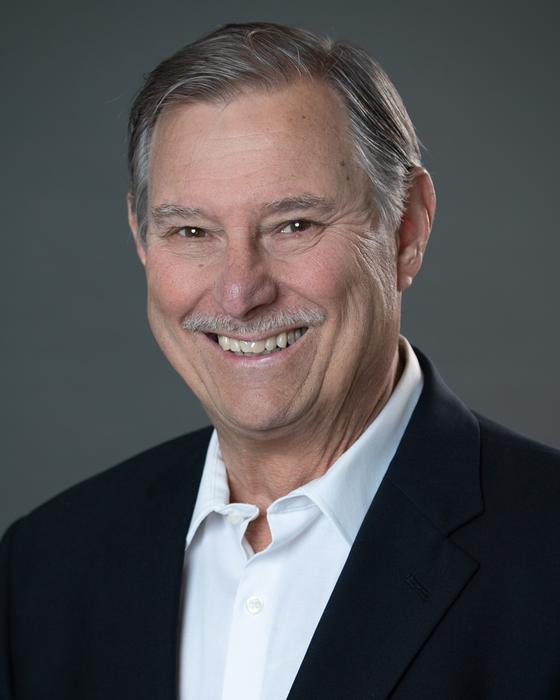
The first Cuban-American to be inducted into the Academy of Sciences in Cuba is a retired Cal Poly biology professor and renowned microbiologist.

Credit: Courtesy Raul Cano
The first Cuban-American to be inducted into the Academy of Sciences in Cuba is a retired Cal Poly biology professor and renowned microbiologist.
In May 2024, Professor Emeritus Raul J. Cano was awarded membership in the Academy’s headquarters in the National Capitol building in Havana.
Cano, who previously received national attention for his work with amber dating back millions of years, has been heavily involved in research and clinical projects in Cuba over the past five years.
Cano partnered with Clinical Hospital Hermanos Ameijeiras in Havana for clinical research in probiotics. Cano has helped form scientific partnerships between American companies and Cuba’s health community, including clinical trials in Cuba that led to the development of a probiotic product called Sugar Shift that’s now commercially available in U.S. and abroad. This probiotic formulation helps Type 2 diabetics in controlling blood sugar levels and improving insulin resistance. The researchers have published several papers based on their clinical trials.
“This honor was based not only on my work in Cuba but also contributions made during my tenure at Cal Poly,” Cano said. “The Academy is more than 500 years old and has a rich history. I’m very happy and honored to be recognized as the first Cuban-American to receive induction.”
Cano, who was born in Cuba, came to the U.S. in 1962 at the age of 16 and went on to a successful career as a microbiologist after being inspired by a teacher at Eastern Washington University. He served as an active faculty member in the College of Science and Mathematics (now Bailey College of Science and Mathematics) at Cal Poly from 1974 to 2005, including a 10-year stint as director of the university’s formerly named Environmental Biotechnology Institute (now the Center for Applications in Biotechnology).
His work with the Environmental Biotechnology Institute included studies with other Cal Poly faculty and students regarding bioremediation to clean up the impacts of oil extraction, as well as development of various tools and practices to address a wide range of environmental concerns, principally soil health and chemical pollution.
During the course of his career, Cano also developed expertise through his studies of fossilized tree resin (known as amber), developing innovative methods to revive ancient bacteria. He explored biomedical applications and even developed his own beer that briefly was marketed commercially under the trademark of Fossil Fuels, using revived ancient yeast dating back 25 million to 45 million years.
Since his retirement from Cal Poly, Cano has sought to help with long-term goals of improving nutrition and quality of life for the Cuban people. His involvement has supported Cuban researchers and medical officials in their collaborative efforts with U.S. corporate partnerships.
Cano said that his initial feeling about returning to Cuba to form scientific partnerships came with mixed feelings and some apprehension.
“I left Cuba when I was a kid, but it was during a very tumultuous time and I didn’t know how the Cuban people and the government would feel about an exile who came back to work with them,” Cano said. “As it turned out, they were very appreciative. I went to the ceremony in Havana, and it was very special.”
Cite Scienmag News
Drew Townsend. (July 30, 2024). Former Cal Poly biological sciences professor first Cuban-American to be inducted into the Academy of Sciences in Cuba. Scienmag. https://scienmag.com/former-cal-poly-biological-sciences-professor-first-cuban-american-to-be-inducted-into-the-academy-of-sciences-in-cuba/
Drew Townsend. "Former Cal Poly biological sciences professor first Cuban-American to be inducted into the Academy of Sciences in Cuba." Scienmag, 30 July 2024, https://scienmag.com/former-cal-poly-biological-sciences-professor-first-cuban-american-to-be-inducted-into-the-academy-of-sciences-in-cuba/. Accessed 4 September 2026.
Drew Townsend. "Former Cal Poly biological sciences professor first Cuban-American to be inducted into the Academy of Sciences in Cuba." Scienmag. July 30, 2024. https://scienmag.com/former-cal-poly-biological-sciences-professor-first-cuban-american-to-be-inducted-into-the-academy-of-sciences-in-cuba/

