


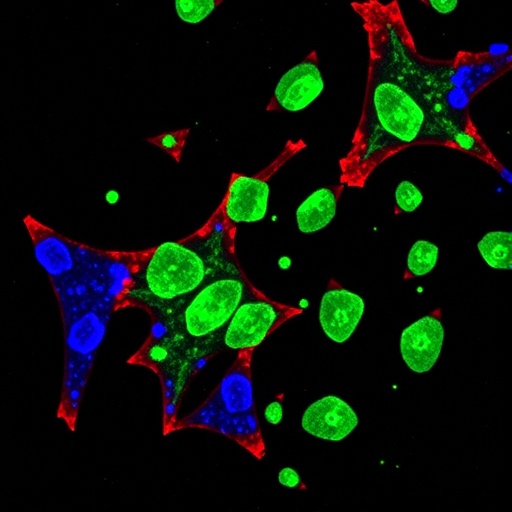
In a groundbreaking study published in 2026, researchers have unveiled a pivotal molecular mechanism that disrupts the differentiation of chondrocytes, the specialized cells essential for cartilage formation. This discovery could significantly alter our understanding of cartilage-related disorders, including osteoarthritis and various developmental abnormalities. The research focuses on miR-205a, a microRNA molecule, and its unexpected role in modulating the expression of CDH11, or Cadherin-11, a cell adhesion protein critically involved in cellular signaling pathways. Their findings reveal that miR-205a suppresses CDH11, consequently interfering with the Wnt/β-catenin signaling pathway, a fundamental cascade for cell fate determination and differentiation.
MicroRNAs have long been recognized as crucial regulators of gene expression at the post-transcriptional level. These small non-coding RNAs fine-tune cellular processes by binding to messenger RNAs and preventing their translation into proteins. In this study, miR-205a emerges not merely as an isolated player but as a key modulator impacting the structural and functional integrity of chondrocytes. The suppression of CDH11 by miR-205a prompted a cascade of molecular disruptions that culminated in impaired chondrocyte differentiation, highlighting a delicate balance maintained by these molecular agents in cartilage biology.
Central to this mechanism is the Wnt/β-catenin signaling pathway, a highly conserved pathway critical for embryogenesis, cell proliferation, and differentiation. CDH11 is intricately linked to this pathway, acting as a crucial mediator of cell-to-cell adhesion and signaling transduction. The researchers demonstrated that miR-205a-induced suppression of CDH11 attenuates the Wnt/β-catenin signaling cascade, leading to faulty chondrocyte maturation. This impairment manifests at the cellular level as altered gene expression profiles necessary for chondrogenesis, underscoring the vital role of CDH11 in maintaining signaling fidelity.
The study employed comprehensive molecular biology techniques to elucidate this novel regulatory axis. Using human chondrocyte cultures alongside in vivo models, the researchers quantified the expression dynamics of miR-205a and CDH11, establishing a definitive inverse correlation. Functional assays substantiated that overexpression of miR-205a significantly diminished CDH11 levels, while miR-205a inhibition restored normal CDH11 expression. Further exploration unveiled that these molecular perturbations translated into defective cartilage formation, a potential precursor to degenerative joint diseases.
What is particularly striking about this research is the identification of miR-205a as a potential therapeutic target. By modulating miR-205a activity, it may be possible to restore proper CDH11 expression and consequently rescue Wnt/β-catenin signaling. This restoration could revitalize chondrocyte differentiation, offering promising avenues for cartilage repair and regeneration strategies. The implications extend beyond basic science, suggesting new molecular interventions for conditions like osteoarthritis, where cartilage degeneration leads to chronic pain and disability.
Moreover, the research sheds light on the complexity of regulatory networks governing cell differentiation. The interplay between microRNAs, adhesion molecules, and signaling pathways illustrates the multifaceted controls ensuring proper tissue architecture and function. Dissecting these interactions provides a more nuanced understanding of how cellular identities are established and maintained, which is crucial for developmental biology and regenerative medicine.
Notably, the disruption of Wnt/β-catenin signaling is a critical event not only in cartilage development but also in various pathological conditions, including cancer and fibrosis. The specific link uncovered here between miR-205a, CDH11, and Wnt/β-catenin adds a new layer of specificity to how this pathway can be deregulated. It reveals a novel regulatory checkpoint where microRNA-mediated modulation of adhesion proteins influences broader signaling mechanisms, with potential ramifications in diverse biological contexts.
The findings also emphasize the importance of CDH11 beyond its conventional role in cell adhesion. As a mediator of intracellular signaling cascades, CDH11 integrates extracellular cues with transcriptional responses necessary for differentiation. The suppression of CDH11 thus represents a critical node of failure in the differentiation process, underscoring its significance as a molecular lynchpin in cartilage biology.
From a methodological perspective, this investigation highlights the power of combining molecular genetics, cell biology, and bioinformatics to unravel complex biological systems. The use of gene editing tools to manipulate miR-205a levels, coupled with advanced imaging and signaling assays, provided robust evidence for the mechanistic model proposed. Such integrative approaches are vital for advancing our grasp of how discrete molecular interactions translate into macroscopic phenotypes.
Furthermore, this research reinforces the concept that microRNAs can have context-dependent effects. While miR-205a has been implicated in various cellular processes and diseases, its specific suppression of CDH11 in chondrocytes opens new avenues for exploring cell-type-specific regulatory mechanisms. It challenges researchers to investigate the diverse roles of microRNAs within distinct microenvironments and developmental stages.
The therapeutic potential emerging from this study is especially compelling given the global burden of cartilage-related disorders. With limited regenerative capacity in cartilage tissue, current treatment options remain largely palliative. Strategies targeting miR-205a to reinstate healthy signaling balance could revolutionize treatments, offering regenerative approaches that address root causes rather than symptoms.
In sum, this landmark study by Liu, Chen, Hou, and colleagues articulates a sophisticated interplay between miR-205a, CDH11, and Wnt/β-catenin signaling that governs chondrocyte differentiation. Their results enrich fundamental knowledge of cartilage biology and open new frontiers for translational medicine. As researchers continue to decode these molecular dialogues, the prospect of repairing damaged cartilage and mitigating degenerative diseases moves closer to reality.
This discovery exemplifies the intricate molecular choreography underpinning tissue development and highlights the endless complexity waiting to be uncovered in cellular biology. By revealing how a microRNA can orchestrate fundamental signaling pathways via adhesive proteins, the work sets a precedent for future investigations into miRNA-mediated regulatory networks impacting health and disease.
Given the ubiquitous involvement of the Wnt/β-catenin pathway in multiple tissues and pathologies, these findings may extend far beyond orthopedic science. Continued research into miR-205a and its targets promises to unveil broader principles of cellular regulation with wide-reaching biomedical implications. For now, the spotlight shines on this elegant mechanism that balances cellular communication and differentiation in cartilage and offers a beacon of hope for regenerating this vital tissue.
Cite Scienmag News
Juliet Wilcox. (May 6, 2026). miR-205a Suppresses CDH11, Halting Chondrocyte Growth. Scienmag. https://scienmag.com/mir-205a-suppresses-cdh11-halting-chondrocyte-growth/
Juliet Wilcox. "miR-205a Suppresses CDH11, Halting Chondrocyte Growth." Scienmag, 6 May 2026, https://scienmag.com/mir-205a-suppresses-cdh11-halting-chondrocyte-growth/. Accessed 4 September 2026.
Juliet Wilcox. "miR-205a Suppresses CDH11, Halting Chondrocyte Growth." Scienmag. May 6, 2026. https://scienmag.com/mir-205a-suppresses-cdh11-halting-chondrocyte-growth/


