


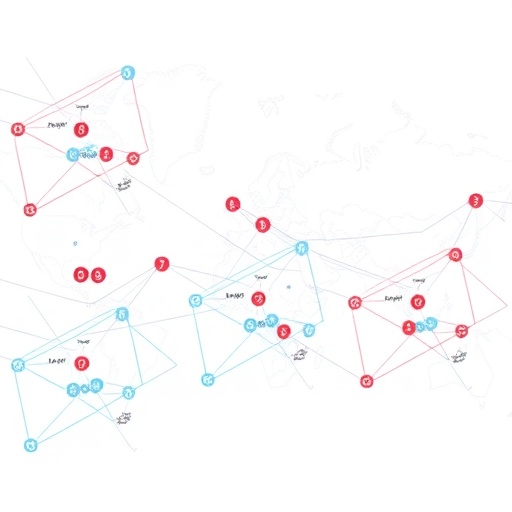
In an era dominated by digital technologies, our global society faces a daunting challenge: the increasingly fragile nature of the interconnected digital systems fundamental to modern life. A groundbreaking new report titled “When digital systems fail: The hidden risks of our digital world” sheds critical light on this vulnerability. This document is the result of a collaborative effort among experts from twelve countries, including authorities, private sector leaders, academics, and international organizations. It meticulously analyzes scenarios where disruptions — from solar storms to submarine cable failures — could wreak havoc on Earth, at sea, and in space, revealing how systemic digital failures threaten essential services across the globe.
The digital infrastructure underpinning healthcare, financial services, emergency responses, and innumerable daily activities is far more brittle than widely recognized. Sophisticated and deeply interdependent, these networks have no straightforward analog fallback, exposing societies to unprecedented systemic risks. This report warns of the possibility of cascading failures—circumstances where a disruption in one domain triggers a domino effect across industries and countries. Such events could escalate into a “digital pandemic,” disrupting not just localized services but global systems on which billions depend.
Among the most alarming risk factors highlighted is the impact of extreme space weather events. Solar storms, characterized by intense eruptions of solar radiation and charged particles, have the potential to incapacitate satellites, distort navigation signals, and induce geomagnetically induced currents that can destabilize terrestrial power grids. Unlike temporary outages we are accustomed to, recovery from these events could extend over months due to the severity of equipment damage and the complexity of restoring satellite constellations vital for communication, GPS, and weather forecasting.
Terrestrial climate extremes further compound these vulnerabilities. Heatwaves, for example, can overburden data centers essential to cloud computing and telecommunication infrastructures, leading to severe outages in mobile networks and internet services. The cascading consequences extend into the critical sectors reliant on these systems: health care providers may struggle to access patient records or emergency services communication lines, and financial institutions could face transactional paralysis. The interplay of environmental stressors and technical fragility underscores an alarming reality: existing infrastructure is often ill-prepared for climate-related stresses.
Simultaneously, natural disasters such as earthquakes pose a significant threat by physically severing submarine internet cables — the backbone of global digital communication. With many cables buried or laid deep on ocean floors, repair operations are complex, expensive, and time-consuming. Prolonged outages can isolate entire nations or regions from the global digital economy and communication networks, exacerbating economic disparities and hindering emergency management responses.
Crucially, the report exposes a lesser-known but equally concerning dimension of vulnerability: our societal dependence on digital systems is unmatched by a retention of analogue skills or fallback options. Once ubiquitous manual systems and offline processes have eroded, leaving an abyss to fill during lengthy outages. This digital dependency creates blind spots in preparedness, where the immediate inability to revert to non-digital methods may escalate crises, amplifying the socio-economic impacts of digital downtime.
The intricacy of these warning signs calls for a paradigm shift in managing digital resilience. Experts argue that resilience cannot be an afterthought but must instead be embedded in the design and operational DNA of all technological systems. This means moving beyond technical fixes toward integrative approaches that consider legal frameworks, disaster risk management, coordinated multi-sector planning, and international cooperation. Only through such holistic strategies can societies hope to mitigate systemic risks inherent in critical digital infrastructure networks.
Policy interventions must evolve rapidly to embrace the systemic nature of digital risks. Recognizing digital infrastructure disruptions as core hazards equally deserving attention alongside traditional disaster risks is imperative. Updating existing legal and regulatory frameworks to encourage investment in robust infrastructure, mandate fallback mechanisms, and foster cross-border collaboration forms a critical foundation for future-proofing. Additionally, incentivizing multi-sector scenario planning will strengthen preparedness, ensuring stakeholders are aligned in managing cascading failures that transcend organizational and national boundaries.
The report further emphasizes the necessity to fortify standards governing critical digital infrastructures such as satellites, submarine cables, and data centers. Enhanced standards must mandate rigorous robustness and fallback capabilities, ensuring essential services can withstand high-impact events. Proactive coordination on threats like space weather and submarine cable vulnerabilities requires global dialogue and action, given that these risks inherently transcend state jurisdictions. International governance frameworks are thus pivotal in orchestrating this collective defense.
Resilience is not just a technical or regulatory issue but a societal one. Building adaptive capacities involves equipping communities, businesses, and institutions with skills, resources, and protocols to maintain continuity amid digital disruptions. This includes fostering public awareness, diversifying communication methods, and integrating resilience training into societal norms. By enhancing societal resilience, the detrimental impact of inevitable digital failures can be mitigated, accelerating recovery and maintaining confidence in critical systems.
Integral to these efforts is fostering trust and collaboration among diverse stakeholders. The multi-faceted nature of digital risk demands coordinated action from governments, industry players, academics, and civil society. This collaboration must nurture shared awareness, accountability, and capacity building. Only through transparent communication and joint stewardship can the global community safeguard digital infrastructures against systemic vulnerabilities that compromise not only technologies but the fabric of modern civilization.
As digital transformation accelerates, this report blazes a crucial trail by codifying knowledge about hidden systemic risks and translating it into actionable guidance. Its evidence-based approach highlights that safeguarding digital ecosystems is not optional but essential to the continued functioning of interconnected societies. Governments and industries alike must heed this alarm, embracing a collective responsibility to modernize risk management, future-proof critical infrastructure, and develop resilience frameworks capable of facing the complex challenges of the digital era.
In summary, “When digital systems fail” underscores a sobering reality: our digital world is perilously exposed to natural hazards, technical failures, and systemic fragilities. Tackling these challenges demands a fusion of innovation, governance, and societal awareness. Systems must be designed for resilience, risk frameworks modernized, and fallback strategies revitalized. Sustained international cooperation and multidisciplinary approaches are non-negotiable for ensuring that digital dependency does not translate into vulnerability — a lesson with urgency as digital technologies become ever more central to survival and prosperity worldwide.
News Publication Date: Not specified.
Web References: https://www.itu.int
Keywords
Digital resilience, systemic risk, solar storms, submarine cables, satellite disruptions, data centers, digital dependency, disaster risk reduction, space weather, telecommunications infrastructure, global cooperation, fallback systems, technological fragility.
Cite Scienmag News
Denise Maddox. (May 5, 2026). Mapping Digital Threats: New Report Reveals Key Vulnerabilities in Global Interconnected Systems. Scienmag. https://scienmag.com/mapping-digital-threats-new-report-reveals-key-vulnerabilities-in-global-interconnected-systems/
Denise Maddox. "Mapping Digital Threats: New Report Reveals Key Vulnerabilities in Global Interconnected Systems." Scienmag, 5 May 2026, https://scienmag.com/mapping-digital-threats-new-report-reveals-key-vulnerabilities-in-global-interconnected-systems/. Accessed 7 September 2026.
Denise Maddox. "Mapping Digital Threats: New Report Reveals Key Vulnerabilities in Global Interconnected Systems." Scienmag. May 5, 2026. https://scienmag.com/mapping-digital-threats-new-report-reveals-key-vulnerabilities-in-global-interconnected-systems/


