


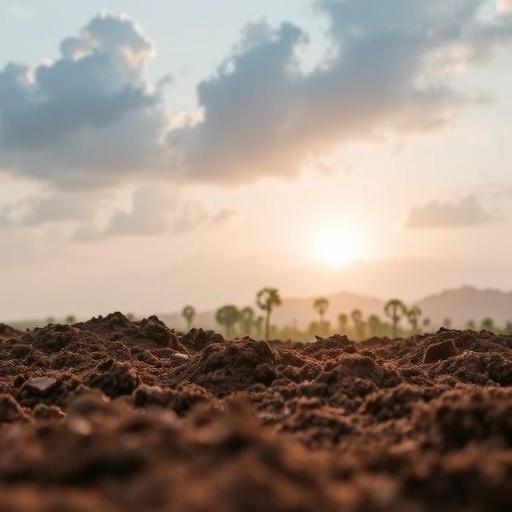
In the lush tapestry of tropical forests where biodiversity thrives and carbon is densely sequestered, a small evergreen tree known as Theobroma cacao holds a special place. Revered as the source of chocolate—the food of the gods, whose very name derives from the Greek words for god (theós) and food (brôma)—this tree has become the center of an urgent agricultural and environmental conversation. Over the past four decades, global demand for chocolate has surged dramatically, prompting an equally pressing need to augment cocoa production worldwide. Isabella Steeley, a doctoral researcher at the University of Sheffield, is diving into innovative solutions to meet this swelling demand without further ravaging tropical ecosystems.
Conventional strategies to increase cacao output often involve expanding plantations by clearing tropical forests, thereby replacing complex, carbon-rich ecosystems with monoculture farms. This practice contributes to biodiversity loss and carbon emissions. However, an alternative path exists: enhancing yields on the already cultivated land. Current average yields for cacao hover around 480 kilograms per hectare, yet theoretical potential suggests these figures could be amplified manifold. Unlocking this latent productivity requires careful intervention and soil management that align with both economic and ecological goals.
Steeley’s pioneering research, soon to be unveiled at the 2026 European Geosciences Union (EGU) General Assembly, investigates the application of enhanced rock weathering (ERW) as a soil amendment technique to boost soil fertility and increase cacao yield in the Atlantic Rainforest region of Brazil. This ecosystem, fragmented and degraded over years of anthropogenic pressure, presents a unique challenge for sustainable agriculture. The research focuses on two distinct cacao cultivation systems: commercial farms that reforest degraded pasturelands with cacao interspersed among shade trees, and the traditional cabruca system, which integrates cacao trees within the remaining native forest understory, thereby conserving more biodiversity at the expense of yield.
In intact tropical forests, nutrient cycling is a finely balanced process. Roots absorb nutrients from the soil while decaying organic matter replenishes it, maintaining soil fertility. When forests are cleared, this cycle is disrupted. Tropical soils, characterized by intense rainfall and warmth, naturally exhibit low nutrient retention due to rapid leaching and acidification. As acidity rises, essential nutrients become less bioavailable and toxic elements, including aluminum and cadmium, become more soluble, hampering plant growth and yield. Such conditions often lead to declining cacao productivity after 20 years or so of cultivation.
Enhanced rock weathering introduces a compelling approach to counteract these soil limitations. By applying finely ground basalt dust—specifically andesitic basalt sourced locally in Brazil—the technique accelerates natural silicate mineral weathering processes. As the rock dust dissolves, it neutralizes soil acidity and releases base cations such as calcium, magnesium, and potassium, essential for plant nutrition. Moreover, the process captures atmospheric carbon dioxide, converting it into stable soil carbonate minerals, thereby offering a dual benefit of mitigation and adaptation in agricultural landscapes.
Preliminary results from the first two years of Steeley and her colleagues’ three-year study reveal significant soil improvements, particularly in commercial cacao plantations where reforestation occurs on degraded pasturelands. These ameliorations suggest an opportunity to reconnect fragmented rainforest patches while enhancing agricultural productivity. The cabruca systems, despite their lower productivity, demonstrate promising carbon sequestration potential through ERW. Steeley’s group has developed novel quantification methods to determine the extent of rock dust weathering, enabling accurate calculation of carbon sequestered within these soils.
Intriguingly, early data indicate that cabruca soils may sequester more atmospheric CO₂ than commercial farms through enhanced rock weathering, implying that smallholder farmers engaged in traditional agroforestry could monetize carbon credits. This potential creates a unique incentive structure whereby environmental stewardship and economic gain could synergize, supporting rural livelihoods and fostering sustainable land management. Given that most cacao production occurs on farms smaller than 50 hectares, such co-benefits could have transformative impacts within local communities.
Collaboration with local farmers and agronomists lies at the heart of this research. Steeley emphasizes the collective nature of the endeavor, highlighting farmer enthusiasm for innovative practices that safeguard their income while enhancing ecological sustainability. This inclusive approach ensures that scientific advancements translate into practical, scalable solutions tailored to the socio-economic realities of cacao-producing regions.
The challenges of tropical soil fertility are compounded by climatic factors, but enhanced rock weathering offers a geochemical pathway to rehabilitate degraded landscapes. By increasing soil pH and nutrient availability, this method holds promise for reversing yield declines typical in long-term cacao cultivation. Sustainability in cocoa production, therefore, does not merely hinge on avoiding deforestation but also on revitalizing existing farmlands through scientifically informed interventions.
At the upcoming EGU General Assembly 2026, Steeley will present these compelling findings during Session SSS5.6 on May 5, offering insights into how geoscientific advances can contribute to sustainable agriculture and climate mitigation. Her work bridges multiple disciplines, from soil chemistry and geochemistry to agroforestry and carbon cycle science, exemplifying integrated approaches necessary to address complex environmental challenges.
The implications extend beyond cocoa farming. Enhanced rock weathering presents a scalable, nature-based solution applicable to various tropical and subtropical agroecosystems struggling with soil acidification and nutrient depletion. It also aligns with global efforts to achieve carbon neutrality by enhancing terrestrial carbon sinks while sustaining food security.
In sum, Steeley’s research underscores a paradigm shift in tropical agriculture wherein ancient geological processes are harnessed to forge resilient, productive, and carbon-beneficial farming systems. As demand for cacao and other tropical commodities intensifies, such innovations offer a beacon of hope for conserving biodiversity, mitigating climate change, and uplifting rural livelihoods, all crucial goals in the Anthropocene epoch.
News Publication Date: Not specified.
Web References: European Geosciences Union General Assembly 2026 session page: https://meetingorganizer.copernicus.org/EGU26/session/57859
Cite Scienmag News
Alan Morgan. (May 5, 2026). Saving Chocolate and Restoring Rainforests: How Rock Dust Enhances Soil Nutrition and Empowers Farmers. Scienmag. https://scienmag.com/saving-chocolate-and-restoring-rainforests-how-rock-dust-enhances-soil-nutrition-and-empowers-farmers/
Alan Morgan. "Saving Chocolate and Restoring Rainforests: How Rock Dust Enhances Soil Nutrition and Empowers Farmers." Scienmag, 5 May 2026, https://scienmag.com/saving-chocolate-and-restoring-rainforests-how-rock-dust-enhances-soil-nutrition-and-empowers-farmers/. Accessed 4 September 2026.
Alan Morgan. "Saving Chocolate and Restoring Rainforests: How Rock Dust Enhances Soil Nutrition and Empowers Farmers." Scienmag. May 5, 2026. https://scienmag.com/saving-chocolate-and-restoring-rainforests-how-rock-dust-enhances-soil-nutrition-and-empowers-farmers/


