


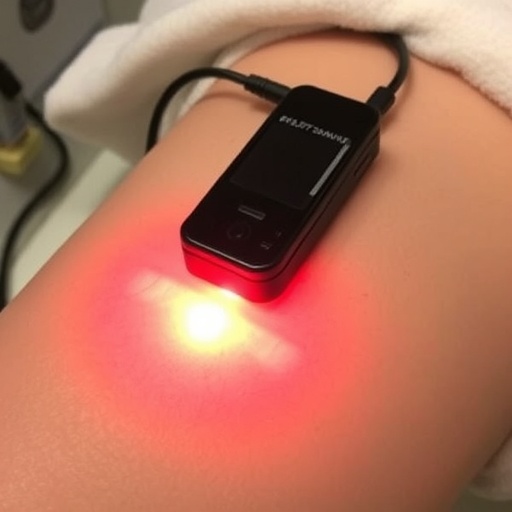
In a groundbreaking advancement that could revolutionize the way we approach wound healing, researchers have introduced an innovative, inertia-driven, self-powered electrotherapy device designed to accelerate and enhance the complex process of tissue regeneration. This new technology, documented by Lee, HM., Kim, J.H., Lee, H.K., and their colleagues in the upcoming 2026 issue of npj Flexible Electronics, marks a significant leap forward from conventional wound treatment methodologies, blending cutting-edge materials science with biomechanics to harness natural human movements as a therapeutic power source.
The approach centers on a flexible electronic system capable of converting the mechanical energy generated through everyday motions into electrical stimulation directly applied to the wound site. This novel inertia-driven mechanism eschews the need for external power supplies or batteries, providing a truly self-sufficient and portable solution that can continuously facilitate wound repair while the patient goes about normal activities. By seamlessly integrating with the body’s own kinetic energy, this device ensures consistent, controlled electrotherapy that optimizes cellular behavior and tissue remodeling.
Wound regeneration is inherently complex, relying on a well-orchestrated cascade of biological responses including inflammation, cell proliferation, and extracellular matrix remodeling. Electrotherapy, the application of electrical currents to promote healing, has been shown to modulate these processes effectively, yet practical limitations have hindered its widespread adoption. Traditional electrotherapy devices often require cumbersome equipment and external power connections, limiting patient compliance and mobility. The innovative system devised by Lee and colleagues transforms this landscape by providing a lightweight, flexible patch that adheres to the skin and autonomously generates therapeutic currents.
The key innovation lies in the device’s inertia-driven power generation unit, which incorporates advanced piezoelectric and triboelectric materials arranged within a flexible substrate. As the user moves—walking, bending, or even subtle motions—the mechanical deformation triggers electrical output. This output is meticulously calibrated to stimulate cellular activities known to accelerate wound closure and reduce infection risk. Notably, the electrical signals mimic natural bioelectrical cues observed in healthy tissue repair processes, offering a biomimetic avenue to enhance healing efficacy.
Beyond its power innovation, the device boasts remarkable flexibility and biocompatibility. The materials used are engineered to conform to irregular skin surfaces without causing irritation or discomfort, ensuring prolonged wearability. The researchers employed polydimethylsiloxane (PDMS) combined with nanostructured conductive polymers, achieving a delicate balance between mechanical durability and electrical performance. This flexibility is pivotal, as it allows the system to remain functional across diverse body regions and anatomical curvatures, expanding the scope of potential clinical applications.
The therapeutic advantages of this technology were rigorously evaluated through a series of in vitro and in vivo experiments. Cellular assays demonstrated that the stimulated electric fields enhanced keratinocyte migration and fibroblast proliferation—two critical cellular activities in the wound healing cascade. In animal models with induced dermal wounds, treatment with the inertia-powered device markedly accelerated the closure rate compared to untreated controls, with histological analyses revealing more organized tissue architecture and reduced scar formation.
Delving deeper into the mechanism of action, the researchers uncovered that electrotherapy provided by their system modulates ion channels and growth factor expression within the wound microenvironment. Specifically, the electric fields influenced calcium ion influx, a known secondary messenger in wound signaling pathways, promoting angiogenesis and collagen synthesis. This multifaceted biological impact underscores how engineering physiology-inspired electrical stimulation can tap into endogenous healing potential and bypass limitations of pharmacological interventions.
Another remarkable benefit is the system’s sustainability and patient-centric design. By eliminating dependence on conventional batteries or wired power sources, it not only reduces environmental burden but also enhances convenience and compliance. Patients undergoing therapy are free to move naturally throughout daily routines without interruption or inconvenience, which has been a significant barrier in existing electrotherapy practices. This aspect could transform outpatient wound management and even enable remote monitoring integration.
Furthermore, the device’s modular construction and compatibility with wireless data transmission open avenues for future enhancements in personalized medicine. Incorporating sensors that monitor wound status, moisture, and temperature could enable real-time feedback and dynamic modulation of the therapeutic current, tailoring treatment protocols to individual healing trajectories. Lee and his team envision this as a platform technology with significant flexibility to evolve alongside advances in wearable biosensing and telemedicine.
Scaling this technology from lab to clinical settings poses unique challenges, including regulatory approvals, large-scale manufacturing, and robustness under diverse real-world conditions. Yet, the initial demonstrations provide strong evidence of feasibility and reliability in conditions simulating human activities over extended periods. Collaborative efforts with biomedical device companies and clinical research groups are underway to initiate human trials, expecting to validate safety, usability, and therapeutic efficacy further.
The implications extend beyond chronic wound care into broader domains such as rehabilitation following surgery, diabetic ulcers, burns, and even cosmetic applications aimed at minimizing scarring. By leveraging the intrinsic relationship between mechanical motion and electrical stimuli in biology, the inertia-driven electrotherapy marks a paradigm shift towards synergistic, self-sustaining medical devices that integrate seamlessly into patients’ lives.
Moreover, the interdisciplinary nature of the project—uniting materials science, electrical engineering, biophysics, and regenerative medicine—exemplifies how modern science tackles complex healthcare problems. The team’s innovative approach points towards a future where wearable devices not only passively record health metrics but actively participate in therapeutic processes, ushering in a new era of smart, autonomous bioelectronic medicine.
In summary, the inertia-driven, self-powered electrotherapy device unveiled by Lee and colleagues stands poised to redefine wound care by transforming every step taken by the patient into a source of healing energy. Its flexible architecture, biomimetic electrical stimulation, and patient-tailored design collectively create an elegant solution to longstanding clinical challenges. As this technology advances towards human applications, it promises to enhance recovery, reduce healthcare costs, and improve quality of life for millions affected by chronic wounds worldwide.
The trailblazing research reported in npj Flexible Electronics not only offers a tangible solution but also inspires further innovation at the intersection of wearable electronics and regenerative therapies. By harnessing the body’s own movement to power healing, the study opens the door to a new class of medical devices that blend physics, biology, and engineering in unprecedented ways. Such advancements underscore the transformative potential of integrating smart, self-powered devices into everyday healthcare.
Looking ahead, the continued evolution of materials with enhanced piezoelectric and triboelectric properties, combined with advances in flexible electronics and biointerfaces, will expand the capabilities and applications of inertia-driven therapies. As data-driven personalized medicine becomes mainstream, devices like this could automatically adjust stimulation parameters based on sensor inputs, offering dynamic, responsive care for diverse patient needs. The prospect of real-time wound healing optimization, powered by nothing more than the wearer’s own motions, marks a visionary step into the future of medical technology.
In conclusion, this pioneering electrotherapy represents a critical milestone in wound regeneration science and regenerative medicine technology. By effectively merging biomechanical energy harvesting with targeted electrical stimulation, Lee, Kim, Lee, and their team have introduced a next-generation modality that could help millions heal faster and better. Their work exemplifies the powerful synergy created when interdisciplinary innovation meets pressing medical challenges, illuminating a path towards smarter, sustainable, and more effective therapeutic solutions driven entirely by the human body itself.
Cite Scienmag News
Denise Maddox. (May 4, 2026). Self-Powered Electrotherapy Boosts Wound Healing. Scienmag. https://scienmag.com/self-powered-electrotherapy-boosts-wound-healing/
Denise Maddox. "Self-Powered Electrotherapy Boosts Wound Healing." Scienmag, 4 May 2026, https://scienmag.com/self-powered-electrotherapy-boosts-wound-healing/. Accessed 3 September 2026.
Denise Maddox. "Self-Powered Electrotherapy Boosts Wound Healing." Scienmag. May 4, 2026. https://scienmag.com/self-powered-electrotherapy-boosts-wound-healing/


