


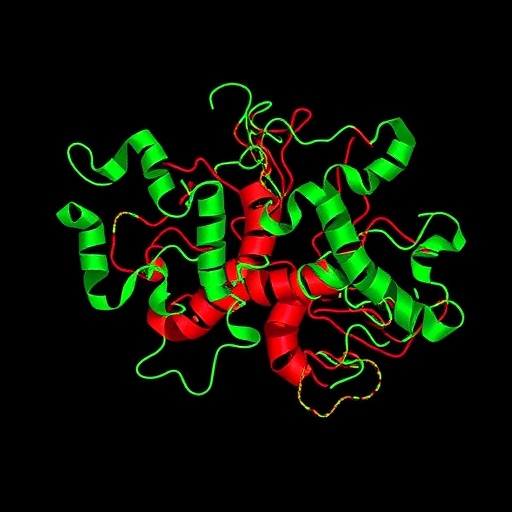
In a groundbreaking advancement in pediatric oncology, researchers have unveiled novel insights into neuroblastoma, a malignancy that stands as one of the most prevalent solid tumors in children. Neuroblastoma’s complexity and aggressive nature have long challenged clinicians and scientists alike, compounded by its heterogeneous genetic and epigenetic landscape. One of the pivotal areas driving this tumor’s progression is the aberrant regulation of DNA methylation, a biochemical process integral to gene expression control. Recent findings illuminate how specific DNA methyltransferases contribute to neuroblastoma’s malignant properties, opening new avenues for targeted therapy.
Epigenetics, the study of heritable changes in gene function that do not involve alterations in the DNA sequence itself, has emerged as a critical frontier in cancer biology. Among the epigenetic modifications, DNA methylation exerts a powerful influence over the activation and silencing of genes, significantly affecting tumor suppressor genes. In many cancers, including neuroblastoma, these tumor suppressor genes become inactivated through hypermethylation of their promoter regions, thereby facilitating unchecked cell proliferation and survival.
Traditional DNA methyltransferase inhibitors (DNMTis) have offered some promise in reversing this silencing effect, yet their clinical translation has been marred by two substantial barriers—therapeutic inadequacy and high toxicity. Conventional DNMTis broadly inhibit multiple DNA methyltransferases, which can lead to off-target effects and significant adverse reactions in young patients. Hence, the quest has been to identify more selective inhibitors that can precisely disrupt the epigenetic drivers of neuroblastoma without compromising patient safety.
In a pivotal study recently published in Pediatric Research, Izumi and colleagues have spotlighted the critical role of DNMT3B, a member of the DNA methyltransferase family, in promoting neuroblastoma cell proliferation and survival. Unlike the other DNMTs, DNMT3B appears to wield a more prominent influence in maintaining the oncogenic epigenetic landscape of neuroblastoma. This discovery pivots away from generalized inhibition towards a precision medicine approach that specifically targets DNMT3B.
The team’s methodology involved a series of meticulous in vitro experiments, where neuroblastoma cells treated with DNMT3B-specific inhibitors demonstrated significantly reduced growth and enhanced apoptosis, the process of programmed cell death. The reduction in tumor cell viability suggests that DNMT3B is not merely a passive marker but actively sustains the malignant phenotype. This is a crucial finding, as it provides a direct molecular target within the epigenetic machinery that can be exploited therapeutically.
Beyond the cellular assays, the study delved into the intricate mechanisms by which DNMT3B exerts its effects. DNMT3B is responsible for de novo DNA methylation, establishing new methyl groups on DNA that can silence genes pivotal to cellular differentiation and apoptosis. In neuroblastoma, this functionality means that DNMT3B perpetuates a stem-like, undifferentiated state associated with aggressive tumor behavior. By inhibiting DNMT3B, the study found there is a partial reversal of this epigenetic silencing, reactivating essential tumor suppressor pathways.
This precision-targeted inhibition model confronts one of the most challenging aspects of pediatric cancer therapy: the balance between efficacy and toxicity. Given the delicate physiology of children, treatment paradigms must minimize long-term side effects. The selective targeting approach championed by the study proposes a therapy with potentially fewer off-target impacts, reducing systemic toxicity and improving quality of life during and after treatment.
The implications extend beyond neuroblastoma alone. DNMT3B has been implicated in the epigenetic regulation of several other malignancies, suggesting that the development of specific DNMT3B inhibitors could herald a new class of epigenetic therapies. These therapies promise to refine the cancer treatment arsenal, integrating molecular precision with epigenetic reprogramming strategies.
Moreover, understanding the role of DNMT3B enhances the broader comprehension of tumor biology. Epigenetic plasticity allows cancer cells to adapt swiftly to environmental pressures, including therapeutic interventions. Disrupting key methyltransferases like DNMT3B could thus undermine the tumor’s ability to develop resistance, prolonging therapeutic responses and potentially improving long-term survival outcomes.
The research community is also now tasked with translating these laboratory findings into clinical contexts. Challenges remain, from optimizing inhibitor delivery and pharmacokinetics to assessing long-term impacts in pediatric populations. Nonetheless, the clarity of DNMT3B as a therapeutic target represents a paradigm shift in how DNA methylation can be modulated to combat cancer.
Alongside targeted therapy, the integration of epigenetic drugs into existing treatment regimens holds promise to amplify anti-tumor effects. Combining DNMT3B inhibition with chemotherapy, immunotherapy, or differentiation agents may produce synergistic effects, enhancing cell death and suppressing tumor relapse. This multimodal approach requires rigorous clinical trials but is underscored by this new mechanistic foundation.
The study’s insights also reverberate through the broader field of cancer research, underscoring the importance of dissecting epigenetic heterogeneity within tumors. Personalized medicine strategies can now incorporate epigenetic profiling of individual tumors, tailoring treatments based on the unique DNA methylation signatures influenced by enzymes like DNMT3B. This can lead to more precise prognostic tools as well.
In conclusion, the investigation by Izumi et al. marks a significant breakthrough in the fight against neuroblastoma. By elucidating the oncogenic role of DNMT3B and demonstrating the therapeutic impact of its inhibition, the research advances a new frontier in epigenetic cancer therapy. This approach holds the promise of more effective, less toxic treatments for children afflicted by this challenging disease, and potentially, a roadmap for similar strategies across other cancers.
As the scientific community continues to unravel the epigenetic intricacies of cancer, targeting specific DNA methyltransferases like DNMT3B offers a beacon of hope. It paves the way for therapies that do not merely attack cancer cells indiscriminately but reprogram their fundamental gene expression networks, shifting the battle against tumor growth and survival onto a novel, more controllable axis.
The future of neuroblastoma therapy may thus lie in the precision epigenetic targeting uncovered here—ushering in an era where childhood cancers are not only treatable but manageable with minimal harm. The challenge now is to translate these findings from bench to bedside, bringing transformative treatment options to our youngest patients.
Cite Scienmag News
Juliet Wilcox. (April 30, 2026). DNMT3B Drives Neuroblastoma Growth, Its Inhibition Fights Tumors. Scienmag. https://scienmag.com/dnmt3b-drives-neuroblastoma-growth-its-inhibition-fights-tumors/
Juliet Wilcox. "DNMT3B Drives Neuroblastoma Growth, Its Inhibition Fights Tumors." Scienmag, 30 April 2026, https://scienmag.com/dnmt3b-drives-neuroblastoma-growth-its-inhibition-fights-tumors/. Accessed 1 September 2026.
Juliet Wilcox. "DNMT3B Drives Neuroblastoma Growth, Its Inhibition Fights Tumors." Scienmag. April 30, 2026. https://scienmag.com/dnmt3b-drives-neuroblastoma-growth-its-inhibition-fights-tumors/


