


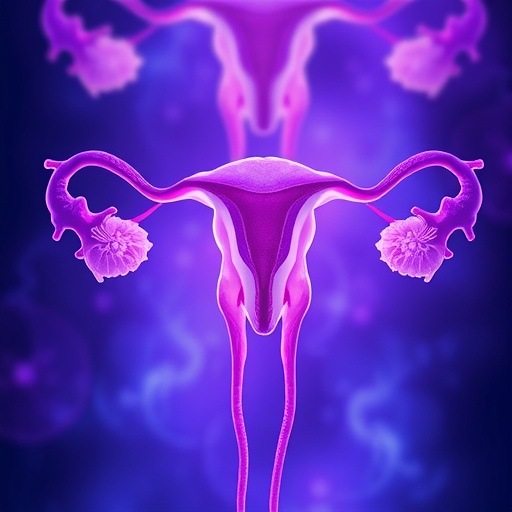
Advancing fertility preservation methods has immense significance, particularly for children and adolescents undergoing cancer treatments. A groundbreaking study led by Brazilian researchers at the University of São Paulo’s Medical School (FM-USP) presents a novel approach to enhance the success of autologous ovarian tissue transplantation. This method integrates melatonin delivery through an absorbable scaffold sponge, substantially improving graft viability—a crucial breakthrough in reproductive medicine.
Autologous ovarian tissue transplantation is a pivotal technique developed to preserve fertility in patients who face the gonadotoxic effects of chemotherapy and radiation. Unlike traditional fertility preservation methods, this protocol does not require hormonal stimulation or egg retrieval, making it viable for prepubescent patients and those requiring immediate cancer treatment without delay. The procedure involves excision and cryopreservation of ovarian fragments, which are later transplanted back to restore endocrine function and fertility.
The key innovation of this study lies in the application of melatonin, a compound acclaimed for its robust antioxidant and anti-apoptotic properties. Melatonin’s role as a regulator of cellular health has been extensively studied, but its targeted delivery via an absorbable sponge represents an unprecedented advancement. This method circumvents the invasive nature of prior approaches and optimally protects ovarian follicles during the vulnerable avascular grafting phase.
To experimentally evaluate this approach, researchers employed a well-established rat model involving ovariectomy followed by freezing and thawing of ovarian tissue. The tissue was transplanted autologously to an ectopic site—the abdominal cavity over the psoas muscle—without vascular anastomosis, closely mimicking clinical autografting conditions. This setup allowed for precise assessment of graft survival and function under controlled settings.
Two distinct groups were analyzed: a control group receiving sponges soaked in culture medium alone, and an experimental group treated with melatonin-laden absorbable sponges. Over a 30-day observation period, the rats’ estrous cycles were meticulously monitored through daily vaginal smears, providing functional evidence of graft viability and ovarian activity. The detailed histological and molecular analyses conducted after graft retrieval offered insights into tissue remodeling and cellular dynamics.
Results were compelling; melatonin treatment significantly enhanced revascularization and decreased programmed cell death in the corpus luteum, a transient yet essential ovarian structure responsible for hormone production post-ovulation. Notably, these improvements occurred without concomitant increases in fibrosis or inflammation, factors that typically compromise graft functionality and longevity.
This study represents a leap forward in fertility preservation pharmaceuticals, underscoring the therapeutic potential of localized antioxidant administration. It highlights the significance of scaffold-based delivery systems for bioactive compounds, optimizing their bioavailability and protective actions within transplanted tissues. The researchers’ strategy promises to extend graft survival times and improve outcomes for patients who currently have limited reproductive options.
The clinical implications for cancer survivors are profound. Restoring ovarian function post-chemotherapy not only revives fertility but also reinstates hormonal balance, attenuating the premature onset of menopause and its associated comorbidities. Moreover, this method offers an avenue tailored to pediatric oncology, where conventional fertility preservation modalities are infeasible.
Further investigations are essential to translate these encouraging preclinical results to human subjects. Research must focus on scalability, long-term safety, and efficacy across diverse patient populations. Parallel studies exploring other regenerative agents combined with melatonin could unveil synergistic effects, expanding the therapeutic arsenal for ovarian tissue graft optimization.
This interdisciplinary research, backed by Fundação de Amparo à Pesquisa do Estado de São Paulo (FAPESP), exemplifies the power of international scientific collaboration. It integrates cutting-edge biomaterials science with reproductive biology, setting a precedent for future innovations in organ and tissue transplantation technologies.
Overall, the utilization of melatonin via scaffold-mediated delivery embodies a paradigm shift in managing fertility preservation challenges. By safeguarding ovarian grafts against ischemic damage and cellular apoptosis, this method has the potential to transform the reproductive futures for cancer survivors worldwide. As research progresses, it may soon become a standard adjunct to ovarian autografting protocols.
Cite Scienmag News
Nathaniel Bowman. (April 30, 2026). Study Finds Melatonin Enhances Success of Autologous Ovarian Tissue Transplantation. Scienmag. https://scienmag.com/study-finds-melatonin-enhances-success-of-autologous-ovarian-tissue-transplantation/
Nathaniel Bowman. "Study Finds Melatonin Enhances Success of Autologous Ovarian Tissue Transplantation." Scienmag, 30 April 2026, https://scienmag.com/study-finds-melatonin-enhances-success-of-autologous-ovarian-tissue-transplantation/. Accessed 2 September 2026.
Nathaniel Bowman. "Study Finds Melatonin Enhances Success of Autologous Ovarian Tissue Transplantation." Scienmag. April 30, 2026. https://scienmag.com/study-finds-melatonin-enhances-success-of-autologous-ovarian-tissue-transplantation/


