


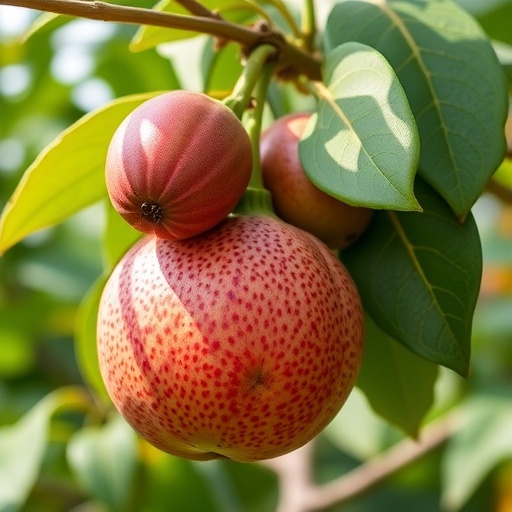
Why do some plants produce small, dry fruits, while others develop large, fleshy ones? This seemingly simple question delves into complex biological, ecological, and evolutionary processes that influence fruit morphology across angiosperms. Fruit volume is a critical trait that directly impacts seed dispersal mechanisms, plant survival, and the ability to establish new populations. Despite its significant ecological role, the drivers behind the wide variation in fruit volume on a large, cross-species scale have remained elusive. A recent comprehensive study led by researchers in China provides groundbreaking insights into these underlying factors, shedding light on how evolutionary history, plant functional traits, and climate interplay to shape fruit volume across diverse Chinese flowering plant species.
In a sweeping analysis encompassing 2,668 angiosperm species sampled from 22 distinct ecological stations across China—including forests, grasslands, wetlands, and arid deserts—researchers integrated phylogenetic frameworks, detailed plant trait datasets, and climate variables. This integrative approach allowed them to dissect the relative contributions of evolutionary lineage versus environmental pressures in determining fruit volume. Their rigorous statistical analyses uncovered that evolutionary history exerts an overwhelmingly dominant influence on fruit volume patterns across species. Specifically, the evolutionary relationships among species accounted for approximately 64.7% of the explained variation in fruit size, pointing toward deep phylogenetic constraints that govern trait expression.
This finding implies that closely related species tend to inherit similar fruit sizes from their common ancestors, reflecting strong phylogenetic signal in this functional trait. Such a pattern underscores the importance of evolutionary legacy as a baseline determinant for fruit morphology. However, the researchers also noted that this influence is not static; it fluctuates in response to environmental gradients, particularly temperature regimes. As ambient temperatures increase, the strength of evolutionary constraints on fruit volume tends to attenuate, signaling that climate modulates the extent to which phylogenetic heritage dictates plant traits.
More precisely, the study identified that the maximum temperature of the warmest month in a given habitat serves as a key modulator of the evolutionary imprint on fruit volume. In hotter regions, the association between phylogenetic relatedness and fruit size weakens, suggesting that environmental filtering and species turnover begin to reconfigure trait distributions beyond ancestral constraints. Rather than completely overriding evolutionary legacies, climatic factors appear to adjust the expression of fruit volume by influencing local community assembly processes. This nuanced modulation highlights a dynamic interplay where both historical and contemporary forces shape plant functional diversity.
Interestingly, the researchers found divergent responses between dry-fruited and fleshy-fruited species. Dry-fruited plants showed a more pronounced decline in the importance of evolutionary history when exposed to warmer environments. This could be explained by the greater ecological flexibility or adaptive capacity of dry fruits in response to thermal stress. In contrast, fleshy-fruited species exhibited either a maintained or even heightened influence of phylogenetic history under warmer climatic conditions. This contrasting pattern reflects different ecological strategies possibly linked to dispersal syndromes, resource allocation, or biotic interactions that differentially affect dry and fleshy fruits along temperature gradients.
The study offers compelling evidence that evolutionary constraints on fruit traits are malleable rather than rigid, modulated by present-day environmental contexts. This represents a significant advance in our understanding of trait evolution and plant adaptation, revealing that fruit volume is shaped by a persistent evolutionary groundwork that environmental variables can either reinforce or relax. Such insights are critical for predicting how plant communities will respond to accelerating climate change, particularly as rising temperatures may reshape trait distributions and thereby impact ecosystem functions.
By demonstrating that fruit volume variation is orchestrated by a balance between phylogenetic heritage and climate-driven ecological processes, this research provides a more integrated framework for studying plant functional diversity. It emphasizes the need to consider both lineage-specific trait conservatism and environmental plasticity to accurately forecast species responses to changing habitats. Furthermore, the differential responses of dry- and fleshy-fruited plants underscore the importance of trait-specific analyses when modeling biodiversity and ecosystem resilience under global change scenarios.
The methodological approach of combining large-scale phylogenetic datasets with diverse environmental variables and rigorous statistical modeling sets a new standard in plant trait ecology. It allows disentangling complex causative factors underlying phenotypic diversity at broad geographic and taxonomic scales. This approach could be extended to other functional traits beyond fruit volume, thus enhancing our comprehension of evolutionary ecology across plant lineages and ecosystems.
Lead author Bo Wang highlights that their findings refine the long-standing perspective on plant trait evolution. “Our results show that the blueprint for fruit size is primarily etched by evolutionary history,” Wang remarks, “but environmental conditions intricately sculpt how this evolutionary signature manifests within communities.” This conceptual framework underscores the layered complexity of trait development, where inherited genetic architecture and real-time ecological pressures continually interact.
The implications of this study resonate beyond academic inquiry. Understanding the mechanisms governing fruit volume aids in deciphering seed dispersal dynamics, species distribution patterns, and community structure. Moreover, it offers practical insights into managing biodiversity and conservation strategies amid shifting climates. As plant traits mediate critical ecosystem services, unraveling their evolutionary and climatic determinants becomes imperative for sustaining ecosystem health and function.
In sum, this research marks a key step forward in elucidating the drivers of a fundamental plant functional trait at continental scales. It offers a nuanced narrative that integrates macroevolutionary history with local environmental variability, enhancing predictive models of plant adaptation and biodiversity under future climatic scenarios. As climate change accelerates, such insights into the dynamic interplay between evolutionary legacy and environmental modulation will prove vital for both science and conservation.
Web References: http://dx.doi.org/10.1016/j.pld.2026.03.010
Cite Scienmag News
Gavin Prescott. (April 30, 2026). Evolutionary History Influences Fruit Size, with Climate Affecting Its Impact. Scienmag. https://scienmag.com/evolutionary-history-influences-fruit-size-with-climate-affecting-its-impact/
Gavin Prescott. "Evolutionary History Influences Fruit Size, with Climate Affecting Its Impact." Scienmag, 30 April 2026, https://scienmag.com/evolutionary-history-influences-fruit-size-with-climate-affecting-its-impact/. Accessed 3 September 2026.
Gavin Prescott. "Evolutionary History Influences Fruit Size, with Climate Affecting Its Impact." Scienmag. April 30, 2026. https://scienmag.com/evolutionary-history-influences-fruit-size-with-climate-affecting-its-impact/


