


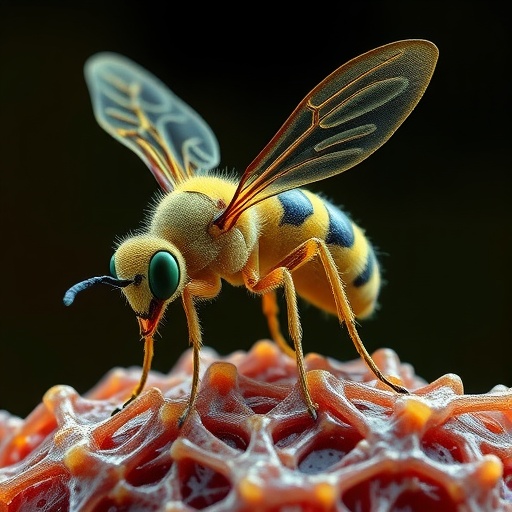
The ancient soil microbes known as Streptomyces have long been celebrated for their ability to produce a myriad of antibiotics, contributing fundamentally to modern medicine. However, a groundbreaking study published in Nature Microbiology reveals a surprising new facet of these prolific bacteria: the production of a diphtheria toxin-like exotoxin that specifically targets insects. This discovery not only broadens our understanding of bacterial toxin evolution but also opens exciting avenues for biological pest control, potentially revolutionizing approaches to managing agricultural pests with far greater specificity and environmental safety.
For decades, Streptomyces species have been the workhorses of antibiotic discovery, responsible for blockbuster drugs such as streptomycin and tetracycline. Yet, their ecological roles extend beyond antibiotic production. These filamentous bacteria inhabit complex soil ecosystems, where competition for resources is fierce. It is within this context that the newly identified diphtheria toxin homolog appears to function as a potent molecular weapon against insect adversaries, reflecting an evolutionary strategy previously unexpected for Streptomyces.
The study, led by Xu, Stubbendieck, Viswanatha, and colleagues, employed sophisticated genomic and proteomic techniques to identify a toxin gene cluster in select Streptomyces strains. Detailed bioinformatics analysis indicated that this gene cluster encodes a protein remarkably similar in structure and function to the celebrated diphtheria toxin produced by Corynebacterium diphtheriae. However, unlike the human-targeted diphtheria toxin, this exotoxin’s molecular architecture is fine-tuned to disrupt essential biological pathways in insects.
Through intricate biochemical assays, the researchers demonstrated that the Streptomyces-derived exotoxin inhibits eukaryotic protein synthesis by ADP-ribosylating elongation factor 2—a hallmark activity shared with diphtheria toxin. Yet, the specificity of this biochemical attack is uniquely directed towards insect EF-2 variants, ensuring lethal efficacy without harming surrounding non-target organisms. Such exquisite target selectivity is revolutionary because current insecticides often lack fine molecular discrimination, resulting in collateral damage to beneficial insects and broader ecosystems.
Functional analyses extended to insect bioassays confirmed the exotoxin’s potent insecticidal activity. Larvae exposed to purified toxin exhibited rapid paralysis and mortality within hours, indicating a swift mode of action consistent with disruption of cellular protein synthesis. Moreover, mutants of Streptomyces deficient in the toxin gene cluster showed significantly diminished lethality toward insect pests, providing compelling evidence for the toxin’s pivotal ecological role in bacterial defense strategies.
The evolutionary implications of this toxin production are profound. The research team hypothesizes that horizontal gene transfer events may have facilitated the acquisition of this diphtheria toxin-like gene cluster by certain Streptomyces species, enabling them to carve out a novel ecological niche as insect antagonists. This contrasts with the traditional concept of Streptomyces solely deploying antibiotic mechanisms against bacterial rivals. The toxin’s presence may represent an evolutionary bridge that connects microbial warfare with higher eukaryotic predation.
From an applied science perspective, these findings herald a paradigm shift in sustainable agriculture. Harnessing this naturally evolved toxin could lead to the development of precision bioinsecticides with minimal environmental footprint. Unlike conventional chemical pesticides, which often accumulate persistence and toxicity issues, bioinsecticides derived from Streptomyces toxins promise species-specific targeting, thereby preserving beneficial insects such as pollinators and natural predators.
The molecular characterization of the toxin’s mode of action also offers exciting prospects for protein engineering. By dissecting the structural elements that confer insect specificity, synthetic biologists could design tailored exotoxin variants to combat emerging pest species resistant to existing methods. Furthermore, delivery systems leveraging Streptomyces-based formulations might provide living factories that continuously secrete these insecticidal proteins in situ, reducing the need for repeated applications and lowering costs.
Notably, safety assessments are crucial as the researchers endeavor to ensure that this promising bioinsecticide poses no hazard to humans, livestock, or non-target wildlife. Initial tests show a high degree of specificity to insect elongation factor 2, with no apparent effects on mammalian or plant homologs. However, comprehensive toxicological profiling under diverse environmental conditions will be imperative to address regulatory demands and public concerns.
The investigation also sheds light on broader ecological dynamics within soil microbiomes. By deploying protein exotoxins that incapacitate insects, Streptomyces species possibly influence insect population dynamics and soil food webs, contributing to ecosystem balance. Such microbial-insect interactions underscore the complexity and interconnectedness of soil habitats, inviting future explorations into how microbial natural products shape terrestrial ecosystems.
Technological advances in genome mining accelerated this discovery, illustrating the power of modern omics platforms. By scanning vast repositories of Streptomyces genomic data, the scientists identified numerous promising toxin candidates previously overlooked. This exemplifies a new frontier in natural product research, where computational predictions combined with functional validations can unveil potent bioactive compounds with novel biological roles.
The study’s comprehensive approach—from genomics to molecular biology and ecological validation—exemplifies interdisciplinary collaboration in microbiology. It integrates expertise spanning bioinformatics, structural biology, entomology, and synthetic biology, showcasing the multifaceted nature of contemporary life science research. Collaboration enabled the conversion of a genomic curiosity into a validated bioinsecticidal agent with far-reaching implications.
In conclusion, the striking discovery that Streptomyces species produce a diphtheria toxin-like exotoxin targeting insects is a testament to the untapped biochemical diversity of soil microbes. It challenges preconceptions about bacterial ecological strategies and provides new tools for pest control that align with environmental stewardship goals. As agricultural challenges mount and pesticide resistance escalates, such biologically inspired innovations offer hope for transformative, sustainable solutions.
The unfolding story of this exotoxin is a vivid reminder that nature’s molecular inventions continue to surprise and inspire. Each novel compound encoded in microbial genomes carries the potential to reshape medicine, agriculture, and ecology. Continued exploration of these microbial arsenals promises not only scientific discovery but also tangible benefits for humanity and the planet.
Cite Scienmag News
Gavin Prescott. (April 30, 2026). Streptomyces Secrete Insect-Targeting Diphtheria-Like Toxin. Scienmag. https://scienmag.com/streptomyces-secrete-insect-targeting-diphtheria-like-toxin/
Gavin Prescott. "Streptomyces Secrete Insect-Targeting Diphtheria-Like Toxin." Scienmag, 30 April 2026, https://scienmag.com/streptomyces-secrete-insect-targeting-diphtheria-like-toxin/. Accessed 31 August 2026.
Gavin Prescott. "Streptomyces Secrete Insect-Targeting Diphtheria-Like Toxin." Scienmag. April 30, 2026. https://scienmag.com/streptomyces-secrete-insect-targeting-diphtheria-like-toxin/


