


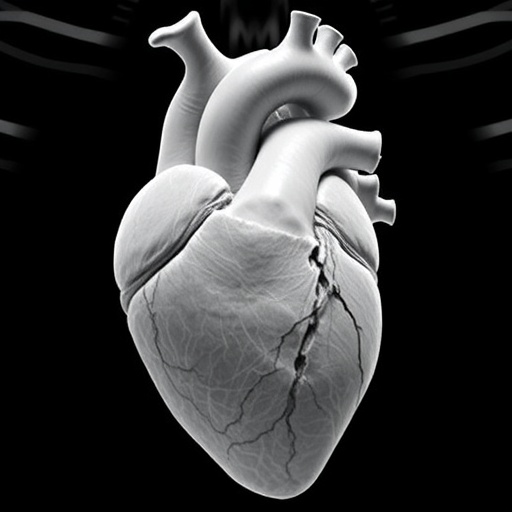
In a groundbreaking advance in the study of congenital diaphragmatic hernia (CDH), researchers have unveiled new insights into the perioperative cardiac function of infants suffering from this complex condition. Using state-of-the-art three-dimensional echocardiography, the investigative team led by Toyoshima and colleagues has provided a detailed analysis of biventricular function before and after surgical intervention, shedding light on the dynamic cardiac adaptations that occur in the vulnerable perioperative period. This study heralds a new era in neonatal cardiac imaging and offers critical implications for clinical practice and surgical outcomes in infants with CDH.
Congenital diaphragmatic hernia, a developmental defect resulting in a diaphragmatic discontinuity, permits abdominal viscera to herniate into the thoracic cavity, severely compromising lung and cardiac function. This malformation not only impairs respiratory mechanics but also imposes significant strain on the heart, particularly the right and left ventricles, which must contend with altered loading conditions. Traditional two-dimensional echocardiography has been limited in capturing the intricate geometry and spatial dynamics of the heart in this pathological state, often restricting comprehensive functional assessment.
The innovation of three-dimensional echocardiographic techniques allows for volumetric analysis of ventricular performance with unprecedented accuracy and reproducibility. Toyoshima et al.’s study leveraged this technology to meticulously evaluate biventricular parameters, including stroke volume, ejection fraction, and ventricular deformation metrics, documenting how these indices evolve from the preoperative stage through the immediate and extended postoperative periods. Their data reveal nuanced cardiac responses that could not be fully appreciated with earlier imaging modalities.
One of the pivotal findings from this research is the differential impact of CDH on right versus left ventricular function before surgery. The right ventricle, often challenged by pulmonary hypertension secondary to lung hypoplasia and vascular remodeling, showed signs of significant functional compromise. In contrast, the left ventricle typically exhibited reductions in size and output, likely attributable to decreased preload and mechanical compression by herniated organs. These ventricular disparities have critical implications for perioperative management and risk stratification.
Moreover, the longitudinal follow-up with three-dimensional echocardiography demonstrated that surgical repair of the diaphragmatic defect induces substantial shifts in cardiac loading conditions. Postoperative restoration of thoracic anatomy alleviated compressive forces and improved pulmonary blood flow, which in turn influenced the recovery trajectory of both ventricles. Importantly, the right ventricle showed notable functional improvement, though some patients continued to exhibit varying degrees of dysfunction, signaling a need for careful postoperative surveillance.
The methodology employed in this study underscores the importance of integrating advanced imaging with clinical care pathways. Utilizing volumetric datasets obtained from transthoracic echocardiographic probes tailored for neonatal use, the researchers were able to generate real-time three-dimensional reconstructions of the ventricles. This enabled comprehensive functional analysis, including assessment of ventricular synchrony and regional wall motion abnormalities, offering a holistic perspective on cardiac performance.
In addition to clarifying cardiac mechanics in the context of CDH, this research offers prognostic clues. Specific preoperative ventricular parameters correlated strongly with postoperative clinical outcomes such as length of mechanical ventilation, incidence of persistent pulmonary hypertension, and survival rates. Such associations underscore the potential of three-dimensional echocardiographic metrics to serve as biomarkers guiding therapeutic decisions, surgical timing, and individualized management strategies.
An intriguing dimension explored in the study is the interaction between cardiac function and extracorporeal membrane oxygenation (ECMO) utilization in severe CDH cases. The detailed ventricular assessments before and after ECMO initiation provided evidence of cardiac recovery patterns, facilitating evaluations of candidacy and timing for ECMO weaning. This represents a step forward in optimizing ECMO support, balancing the hemodynamic demands and myocardial recovery in this fragile patient population.
Furthermore, the study highlights the technological milestones in imaging hardware and software that now allow for rapid acquisition and processing of three-dimensional cardiac data even in neonates with compromised respiratory and hemodynamic stability. The refinement of probe design, alongside sophisticated analytical algorithms, reduces operator variability and enhances the reliability of functional measurements, expanding the clinical applicability across centers.
Clinicians and researchers alike stand to benefit from the insights delivered by this comprehensive evaluation of biventricular function. The ability to non-invasively monitor cardiac performance through the perioperative period may lead to improved prognostic accuracy and tailored interventions aimed at mitigating heart failure risk. This is particularly critical given the delicate balance required to sustain cardiac output in infants with compromised lung function and complex surgical needs.
Moreover, the implications of Toyoshima et al.’s findings transcend CDH, offering a potential framework for assessing cardiac function in other neonatal conditions involving pulmonary hypertension and altered ventricular loading. The integration of three-dimensional echocardiographic assessment into neonatal intensive care practices may revolutionize how clinicians approach congenital heart disease and cardiopulmonary interactions.
From a translational perspective, the research opens avenues for further investigation into myocardial remodeling and ventricular mechanics using advanced imaging biomarkers. Future studies could explore pharmacologic modulation of cardiac function in CDH, utilizing three-dimensional echocardiography as an endpoint to gauge therapeutic efficacy. Such endeavors could eventually improve survival and quality of life for affected infants worldwide.
In the context of clinical training, the adoption of three-dimensional echocardiography represents both a challenge and an opportunity. Mastery of volumetric imaging interpretation requires dedicated education, yet this technique promises more precise and objective evaluation compared to traditional methods. Enhanced visualization tools and simulation-based training modules may facilitate widespread dissemination of these skills among pediatric cardiologists and neonatologists.
Ultimately, the meticulous research by Toyoshima and colleagues exemplifies how technological innovation, when combined with rigorous clinical investigation, can illuminate previously obscured physiological phenomena. Their work enriches the understanding of cardiac adaptation in CDH and sets a new standard for perioperative cardiovascular assessment. This is an auspicious step toward improving outcomes in a condition historically marked by high morbidity and mortality.
As cardiac imaging pivotally advances, collaborative efforts between cardiologists, surgeons, neonatologists, and imaging scientists will be essential to harness the full potential of three-dimensional echocardiography. Personalized cardiac care tailored to the intricacies of individual patients’ ventricular function could become a new reality, powered by the insights uncovered in studies such as this.
The promise of this research extends beyond its immediate clinical applications; it also heralds a broader shift in neonatal cardiac care, where detailed morpho-functional imaging allows for earlier detection of complications, more precise intervention, and potentially better long-term neurodevelopmental outcomes for survivors of congenital diaphragmatic hernia. This study is a tribute to how precision medicine can be realized in the earliest, most vulnerable stages of human life.
Cite Scienmag News
Harold Sullivan. (April 25, 2026). 3D Heart Study in Congenital Diaphragmatic Hernia. Scienmag. https://scienmag.com/3d-heart-study-in-congenital-diaphragmatic-hernia/
Harold Sullivan. "3D Heart Study in Congenital Diaphragmatic Hernia." Scienmag, 25 April 2026, https://scienmag.com/3d-heart-study-in-congenital-diaphragmatic-hernia/. Accessed 4 September 2026.
Harold Sullivan. "3D Heart Study in Congenital Diaphragmatic Hernia." Scienmag. April 25, 2026. https://scienmag.com/3d-heart-study-in-congenital-diaphragmatic-hernia/


