


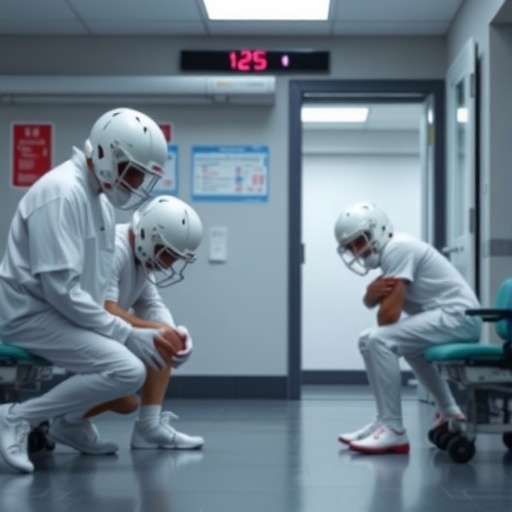
In a comprehensive new study published in the April 2026 issue of JAMA Network Open, researchers have uncovered profound socioeconomic disparities influencing the patterns of concussion care across Ontario. The study, conducted by a collaborative team from ICES, the CHEO Research Institute, Children’s Hospital of Philadelphia (CHOP), and the Ontario Brain Institute, reveals that individuals from marginalized socioeconomic backgrounds are disproportionately more likely to seek initial concussion treatment in hospital emergency departments (EDs) rather than outpatient clinics. This trend not only highlights issues in healthcare access but also exposes significant deficits in follow-up care, with critical implications for recovery outcomes.
Concussion, a mild traumatic brain injury, typically requires timely and specialized management to prevent long-term neurological consequences. Although most cases are treated successfully through outpatient care, the study illuminates an alarming pattern wherein patients facing economic hardship or lacking a regular family physician tend to bypass primary care pathways. Instead, they present initially to emergency departments—a setting that experts argue may not be ideal for concussion management due to time constraints and resource limitations inherent in EDs.
Dr. Daniel Corwin, Associate Director and Emergency Department Lead of CHOP’s Minds Matter Concussion Program, emphasizes the role of socioeconomic variables in shaping healthcare utilization patterns. “Previous literature has consistently shown that lower socioeconomic status is linked to increased emergency department use for non-emergent conditions,” Dr. Corwin states. “Our findings reinforce this notion specifically within concussion care, underscoring the need for system-wide interventions to bridge gaps in access and follow-up for marginalized communities.”
The research is grounded in a population-based observational study that analyzed healthcare data for an extensive cohort of 674,629 patients across Ontario diagnosed with concussion over a 13-year span. By leveraging large-scale health administrative datasets, the team was able to classify patients based on their initial point of care and correlate these findings with socioeconomic indicators such as neighborhood income, rurality, and family physician attachment.
A striking 41 percent of individuals sought their first concussion evaluation in emergency departments. These patients overwhelmingly originated from lower-income neighborhoods, lacked established primary care providers, and were more likely to live in rural areas where healthcare resources may be scarcer. Contrastingly, patients from neighborhoods characterized by greater ethnic and cultural diversity were less inclined to use EDs as their initial point of care, suggesting complex interplay between community demographics and healthcare-seeking behaviors.
Beyond initial care, follow-up engagement was markedly deficient among ED-first patients. The study reveals that fewer than nine percent of these individuals returned for a follow-up visit within 30 days. This figure pales in comparison to the 28 percent follow-up adherence observed among those who initially accessed outpatient services. Such disparities hold critical clinical importance, as effective concussion management demands ongoing monitoring to address evolving symptoms and prevent secondary injury.
Furthermore, the absence of a regular family physician emerged as a formidable barrier to continuity of care. Patients without a family doctor were up to 70 percent less likely to attend recommended follow-up appointments. This gap highlights the instrumental role primary care providers play in orchestrating concussion recovery plans and facilitating referrals to specialized services.
The study’s findings have significant implications for how healthcare systems should tailor concussion care frameworks to better accommodate vulnerable populations. Dr. Corwin advocates for a multifaceted approach, combining improved access to primary care, enhanced support for emergency clinicians treating concussions, and exploration of innovative care delivery models. Telemedicine and remote patient monitoring, for instance, represent promising strategies for overcoming geographic and socioeconomic obstacles while ensuring timely follow-up.
TRANSCENDENT, the concussion research program underpinning this analysis and funded by the Ontario Brain Institute, is actively piloting cutting-edge digital health tools aimed at boosting access and engagement among underserved patients. By integrating patient-centered technologies with data-driven clinical insights, the program aspires to revolutionize concussion care pathways and reduce health disparities on a systemic level.
The broader context of this research resonates with ongoing healthcare equity challenges worldwide. Marginalized populations often experience fragmented care, delayed diagnoses, and poor health outcomes, particularly in conditions requiring nuanced management like brain injury. This study not only quantifies those disparities in concussion care but also provides a compelling rationale for policy reforms that prioritize inclusivity and sustainability.
Institutions involved in this work, including ICES and the CHEO Research Institute, emphasize the importance of leveraging extensive population health databases to generate evidence that informs policies and resource allocation. By illuminating socioeconomic factors influencing clinical trajectories, such research offers actionable insights for healthcare planners, practitioners, and policymakers striving to optimize care delivery and health equity.
As healthcare systems increasingly grapple with rising demands and constrained resources, the study urges a reevaluation of concussion management paradigms to ensure they are accessible, equitable, and aligned with best clinical practices. This effort must encompass strengthening primary care networks, deploying innovative technological solutions, and fostering community outreach tailored to the unique needs of socioeconomically marginalized groups.
Ultimately, this ground-breaking research underscores that concussion is not merely a neurological or clinical issue but a societal challenge intertwined with health inequities. Addressing these disparities comprehensively holds the promise of not only enhancing individual patient recovery but also of generating population-wide benefits, reducing healthcare costs, and advancing the quality of brain health care.
—
News Publication Date: 22-Apr-2026
Web References:
https://doi.org/10.1001/jamanetworkopen.2026.7416
Cite Scienmag News
Cassandra Pierce. (April 22, 2026). Study Finds Patients Experiencing Greater Marginalization More Likely to Use Emergency Departments for Concussion Care. Scienmag. https://scienmag.com/study-finds-patients-experiencing-greater-marginalization-more-likely-to-use-emergency-departments-for-concussion-care/
Cassandra Pierce. "Study Finds Patients Experiencing Greater Marginalization More Likely to Use Emergency Departments for Concussion Care." Scienmag, 22 April 2026, https://scienmag.com/study-finds-patients-experiencing-greater-marginalization-more-likely-to-use-emergency-departments-for-concussion-care/. Accessed 4 September 2026.
Cassandra Pierce. "Study Finds Patients Experiencing Greater Marginalization More Likely to Use Emergency Departments for Concussion Care." Scienmag. April 22, 2026. https://scienmag.com/study-finds-patients-experiencing-greater-marginalization-more-likely-to-use-emergency-departments-for-concussion-care/


