


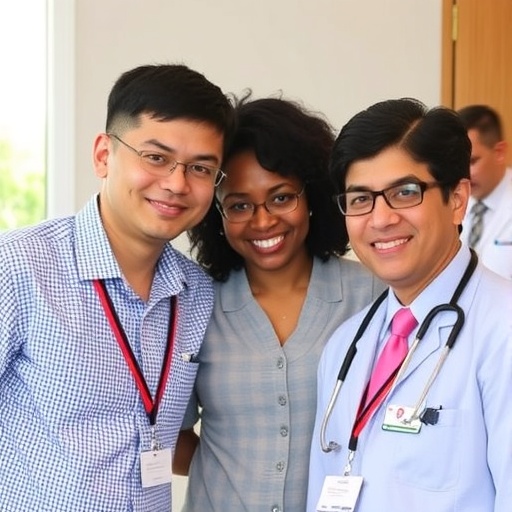
In a groundbreaking endeavor to transform pediatric cancer research, the Damon Runyon Cancer Research Foundation and St. Jude Children’s Research Hospital have united once again to fund a pioneering cohort of young scientists dedicated to unraveling the complexities of childhood cancers. This joint initiative, launched in 2024, represents a substantial $1.5 million investment, supporting five distinguished fellows with $300,000 each over four years. Their work promises to carve new paths in understanding and treating pediatric malignancies, a field that has traditionally suffered from insufficient targeted funding compared to adult oncology.
The collaboration is meticulously designed to fill a critical gap in the research ecosystem, where promising scientists often diverge toward adult cancer studies or pharmaceutical sectors due to the scarcity of dedicated pediatric-oriented funding. As James R. Downing, MD, President and CEO of St. Jude, articulates, this program aims not only to propel scientific discovery but to cultivate the next generation of leaders who will actively redefine therapeutic approaches for children facing the most aggressive and resistant cancer types. The focus extends beyond immediate cure rates to addressing long-term toxicity and side effects that can dramatically impair survivors’ quality of life.
The newly appointed fellows are spearheading innovative projects with profound technical intricacies. Dr. Keene Abbott, utilizing his expertise in molecular biology from MIT and his postdoctoral period at the Dana-Farber Cancer Institute, investigates a unique protein critical for DNA replication and repair in Ewing sarcoma cells. His hypothesis is that these cancer cells exhibit disproportionate reliance on this protein, rendering it a molecular vulnerability. By elucidating the biochemical pathways and structural biology underpinning this dependence, Abbott’s research could unlock less toxic, targeted therapeutics, moving away from conventional chemoradiation strategies that have stagnated for decades.
Meanwhile, Dr. Abigail Clevenger combines advanced single-cell profiling methodologies, including transcriptomics and proteomics, with patient-derived tumor samples to dissect cellular heterogeneity and immune evasion mechanisms in Ewing sarcoma. Her work, rooted in bioengineering principles from Rice University, focuses on understanding how intracellular cytoskeletal architectures facilitate tumor progression and immune suppression. By mapping these dynamic intracellular processes, Clevenger aims to inform combinatorial immunotherapeutic interventions that can disrupt these malignancies’ evasion tactics and enhance immune-mediated tumor eradication.
Dr. Amy Li’s investigation centers on mitigating chronic graft-versus-host disease (cGVHD), a severe immune complication following hematopoietic stem cell transplantation, a primary curative modality in pediatric acute leukemias. Her research leverages CRISPR-Cas9 genetic screens and in vivo murine models to analyze the modulatory impact of thalidomide analogs on regulatory T cells (Tregs). These immunosuppressive cells are pivotal in maintaining tolerance and reducing autoimmune reactions post-transplant. Li’s cutting-edge interrogation aims to delineate molecular pathways that can be pharmacologically targeted to enhance Treg survival and function, thereby reducing cGVHD morbidity and mortality.
In another novel exploration, Dr. Emily Phillips harnesses immunoengineering techniques to manipulate memory-like natural killer (NK) cells, which exhibit potent cytotoxicity against acute myeloid leukemia (AML), particularly chemo-resistant forms frequent in pediatric relapses. Her methodology includes genetic modification of NK cells with chimeric antigen receptors (CARs) or natural killer cell engagers (NKCEs) to boost specificity and killing efficiency against AML surface antigens. Phillips’ work at Washington University could propel these modified NK cells from bench to bedside, heralding an era of personalized immunotherapy designed to overcome chemo-refractory hematological cancers.
Addressing another formidable challenge, Dr. Cary Weiss’s research inspects translocation renal cell carcinoma (tRCC), a rare but particularly aggressive kidney cancer prevalent in young patients. By deploying advanced genomic and transcriptomic assays alongside functional genetics, Weiss seeks to decode the oncogenic dependencies driven by rare fusion proteins characteristic of tRCC. Due to the intrinsic difficulty in directly targeting fusion oncoproteins, Weiss’s approach focuses on identifying auxiliary pathways essential for tumor cell survival, thereby exposing novel druggable targets. His findings could have extensive applications across other fusion-driven pediatric cancers, potentially revolutionizing treatment paradigms.
The Damon Runyon-St. Jude Fellowship attempts not only to support these immersed scientific explorations but also to foster an integrated community of pediatric cancer researchers. Beyond financial backing, the program offers fellows debt relief, acknowledging the significant burden of medical school loans, an incentive designed to retain leading talent in the pediatric oncology niche. Moreover, the fellowship provides participants the unique opportunity to engage in annual symposia at the St. Jude Comprehensive Cancer Center, facilitating collaborative exchanges that may accelerate translational breakthroughs.
The urgency of dedicating tailored resources to pediatric oncology cannot be overstated. As Dr. Yung S. Lie of Damon Runyon emphasizes, without strategic funding aimed at the biological distinctiveness of pediatric cancers, researchers risk diluting their focus or abandoning the field, with dire consequences for treatment advancement. The stark differences in genetic mutations, tumor microenvironments, and etiological factors between adult and pediatric cancers necessitate distinct investigative frameworks and therapeutic innovations.
Despite the remarkable strides in adult cancer immunotherapies and precision medicine, pediatric cancer patients have historically lagged in benefiting from these advances, largely due to their illnesses’ unique pathological and molecular profiles. Dr. Philip T. Pauerstein, one of the 2024 fellows, poignantly captures this reality, underscoring the critical need for dedicated pediatric research programs like the Damon Runyon-St. Jude Fellowship that target the fundamental causative drivers of childhood cancers.
The broader implications of this partnership extend beyond immediate clinical outcomes; it represents a commitment to a long-term vision for children worldwide, aiming to drastically improve survival rates while minimizing the devastating physical and psychological impact of current treatments. As the fellows’ research progresses, it is anticipated that their insights will catalyze novel drug development, improved immune modulation therapies, and refined genetic and epigenetic targeting approaches — all tailored to the unique biology of pediatric cancers.
This fellowship program is a beacon of hope that suggests the pediatric oncology research landscape is poised for a renaissance, driven by interdisciplinary collaborations, state-of-the-art molecular techniques, and a compassionate commitment to the next generation of patients. By investing in the innovative minds that form this new class of fellows, the Damon Runyon Cancer Research Foundation and St. Jude Children’s Research Hospital are laying the groundwork for a future where childhood cancer is not merely survived but effectively cured with precision and grace.
News Publication Date: 2024
Web References:
– https://www.damonrunyon.org/for-scientists/application-guidelines/st-jude-fellowship
– https://www.stjude.org/
– https://damonrunyon.org/
Cite Scienmag News
Nathaniel Bowman. (April 21, 2026). Damon Runyon Cancer Research Foundation and St. Jude Children’s Research Hospital Announce 2026 Fellowships. Scienmag. https://scienmag.com/damon-runyon-cancer-research-foundation-and-st-jude-childrens-research-hospital-announce-2026-fellowships/
Nathaniel Bowman. "Damon Runyon Cancer Research Foundation and St. Jude Children’s Research Hospital Announce 2026 Fellowships." Scienmag, 21 April 2026, https://scienmag.com/damon-runyon-cancer-research-foundation-and-st-jude-childrens-research-hospital-announce-2026-fellowships/. Accessed 4 September 2026.
Nathaniel Bowman. "Damon Runyon Cancer Research Foundation and St. Jude Children’s Research Hospital Announce 2026 Fellowships." Scienmag. April 21, 2026. https://scienmag.com/damon-runyon-cancer-research-foundation-and-st-jude-childrens-research-hospital-announce-2026-fellowships/


