


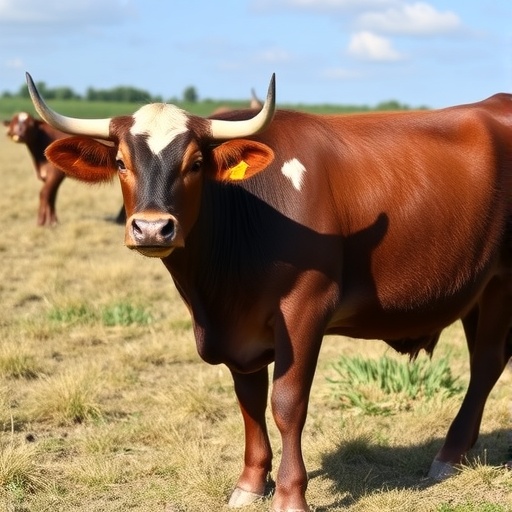
Adelaide University scientists have embarked on a groundbreaking endeavor to curb methane emissions from beef cattle by employing a naturally derived compound sourced from seaweed. This innovative research highlights the potential of bromoform extract oil, derived from the red seaweed genus Asparagopsis, to drastically reduce methane release in extensive grazing systems—an important and historically challenging environment for methane mitigation.
Methane, a potent greenhouse gas, significantly contributes to climate change, accounting for approximately 30% of the increase in global temperatures since the industrial revolution, according to data from the International Energy Agency. Ruminant livestock, particularly cattle, are major methane emitters due to enteric fermentation processes in their digestive systems. Traditionally, efforts to mitigate methane from these animals have focused on intensive farming systems with controlled diets, leaving extensive grazing systems inadequately addressed. The Adelaide University study specifically targets this gap by evaluating bromoform’s efficacy in pasture-raised Angus cows.
In a carefully designed experimental trial over eight weeks, 80 pregnant and lactating Angus cows were supplemented with bromoform extract oil incorporated into their diet. Results revealed a remarkable methane emission reduction ranging from 49% to 77% in cows receiving the supplement. This scale of reduction is unprecedented in extensive systems where delivering consistent dosing can be logistically difficult, due to the free-ranging nature of livestock. The study’s findings mark a significant step towards practical methane mitigation solutions adaptable to real-world grazing environments.
Importantly, supplementation with bromoform extract oil did not compromise animal welfare or productivity. The Angus cows maintained stable body weight throughout the study, despite a slight decrease in total feed intake. This suggests that bromoform could enhance feed efficiency, potentially translating to cost savings for producers by reducing feed requirements without adversely affecting cow health or output. Such economic incentives are crucial for encouraging widespread adoption within the beef industry.
Equally reassuring was the impact on the next generation. Calves born to supplemented mothers exhibited normal rates of development and weight gain, monitored up to 150 days of age. These results alleviate concerns about the potential carry-over effects of maternal supplementation during gestation and lactation. The absence of negative consequences on calf growth is vital for breeding systems where long-term productivity and animal health remain paramount.
Concurrently, the study detected some biochemical changes in the blood chemistry of supplemented cows, indicating the onset of mild metabolic alkalosis in certain individuals. While these changes remained within accepted physiological ranges, they underpin the necessity for further longitudinal research to assess the safety profile and optimize the dosage of bromoform extract oil. Monitoring metabolic shifts is essential to prevent unintended health complications during prolonged supplementation regimes.
Minor fluctuations were also observed in calf blood markers; however, these variations fell within normal parameters, suggesting no immediate cause for concern. Nevertheless, ongoing surveillance is recommended to fully understand the ramifications of maternal dietary supplementation on offspring metabolism, immune status, and overall development in extensive grazing contexts.
Prior investigations into bromoform’s methane suppression primarily involved feedlot or intensive animal production systems characterized by precise dietary regulation. This latest study is pioneering in its demonstration that bromoform-based additives can exert substantial methane mitigation effects in pasture-based cattle management—typical of Australia’s dominant beef production systems. Bridging this knowledge gap has critical implications for scaling up environmental interventions across diverse agricultural settings.
Despite these encouraging advancements, the research team underscores the necessity to refine delivery methods of bromoform supplementation to suit extensive grazing landscapes. Developing cost-effective, practical supplements compatible with extensive administration logistics will drive the technology from controlled research trials to on-farm realities. Such optimization is imperative to maximize producer uptake and environmental benefit.
Future studies must also focus on understanding the long-term impact of bromoform supplementation on animal health, reproductive performance, and product quality. Determining optimal dosing schedules and supplementation strategies that align with cattle lifecycles will be key to embedding methane reduction technologies in sustainable livestock production systems.
The potential ramifications of this research extend beyond methane abatement; a validated, scalable solution could transform global beef production’s environmental footprint, contributing significantly to climate mitigation efforts. By integrating seaweed-derived compounds into livestock diets, the agricultural sector may reconcile productivity with ecological responsibility.
In summary, the Adelaide University team presents compelling evidence that bromoform extract oil supplementation effectively reduces methane emissions from Angus cows managed in extensive grazing systems, without undermining animal growth or health. This innovative methane mitigation strategy offers an auspicious path towards sustainable beef production, addressing one of agriculture’s most pressing environmental challenges through natural, scientifically validated interventions.
Cite Scienmag News
William Thompson. (April 20, 2026). Seaweed Compound Significantly Reduces Methane Emissions in Beef Cattle. Scienmag. https://scienmag.com/seaweed-compound-significantly-reduces-methane-emissions-in-beef-cattle/
William Thompson. "Seaweed Compound Significantly Reduces Methane Emissions in Beef Cattle." Scienmag, 20 April 2026, https://scienmag.com/seaweed-compound-significantly-reduces-methane-emissions-in-beef-cattle/. Accessed 4 September 2026.
William Thompson. "Seaweed Compound Significantly Reduces Methane Emissions in Beef Cattle." Scienmag. April 20, 2026. https://scienmag.com/seaweed-compound-significantly-reduces-methane-emissions-in-beef-cattle/


