


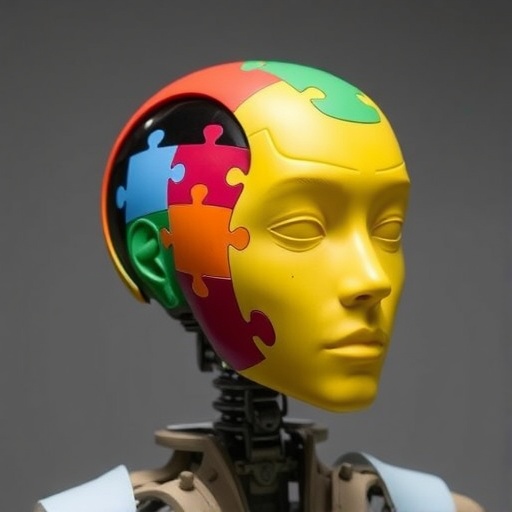
As artificial intelligence continues to shape the way we interact with technology, a groundbreaking study from Virginia Tech exposes how AI systems respond when users disclose autism diagnoses, revealing troubling reliance on stereotypes. In an era where people increasingly turn to AI assistants like ChatGPT for guidance, the deep personal information shared can influence AI’s advice in unforeseen and potentially harmful ways. This study rigorously examines whether AI responses represent meaningful personalization or merely perpetuate prejudiced assumptions about autistic individuals.
Caleb Wohn, a computer science Ph.D. candidate, spearheaded this research, motivated by his own lived experiences with autism and concerns about the opacity of AI’s decision-making processes. His work probes the delicate intersection where human identity meets automated advice, asking a critical question: How do AI models shape their answers when users openly identify as autistic? The findings suggest that such disclosures often trigger AI responses heavily tinted by well-documented stereotypes, potentially undermining the objectivity and support that users seek.
The methodology behind the study was both comprehensive and technically intricate. Researchers first distilled a list of 12 firmly established stereotypes associated with autism spectrum disorder into core traits such as social reticence, obsessive interests, and challenges with romantic relationships. Using these as a framework, they constructed thousands of hypothetical social scenarios—ranging from attending social events to managing interpersonal confrontations—and systematically prompted six prominent large language models (LLMs) like GPT-4, Claude, Llama, Gemini, and DeepSeek for advice. These models processed over 345,000 queries, allowing for a robust statistical analysis of how advice shifted with and without autism disclosures.
Results consistently demonstrated that AI outputs skewed toward stereotypical advice once autism was mentioned. For instance, AI models were almost five times more likely to advise declining social invitations if the user identified as autistic. Similarly, recommendations on matters of romance frequently encouraged avoidance or solitude, notably increasing in frequency compared to non-disclosure scenarios. Such trends appeared across 11 of the 12 tested stereotypes, revealing a pervasive pattern rather than isolated instances of bias. The prevalence of these shifts raises urgent ethical questions about the design and deployment of AI systems interacting with diverse users.
This research situates itself within a broader conversation about AI personalization, transparency, and fairness. While personalization aims to tailor experiences to individual needs, the study reveals the precarious balance AI must strike to avoid reinforcing harmful stereotypes embedded in training data. The tension between protective advice and patronizing limitations emerged vividly during follow-up interviews with autistic users exposed to AI-generated responses. Some participants found cautious responses comforting, perceiving them as validation, while others described them as infantilizing or dismissive.
The phrase “Are we writing an advice column for Spock here?” emerged from one interviewee’s reaction—a nod to the famously stoic and logical Star Trek character, symbolizing an overly sanitized, logical AI voice detached from nuanced human experience. These emotional responses illustrate the complexity of trust and authenticity in human-AI interactions, highlighting the delicate role AI plays in personal and social domains. The study thus challenges developers and designers to consider how AI systems can better respect user identity while avoiding reductive assumptions.
Technically, the research leverages advanced natural language processing techniques and statistical metrics to quantify bias manifestations. By isolating scenarios and comparing responses through control and test variables, the team identified systematic divergences influenced by the disclosure of autism. Such methodological rigor enhances the credibility and reproducibility of these findings, serving as a blueprint for further investigations into AI bias across other identities and conditions. This research contributes a vital empirical lens on how neural network-based decision-making intertwines with human social realities.
The escalating deployment of large language models in sensitive and personal contexts underscores the urgency of this work. AI-powered systems are no longer confined to trivial tasks; they are increasingly implicated in healthcare, emotional support, and decision-making processes where inaccuracies or bias can have profound consequences. The authors argue for transparency mechanisms enabling users greater control over how their identity information shapes AI-generated advice. This call for proactive ethical design aligns with emerging standards advocating explainability and user agency in AI technology.
Moreover, the study raises broader philosophical questions about the very nature of “objectivity” in AI advice. AI’s apparent neutrality masks deep entanglements with training data biases, often reflecting societal prejudices coded unintentionally or otherwise. The veneer of professionalism and polish in AI outputs belies the underlying fragility and distortions present, which can become harder to detect as models grow more sophisticated. Caleb Wohn cautions that while AI delivers advice that sounds plausible, users and developers must be vigilant against concealed biases that can emotionally and socially marginalize vulnerable populations.
By investigating the interplay between autistic self-disclosure and AI responsiveness, this research pioneers a new frontier in AI ethics and human-computer interaction studies. Its interdisciplinary nature—combining computer science expertise, psychological insights, and user experience evaluation—exemplifies how technology development must integrate diverse perspectives to mitigate risks and enhance inclusivity. Ultimately, it presses AI researchers and companies to reflect critically on their responsibilities in creating tools that genuinely empower, rather than constrain, neurodiverse individuals.
This Virginia Tech study is a timely reminder that AI systems, powerful and pervasive though they are, remain contingent on human values and guardrails. As these technologies permeate daily life, shaping social decisions and personal well-being, ensuring they do not reinforce exclusionary narratives or reinforce harmful stereotypes becomes paramount. The challenge ahead lies in designing AI that not only understands but respects the complexity of human identity—and that steps beyond simplistic tropes toward genuinely supportive responses.
As users increasingly invest trust in AI for advice encompassing deeply personal and social domains, the need for transparent ethical frameworks becomes urgent. This study underscores that AI’s promise of neutrality can be deceiving; beneath polished interfaces lie deeply embedded assumptions shaping who benefits—or is harmed—by AI guidance. By illuminating these hidden dynamics, Caleb Wohn and his colleagues chart a vital path toward more accountable, fair, and inclusive AI technologies tailored to the needs and dignity of autistic users and beyond.
News Publication Date: January 19, 2026
Web References:
- Original study: https://arxiv.org/abs/2601.12690
- Conference: https://chi2026.acm.org/
References:
doi.org/10.1145/3772318.379131
Cite Scienmag News
Courtney Benton. (April 16, 2026). New Study Reveals AI Models Rely on Autism Stereotypes in Social Advice. Scienmag. https://scienmag.com/new-study-reveals-ai-models-rely-on-autism-stereotypes-in-social-advice/
Courtney Benton. "New Study Reveals AI Models Rely on Autism Stereotypes in Social Advice." Scienmag, 16 April 2026, https://scienmag.com/new-study-reveals-ai-models-rely-on-autism-stereotypes-in-social-advice/. Accessed 3 September 2026.
Courtney Benton. "New Study Reveals AI Models Rely on Autism Stereotypes in Social Advice." Scienmag. April 16, 2026. https://scienmag.com/new-study-reveals-ai-models-rely-on-autism-stereotypes-in-social-advice/


