


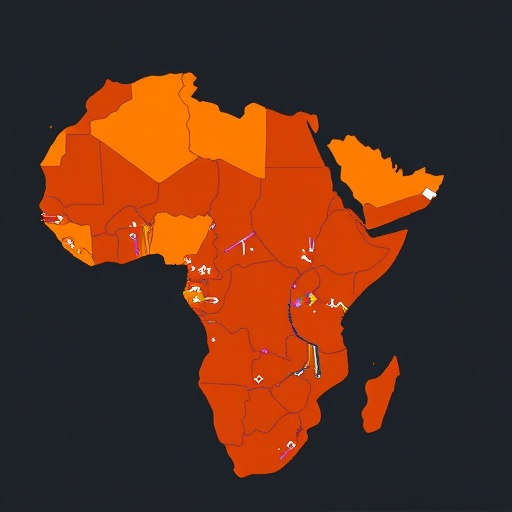
In recent years, data science has emerged as a transformative force in healthcare worldwide, promising revolutionary changes in diagnostics, treatment, and healthcare delivery. Across continents, governments and health organizations are investing heavily in data-driven technologies to combat disease, enhance patient outcomes, and optimize resource allocation. Yet, Africa’s readiness to harness this data science revolution for the betterment of health remains a complex and multifaceted subject. A new comprehensive study by Panji, Ras, Gichoya, and colleagues, soon to be published in Nature Communications, offers a groundbreaking assessment of how prepared Africa is to leverage data science in transforming its healthcare landscape. This analysis not only reveals existing strengths but also delineates the formidable challenges that must be addressed to fulfill the continent’s immense potential.
Fundamentally, data science in health encompasses the collection, processing, and interpretation of vast datasets ranging from genomic sequences and clinical records to epidemiological surveillance and health system logistics. For Africa, where disease burdens such as malaria, HIV/AIDS, and tuberculosis remain disproportionately high, the promise of data science lies in enabling more precise, timely, and cost-effective interventions. The study takes a deep dive into the continent’s infrastructure, human capital, policy frameworks, and technological adoption, revealing a patchwork of readiness driven by uneven progress and systemic barriers.
One of the critical technical dimensions explored concerns Africa’s digital infrastructure. While mobile technology penetration has soared, enabling unprecedented data collection opportunities, the underlying internet connectivity, cloud computing capacity, and high-performance computing resources still fall short in many regions. These infrastructure gaps hinder the deployment of sophisticated machine learning algorithms and real-time data analytics essential for responsive health systems. The researchers highlight that bridging this digital divide is fundamental to operationalizing data science, requiring enhanced investments not only in hardware but also in secure, interoperable data platforms.
Equally vital is human expertise. The study carefully evaluates the depth of data science talent across African nations, underscoring a growing but insufficient cadre of bioinformaticians, epidemiologists, and health informaticians. Academic institutions, though increasingly offering specialized data science programs, often grapple with outdated curricula and limited research funding. The authors advocate for targeted capacity-building initiatives that foster interdisciplinary training, combining skills in statistics, computer science, biology, and clinical medicine. Developing a robust, homegrown workforce stands as a cornerstone for sustainable data-driven healthcare innovation in Africa.
Policy and governance frameworks emerge as another pivotal axis in the study. Although numerous countries have introduced digital health strategies and data protection laws, implementation remains inconsistent. The researchers emphasize the necessity of harmonized data governance policies that ensure patient privacy, ethical use of health data, and equitable sharing of benefits arising from data science. Such governance must be adaptable to accommodate emerging technologies like artificial intelligence and genomics while fostering public trust—an essential ingredient for large-scale health data initiatives.
The researchers also shine light on the rich availability of diverse health data sources across the continent, including national health surveys, routine health management information systems, and increasingly, genomic databases. However, the fragmentation and silos of data pose significant challenges for integrative analytics. The study showcases promising initiatives that employ federated learning and secure multiparty computation to perform analyses without compromising data privacy. These innovations could serve as blueprints for scaling up collaborative research and public health surveillance in Africa.
Importantly, the article does not shy away from addressing sociocultural and economic factors influencing data science adoption in African health systems. Resource constraints, political instability, and limited stakeholder coordination frequently limit the translation of data science advances into practical healthcare solutions. Furthermore, the digital literacy gap within healthcare workforces and among patients themselves demands culturally tailored educational programs to maximize the utility and acceptance of data-driven health tools.
The potential impact of integrating data science into Africa’s health sector is vividly illustrated by case studies within the report. For instance, machine learning models designed for malaria risk mapping have improved allocation of insecticide-treated nets and antimalarial drugs, showing measurable reductions in disease incidence. Similarly, predictive algorithms for HIV treatment adherence support personalized interventions, enhancing viral suppression rates. These examples underscore how data science can amplify the effectiveness of existing programs while opening new avenues for precision public health.
Collaboration emerges as a recurrent theme and a fulcrum for progress. The study documents how partnerships between African universities, governments, and international organizations are catalyzing innovation by facilitating technology transfer, joint research projects, and capacity building. It argues that a pan-African data science consortium for health could foster an ecosystem conducive to shared standards, funding, and knowledge exchange, accelerating continent-wide advancements.
Technological trends such as artificial intelligence, genomic sequencing, and mobile health applications are poised to redefine health care delivery, and Africa is beginning to engage with them more vigorously. The authors highlight burgeoning local startups specializing in AI-driven diagnostics and digital epidemiology, alongside growing adoption of portable sequencing devices for infectious disease outbreaks. These innovations demonstrate Africa’s proactive step toward integrating cutting-edge data science tools tailored to its unique epidemiological and infrastructural realities.
However, the study reminds readers that realizing the full transformative potential of data science requires a sustained commitment to systemic reforms. This includes increasing governmental budget allocations specifically earmarked for digital health innovation, addressing brain drain by incentivizing skilled professionals to remain, and fostering inclusive policies that prioritize marginalized populations. Without such comprehensive strategies, data science in health risks remaining a promise unfulfilled.
The timing of this assessment is particularly important given the recent global health crises such as the COVID-19 pandemic, which exposed both weaknesses and opportunities in Africa’s health data ecosystem. The researchers observe that the pandemic accelerated digital health adoption and highlighted the indispensable role of timely data analytics in outbreak response. Drawing lessons from this experience could serve as a catalyst for bolstering data science infrastructure and policies as part of broader health system resilience efforts.
Ethical considerations receive deliberate attention as well. The study calls for proactive frameworks embedding principles of fairness, transparency, and accountability in all data science applications. Particular focus is placed on ensuring that data-driven decisions do not exacerbate existing health inequities or bias against disadvantaged groups. Community engagement and participatory approaches in data governance are recommended as best practices to uphold the dignity and rights of all individuals captured by health data.
In sum, the study authored by Panji, Ras, Gichoya et al. provides an expansive, nuanced portrait of Africa at a pivotal juncture in its data science evolution. The continent stands at the threshold of a potential revolution in health outcomes driven by data, but this promise will only be realized through concerted efforts spanning infrastructure upgrades, human capital development, governance reform, and ethical safeguards. The research offers a roadmap and clarion call for stakeholders across sectors to collaborate ambitiously and inclusively.
As Africa accelerates toward the data science frontier, its trajectory could redefine global health paradigms. By overcoming structural challenges and embracing innovation, the continent has the opportunity not only to improve the health and well-being of its populations but also to contribute novel data science methodologies and insights to the global community. The study thus represents not merely an assessment but an inspiring vision for a healthier, data-empowered Africa of the future.
Cite Scienmag News
Blake Davidson. (April 13, 2026). Africa’s Data Science Revolution: Health Impact Readiness. Scienmag. https://scienmag.com/africas-data-science-revolution-health-impact-readiness/
Blake Davidson. "Africa’s Data Science Revolution: Health Impact Readiness." Scienmag, 13 April 2026, https://scienmag.com/africas-data-science-revolution-health-impact-readiness/. Accessed 3 September 2026.
Blake Davidson. "Africa’s Data Science Revolution: Health Impact Readiness." Scienmag. April 13, 2026. https://scienmag.com/africas-data-science-revolution-health-impact-readiness/


