


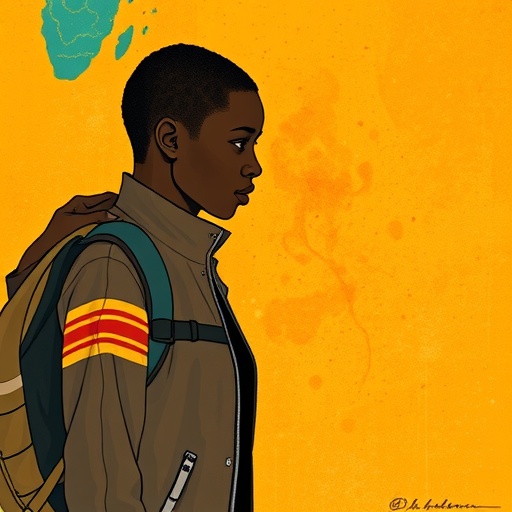
In a groundbreaking new study published in Nature Communications, researchers have unveiled compelling evidence linking past political violence to increased rates of interpersonal violence against children and youth across multiple African nations. This extensive investigation, led by Vigneri, Fadare, Devries, and colleagues, sheds light on the long-lasting social repercussions of political unrest and its profound impact on the safety and well-being of younger populations. Their findings provide a crucial understanding of how political conflict extends beyond immediate casualties to deeply infiltrate familial and community relationships, perpetuating cycles of violence that complicate recovery efforts and social cohesion.
The relationship between political violence and subsequent interpersonal violence is far from a straightforward cause-effect scenario; it implicates a complex interplay of psychological trauma, social destabilization, and weakened institutional protections. This study methodically analyzed data gathered from diverse regions within Africa, where decades of intermittent conflict have disrupted traditional societal structures. The researchers employed advanced statistical modeling to correlate historical instances of political violence with current reports of violence perpetrated within homes and communities, particularly targeting vulnerable groups such as children and adolescents.
Their approach utilized multi-level analyses that accounted for not only the intensity and duration of prior conflict exposure but also socioeconomic variables, cultural factors, and governance quality. The nuanced models highlight how areas with recent political violence experienced markedly higher rates of physical and emotional abuse among youth. Importantly, the analysis distinguishes between direct exposure to conflict and broader community-level impacts, illuminating how political violence can reshape societal norms around aggression and conflict resolution, embedding a culture of violence that manifests in everyday interpersonal interactions.
One of the pivotal technical insights from the study is the mediation effect of community trust and social capital following political turmoil. Through comprehensive surveys and longitudinal data collection, the authors demonstrated that political violence severely erodes institutional trust, diminishes collective efficacy, and disrupts protective social networks. These factors collectively increase children’s vulnerability to abuse by caregivers and peers. The data suggest that interventions aiming to restore social cohesion and rebuild communal trust could be vital in mitigating the intergenerational transmission of violence in post-conflict settings.
The psychological implications outlined in this research underscore the necessity of integrating mental health frameworks into post-conflict recovery programs. The prolonged exposure to violent political events appears to amplify not only direct trauma but also contribute to maladaptive behavioral patterns within families, including increased likelihood of child maltreatment and neglect. The findings support calls for trauma-informed community interventions and targeted support systems that extend beyond conventional physical protection measures to address the emotional and behavioral dimensions of violence resulting from political instability.
Moreover, the geographical breadth of the study encompassed a range of conflict histories, from localized skirmishes to protracted civil wars, allowing the researchers to capture variations in how political violence impacts interpersonal aggression across different contexts. This heterogeneity in conflict types and societal responses offers invaluable insights into the resilience and susceptibility factors that mediate violence contagion. For instance, the presence of robust local governance and active civil society groups appeared to buffer children from violence in some contexts, suggesting pathways for tailored policy interventions.
Statistically, the research team applied mixed-effects logistic regression models, complemented by sensitivity analyses, to ensure that their findings were robust against potential confounders and biases inherent in retrospective assessments. The use of sophisticated econometric techniques allowed for a more precise estimation of effect sizes and confidence intervals, reinforcing the validity of the associations reported. This methodological rigor sets a new standard for studies exploring the long-term social consequences of political violence in low- and middle-income countries.
Importantly, the study also delved into gender-specific impacts of political violence on interpersonal harm. The researchers found nuanced differences in vulnerability and perpetration patterns between boys and girls, hinting at culturally entrenched gender dynamics that influence violence exposure and socialization. This dimension enriches the discourse on child protection by underscoring the need for gender-sensitive approaches when designing violence prevention and response programs in post-conflict African societies.
Beyond the immediate spheres of family and peers, the researchers drew attention to the broader ripple effects of political violence on community safety and youth development. In conflict-affected areas, disrupted schooling, reduced economic opportunities, and fractured social services create environments where young people are more exposed to multiple forms of violence and exploitation. The synthesis of epidemiological data with qualitative insights in this paper offers a rare and comprehensive perspective, filling critical gaps in the literature on child health and human security in fragile settings.
The implications of these findings are powerful and far-reaching, signaling to policymakers, humanitarian agencies, and development organizations the urgent need for integrating violence prevention strategies into political reconciliation and peacebuilding initiatives. Conventional efforts that prioritize ceasefires and political settlements often overlook the insidious, lingering violence within homes and communities, which this study identifies as a significant hurdle to sustainable peace and development.
Finally, this research advocates for enhanced data collection efforts and the establishment of early warning systems to monitor interpersonal violence trends in post-conflict zones. By identifying hotspots and vulnerable populations through nuanced analytical frameworks like those employed in this study, stakeholders can deploy more effective, evidence-based interventions that mitigate the enduring consequences of political violence on younger generations across Africa.
In summary, the study by Vigneri and her team represents a seminal advancement in understanding the intersection between macro-level political conflict and micro-level interpersonal violence affecting children and youth. By leveraging rigorous quantitative methods and incorporating multidisciplinary perspectives, the research paints a detailed portrait of the cascading effects of political violence on societal health and childhood well-being. Moving forward, this work lays a foundational blueprint for researchers and practitioners aiming to interrupt cycles of violence and foster resilient, peaceful communities in the wake of conflict.
Cite Scienmag News
Glenn Wilkins. (April 13, 2026). Political and Interpersonal Violence Impacting African Youth. Scienmag. https://scienmag.com/political-and-interpersonal-violence-impacting-african-youth/
Glenn Wilkins. "Political and Interpersonal Violence Impacting African Youth." Scienmag, 13 April 2026, https://scienmag.com/political-and-interpersonal-violence-impacting-african-youth/. Accessed 4 September 2026.
Glenn Wilkins. "Political and Interpersonal Violence Impacting African Youth." Scienmag. April 13, 2026. https://scienmag.com/political-and-interpersonal-violence-impacting-african-youth/


