


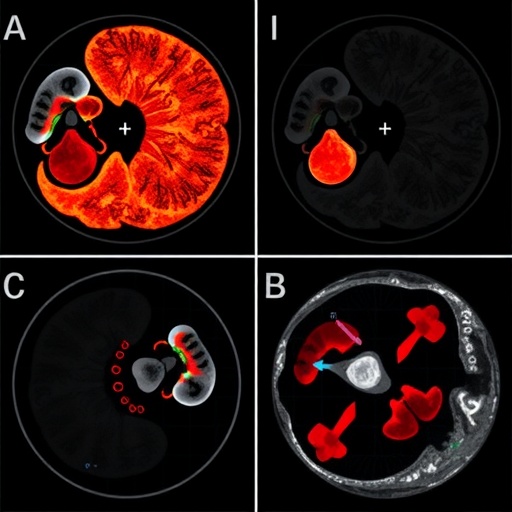
In a groundbreaking development that could reshape the therapeutic landscape for uveal melanoma, scientists have unveiled a high-throughput strategy targeting MDM2 to combat resistance to radiation therapy—a major hurdle in current treatment protocols. This innovative approach marks a significant advance toward overcoming one of the most formidable challenges in oncology: therapeutic resistance in aggressive ocular tumors.
Uveal melanoma, the most common primary intraocular malignancy in adults, is notoriously difficult to treat due to its propensity for resistance to conventional treatments such as radiation therapy. Radiation remains the frontline option for many patients; however, a substantial subset of tumors develop mechanisms to evade its cytotoxic effects, leading to disease progression and poor clinical outcomes. The newly reported strategy focuses on MDM2, a critical negative regulator of the tumor suppressor protein p53, which plays a pivotal role in cell cycle control and apoptosis.
By leveraging a high-throughput screening methodology, researchers systematically identified compounds that effectively inhibit MDM2 activity within uveal melanoma cells. This approach allowed for the rapid evaluation of numerous molecular candidates, optimizing for specificity and potency, ultimately leading to the identification of lead compounds capable of restoring p53 function. The restoration of p53’s tumor-suppressive capacity sensitizes cancer cells to radiation-induced DNA damage, thereby enhancing the efficacy of radiation therapy.
At the molecular level, MDM2 overexpression in uveal melanoma serves as a mechanism through which tumor cells neutralize p53-mediated pro-apoptotic signals. This adaptive response confers a survival advantage, enabling tumor cells to persist despite genotoxic stress. The inhibition of MDM2 lifts this blockade, triggering apoptosis pathways and disrupting the tumor’s defense against therapeutic insults. This mechanistic insight forms the basis for the targeted approach described.
The experimental work underpinning this strategy involved extensive in vitro models that accurately recapitulate the radiation-resistant phenotype of uveal melanoma cells. Researchers utilized sophisticated assays to monitor DNA damage response, apoptosis induction, and cell viability post-treatment, confirming that MDM2 inhibitors synergize with radiation to produce a pronounced cytotoxic effect. Notably, these findings were corroborated through in vivo studies employing xenograft models, bolstering the translational potential of this intervention.
Moreover, the high-throughput platform enabled the exploration of combination therapies, where MDM2 antagonists were paired with radiation and other chemotherapeutics, revealing cooperative interactions that could be exploited clinically. This paves the way for personalized regimens tailored to overcome resistance mechanisms unique to individual tumor profiles, thus maximizing therapeutic outcomes.
Importantly, the research addressed potential toxicity concerns through comprehensive pharmacodynamic and pharmacokinetic evaluations, ensuring that MDM2-targeted agents maintain favorable safety profiles. This aspect is crucial considering the delicate anatomical sites affected by uveal melanoma and the need to preserve vision and ocular integrity during treatment.
The implications of reversing radiation therapy resistance extend beyond uveal melanoma, providing a paradigm for tackling resistance in other malignancies where MDM2-p53 pathways are deregulated. This study thus contributes a vital piece to the broader oncology puzzle, underscoring the value of targeting protein-protein interactions using innovative high-throughput strategies.
What sets this research apart is its integration of cutting-edge molecular biology, drug discovery, and clinical oncology, culminating in a robust, translational approach that aligns with precision medicine goals. By pinpointing a clear molecular vulnerability and harnessing advanced screening techniques, the investigators illuminate a path toward significantly improved patient prognosis.
Furthermore, the study’s comprehensive methodology highlights the potential of high-throughput systems biology frameworks in accelerating drug discovery, enabling the rapid identification of candidate therapeutics from vast chemical libraries. This efficiency not only expedites research but also reduces costs, providing an agile platform that can be adapted to emerging resistance mechanisms and other cancer types.
As the field moves forward, the clinical validation of MDM2 inhibitors in combination with radiation therapy for uveal melanoma is eagerly anticipated. Early-phase trials are expected to evaluate efficacy, dosing regimens, and patient stratification criteria, drawing on the extensive preclinical data now available. Positive outcomes from these trials could revolutionize standard care protocols.
Equally compelling is the prospect of integrating genetic and proteomic analyses to identify biomarkers predictive of response to MDM2-targeted therapies. Such biomarkers would enable oncologists to select patients most likely to benefit, minimizing unnecessary exposure and optimizing resource allocation. This personalization represents the cutting edge of cancer therapeutics.
While challenges remain—such as circumventing potential resistance to MDM2 inhibitors themselves—the versatility and precision of this approach hold promise. Ongoing research is focusing on combination regimens, alternate dosing strategies, and novel inhibitor formulations to sustain treatment durability and minimize adverse effects.
Ultimately, this high-throughput strategy targeting MDM2 stands as a beacon of hope for patients with uveal melanoma, a disease that has long evaded effective, durable treatments. By restoring the powerful tumor suppressor activity of p53 and enhancing the lethality of radiation therapy, this innovation could transform clinical outcomes and provide a template for future anti-resistance therapies across oncology.
As the scientific community builds upon these findings, the promise of personalized, targeted interventions in uveal melanoma moves closer to realization. The intersection of molecular insight, technological innovation, and therapeutic ambition captured by this research exemplifies the next frontier in cancer treatment—one where resistance is no longer an insurmountable barrier but a surmountable challenge.
Cite Scienmag News
Nathaniel Bowman. (April 12, 2026). New High-Throughput Approach Targets MDM2 to Overcome Uveal Melanoma Radiation Resistance. Scienmag. https://scienmag.com/new-high-throughput-approach-targets-mdm2-to-overcome-uveal-melanoma-radiation-resistance/
Nathaniel Bowman. "New High-Throughput Approach Targets MDM2 to Overcome Uveal Melanoma Radiation Resistance." Scienmag, 12 April 2026, https://scienmag.com/new-high-throughput-approach-targets-mdm2-to-overcome-uveal-melanoma-radiation-resistance/. Accessed 3 September 2026.
Nathaniel Bowman. "New High-Throughput Approach Targets MDM2 to Overcome Uveal Melanoma Radiation Resistance." Scienmag. April 12, 2026. https://scienmag.com/new-high-throughput-approach-targets-mdm2-to-overcome-uveal-melanoma-radiation-resistance/


