


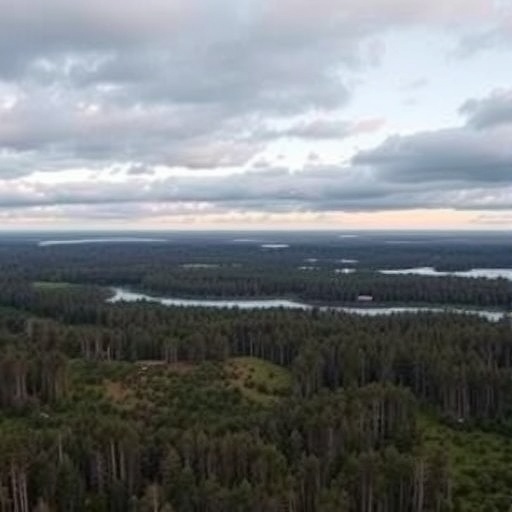
In the verdant expanse of Finland’s forests, a subtle but profound struggle unfolds among the nation’s youngest generation of forest owners. Despite Finland’s storied tradition of forest stewardship characterized by familial inheritance and autonomous management rights, recent research exposes the complexities faced by young translocal forest owners—individuals aged 18 to 30 who reside in metropolitan areas such as greater Helsinki but hold forest properties elsewhere. A new study spearheaded by scholars at the University of Eastern Finland and the Natural Resources Institute Finland illuminates how these young custodians negotiate their personal values against prevailing industrial norms that dominate Finnish forestry.
This investigation, published in the renowned journal Forest Policy & Economics, casts a critical spotlight on the tension between individual ownership freedoms and the entrenched power dynamics that shape forest management practices. The research methodology centered around qualitative interviews, allowing insight into the lived experiences and decision-making processes of these young owners. The findings reveal a recurrent pattern: these owners feel compelled to compromise their values to conform to the dominant forestry paradigms upheld by both older family members and institutional forestry professionals. Such compromises often arise from a desire to avoid conflict and to navigate the limited informational landscape regarding alternative, potentially more sustainable or value-driven management options.
Remarkably, this quandary challenges the deeply ingrained Finnish notion that forest ownership equates to unfettered liberty in managing one’s land. According to the study, this freedom persists primarily in commercial exploitation, while non-commercial aspects of forest stewardship remain heavily influenced by industrial interests. These interests manifest in advisory practices, financial incentives, and culturally transmitted management norms that subtly pressure owners to prioritize timber production and related economic returns over ecological or sentimental values.
One of the most striking revelations is the disparity between the young owners’ value systems and those traditionally espoused by the Finnish forestry sector and older familial generations. Young owners often prioritize sentimental and intrinsic values, such as emotional attachment to the land and its histories, over purely economic metrics. This divergence creates a scenario where the owners’ sense of meaningfulness regarding their forests is undermined when management practices are dictated by external norms rather than personal values.
At the heart of this dissonance lies the concept of sentimental value, which the study highlights as paramount among young forest owners. For many, forests are not mere parcels of land but repositories of memory and identity—sites of childhood experiences, berry-picking, and intergenerational bonding. This profound emotional connection imbues forests with significance that transcends monetary worth, often surpassing even environmental considerations. The intergenerational transmission of knowledge and practices enhances this connection, rooting young owners’ identity firmly in a lineage of forest stewardship.
Paradoxically, this deeply felt sentimental value also presents a formidable impediment to relinquishing forest property. While economic and environmental motivations might encourage divestment or alternative uses, the emotional ties often anchor ownership firmly to these lands. This dynamic underscores the importance of incorporating a broader spectrum of values into forest management paradigms. Failure to do so risks alienating future generations, potentially leading to a decline in the perceived meaningfulness of forest ownership and subsequent sale or abandonment of forests to commercial entities or foreign interests.
The limited availability of accessible information on alternative forest management strategies further compounds the challenge. Young owners seeking to align their stewardship with personal or contemporary environmental ethics find themselves navigating an informational vacuum dominated by industry-centric narratives. This paucity restricts the capacity for innovation or deviation from established silvicultural norms, effectively reinforcing the existing power structures within Finnish forestry.
Financial incentives aligned with industrial forestry also play a pivotal role. Subsidies, taxes, and market mechanisms designed primarily to promote timber production create economic pressures that disincentivize non-conforming management approaches. Young owners, often with limited resources and knowledge to withstand these systemic pressures, understandably opt for conformity, reinforcing the cycle of prevailing norms.
The study’s findings have profound implications for the future of forest ownership and management in Finland. As younger generations grapple with reconciling their values with inherited and institutional expectations, the potential for meaningful, value-based decision-making diminishes. This tension threatens not only the sustainability of forests in ecological terms but also the preservation of culturally and sentimentally significant landscapes.
Experts involved in the research, including Doctoral Researcher Panu Runko and Professor Irmeli Mustalahti, advocate for a more inclusive recognition of diverse forest values within policy and advisory frameworks. Expanding the scope beyond economic utility to incorporate sentimental, cultural, and broader environmental dimensions could foster greater engagement and satisfaction among young owners. Such an approach may slow or prevent the commodification and external acquisition of Finland’s small-scale forest properties, preserving their multifaceted significance.
Moreover, the research contributes a novel lens to the understanding of forest-human relationships, emphasizing the emotional and identity-related facets that have often been overlooked in quantitative silvicultural and economic analyses. Recognizing forests as living narratives intertwined with personal and collective histories invites a richer dialogue on sustainable management.
Given the intersection of intergenerational values and the structural forces of power within the Finnish forest sector, this study calls attention to critical policy gaps. Addressing these gaps by creating supportive networks, disseminating diverse management knowledge, and reforming economic incentives could empower young forest owners to steward their lands authentically. This empowerment aligns with broader European environmental goals, including those highlighted by the REPowerEU initiative, which supports sustainable and resilient natural resource management.
In essence, the challenges faced by young translocal forest owners in Finland underscore the intricate balancing act between tradition, personal values, and industrial imperatives. Understanding and amplifying the voices and experiences of these emerging custodians offer an important pathway toward more equitable, meaningful, and sustainable forestry for the future.
News Publication Date: 26-Mar-2026
Web References: http://dx.doi.org/10.1016/j.forpol.2026.103762
Cite Scienmag News
Alan Morgan. (April 8, 2026). Young Forest Owners in Finland Face Challenges Balancing Their Values. Scienmag. https://scienmag.com/young-forest-owners-in-finland-face-challenges-balancing-their-values/
Alan Morgan. "Young Forest Owners in Finland Face Challenges Balancing Their Values." Scienmag, 8 April 2026, https://scienmag.com/young-forest-owners-in-finland-face-challenges-balancing-their-values/. Accessed 4 September 2026.
Alan Morgan. "Young Forest Owners in Finland Face Challenges Balancing Their Values." Scienmag. April 8, 2026. https://scienmag.com/young-forest-owners-in-finland-face-challenges-balancing-their-values/


