


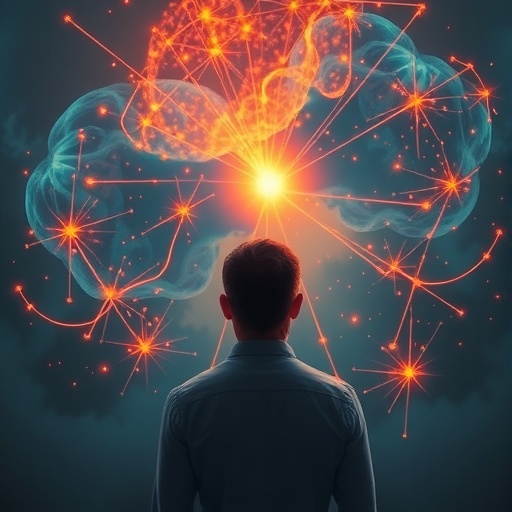
In the complex realm of human cognition, the ability to envision oneself in the future and simulate forthcoming scenarios plays a pivotal role in decision-making and behavioral regulation. This mental faculty, widely known as future-oriented mental time travel, is a cognitive process that enables individuals to project themselves forward in time, anticipating the consequences of their actions before they unfold. Professor Ekrem Dere from Ruhr University Bochum and Sorbonne Université offers a groundbreaking theoretical framework that elucidates why this cognitively demanding process is pursued despite lacking immediate tangible rewards. Published in the prestigious Psychological Review on April 6, 2026, Dere’s work fundamentally links mental time travel with the brain’s reward system through the lens of established learning principles.
At the heart of Dere’s theory lies the question: why do individuals invest considerable cognitive resources in projecting themselves into prospective events when such mental exercises do not provide instant gratification? The answer accords with the broader principle of operant conditioning, a learning paradigm where behaviors are modulated by their consequent rewards or punishments. Dere hypothesizes that mental time travel is self-reinforcing because it activates the brain’s reward circuits, particularly within the mesolimbic dopamine system, a network traditionally associated with motivation and pleasure. This activation strengthens the neural pathways related to future-oriented cognition, promoting the recurrence of this behavior.
Mental time travel is not merely an abstract imaginative exercise; it has profound implications for behavioral success and psychological wellbeing. By forecasting likely outcomes, individuals can anticipate challenges, adapt strategies proactively, and optimize their responses to complex social or professional circumstances. According to Dere, this cognitive foresight enhances everyday functioning by increasing predictability of future scenarios, thereby reducing stress and enabling more effective planning. The reinforcement derived from anticipated positive outcomes encourages continuous use of this mental strategy, creating a feedback loop that sustains and refines future-oriented thinking.
On a neurobiological level, Dere’s framework invites empirical validation through functional magnetic resonance imaging (fMRI). He posits that individuals who frequently engage in mental time travel demonstrate heightened activity in the mesolimbic dopamine pathway. This neural activation serves as an intrinsic reward, reinforcing the cognitive process. The theory suggests that the responsiveness of the reward system can be considered both a marker and a mechanistic driver of the propensity to project oneself mentally into the future.
This novel perspective introduces a rich interface between cognitive psychology and neuroscience, underscoring the adaptive value of mental time travel within the paradigm of operant conditioning. The realization that this future-oriented cognition is intrinsically rewarding reframes prior conceptions that viewed mental time travel largely through the lens of effortful cognitive control or executive function alone. Instead, Dere highlights how motivational neural systems are interwoven with high-level temporal cognition to shape behavior dynamically.
However, mental time travel is a double-edged sword. Dere cautions that in pathopsychological contexts, the same mechanisms driving adaptive foresight can be usurped by maladaptive processes. Individuals suffering from various mental disorders may become trapped in cycles of rumination and catastrophic future projections. Such negative mental time travel engenders emotional distress, exacerbates poor self-image, and precipitates dysfunctional avoidance behaviors. This maladaptive pattern may entrench chronic psychopathology, revealing how disruptions in the reward reinforcement system can have detrimental effects when linked to negative mental contents.
Therapeutically, Dere’s insights advocate for targeted intervention strategies that foster constructive and adaptive future-oriented mental time travel. Psychotherapeutic training can help patients develop healthy mental simulations of the future, thereby promoting resilience and goal-directed behavior. Identifying and intercepting catastrophic projections early can mitigate maladaptive reinforcement and help break cycles of chronic mental illness.
Future research avenues are wide-ranging and profound. Beyond neuroimaging validation, exploration into how individual differences in reward system sensitivity influence mental time travel frequency and quality could yield critical insights. Similarly, investigating how pathological states modulate this self-reinforcement process at the neural level may open new frontiers in precision psychiatry, guiding personalized interventions that recalibrate reward-driven cognitive strategies.
Moreover, Dere’s theoretical integration expands our understanding of how intrinsic motivational systems scaffold complex temporal cognition. This has implications not only for psychopathology but also for educational and occupational domains, where fostering future-oriented thinking can enhance adaptive behavior, creativity, and problem-solving capacities. Enhanced understanding of the underlying neurocognitive mechanisms also promises to inform the development of novel cognitive training programs aimed at improving mental health and cognitive performance.
In sum, Dere’s self-reinforcement hypothesis of future-oriented mental time travel presents an elegant synthesis of cognitive psychology and neuroscience. It posits that the brain’s reward system plays a central role not only in shaping behavior based on immediate outcomes but also in reinforcing complex cognitive simulations of future events. This paradigm-shifting concept delineates mental time travel not as an isolated cognitive feat but as a self-sustaining behavior deeply embedded in the brain’s learning and motivation circuitry, thereby providing a robust framework for understanding the adaptive and maladaptive facets of temporal cognition.
Cite Scienmag News
Ophelia Keating. (April 7, 2026). Why Certain Individuals Mentally Project Themselves Into the Future More Frequently Than Others. Scienmag. https://scienmag.com/why-certain-individuals-mentally-project-themselves-into-the-future-more-frequently-than-others/
Ophelia Keating. "Why Certain Individuals Mentally Project Themselves Into the Future More Frequently Than Others." Scienmag, 7 April 2026, https://scienmag.com/why-certain-individuals-mentally-project-themselves-into-the-future-more-frequently-than-others/. Accessed 4 September 2026.
Ophelia Keating. "Why Certain Individuals Mentally Project Themselves Into the Future More Frequently Than Others." Scienmag. April 7, 2026. https://scienmag.com/why-certain-individuals-mentally-project-themselves-into-the-future-more-frequently-than-others/


