


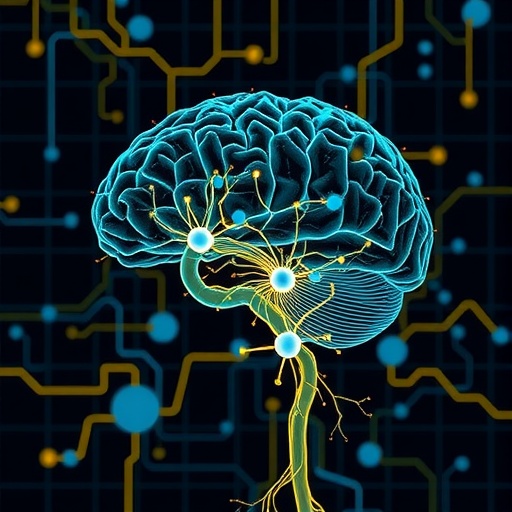
In the labyrinth of the brain’s intricate neural network lies a remarkable capacity: the ability to anticipate the future by internalizing the rhythms and patterns of past experiences. A recent breakthrough study published in Nature Neuroscience unveils how certain neural circuits encode prior knowledge of temporal statistics, offering profound insights into the brain’s predictive machinery. This discovery not only deepens our understanding of cognitive processing but also bridges crucial gaps in the evolving narrative of neuroscience, revealing the biological underpinnings of time perception and anticipation.
Temporal statistics refer to the brain’s internal representation of time intervals and probabilities based on past events. Our daily lives are inundated with temporal information—rhythms in speech, repetitive sounds in music, or intervals between actions—and the brain’s ability to learn these temporal patterns informs its expectations about future happenings. The new research led by Koppen, Klinkhamer, Runge, and colleagues elucidates how specific neural circuits dynamically encode such prior knowledge, enabling the brain to anticipate intervals even amidst uncertainty.
Using a combination of electrophysiological recordings, behavioral tasks, and computational modeling, the researchers meticulously mapped how neuronal populations respond to varying temporal patterns. In carefully designed experiments, subjects were exposed to sequences with controlled temporal variability, allowing scientists to observe how neurons adapted their firing patterns over time. The results showed a remarkable form of neural plasticity: certain circuits not only responded passively but actively represented the statistical regularities of temporal intervals, effectively forming an internal temporal map.
This encoding mechanism underscores the brain’s ability to optimize behavior by leveraging prior knowledge, a concept central to Bayesian theories of perception and decision-making. By integrating sensory input with previously acquired temporal statistics, the neural circuits bias expectations toward more probable outcomes. This computational strategy enhances efficiency and accuracy in predicting when an event is likely to occur, crucial for functions such as motor coordination, speech processing, and even complex cognitive tasks like planning and reasoning.
A striking revelation from the study is the identification of specific brain regions where these temporal priors are encoded. The data implicates a distributed network involving prefrontal, parietal, and striatal regions, each contributing uniquely to the processing of temporal information. The prefrontal cortex is suggested to play a role in maintaining temporal expectations over longer durations, while the striatum appears vital for real-time updating of interval probabilities based on new sensory evidence. Such division of labor among regions highlights the brain’s sophisticated architecture for managing time-based predictions.
Moreover, the study delves into the neuronal coding strategies employed by these circuits. The researchers observed that neurons adjust their firing rates not only to the absolute timing of events but also relative to the inferred probability distribution of intervals. This dynamic coding scheme allows neurons to reflect uncertainty and adapt flexibly to changing temporal contexts, suggesting that these circuits continuously perform probabilistic inference. This finding aligns with the growing appreciation of the brain as a Bayesian machine, constantly refining its internal models against incoming data.
Beyond foundational neuroscience, these discoveries have compelling implications for understanding neuropsychiatric disorders often characterized by disrupted temporal processing. Conditions such as schizophrenia, ADHD, and Parkinson’s disease involve impairments in timing and prediction, possibly linked to dysfunctions in the neural circuits identified in this work. Therefore, unraveling how temporal statistics are encoded could pave the way for novel diagnostic and therapeutic strategies targeting these dysfunctional mechanisms.
The study also raises fascinating questions about the developmental trajectory of temporal encoding circuits. How does the brain acquire and refine temporal priors across the lifespan? Does early experience shape these neural representations, potentially influencing cognitive abilities related to timing and prediction? While the current work focuses on adult subjects, future research inspired by these findings may explore the ontogeny of temporal statistics encoding and its susceptibility to environmental influences.
Furthermore, these insights extend into artificial intelligence and machine learning domains. Understanding the brain’s natural strategies for temporal prediction can inform the design of algorithms that better mimic human time perception and decision-making under uncertainty. Temporal priors and probabilistic inference remain significant challenges for AI, and biologically inspired models emerging from this neuroscience research may help bridge the gap between human cognition and artificial systems.
The interplay between neural circuitry and temporal statistics also relates to the subjective experience of time—a field intertwined with philosophy and psychology. By decoding the biological basis of temporal expectations, the study brings us closer to unveiling how humans perceive the flow of time and how this perception is modulated by memory and anticipation. Such knowledge could reshape theoretical frameworks about consciousness and temporal awareness.
Notably, the research methodology combined high-resolution neural recordings with advanced computational modeling, reflecting a paradigm shift in neuroscience toward integrative approaches. By quantitatively linking neural activity with probabilistic models of prior knowledge, the work exemplifies the power of interdisciplinary collaboration in unraveling complex brain functions. This approach sets a promising precedent for future investigations aiming to decode high-dimensional cognitive processes.
The robustness and generalizability of the findings were tested across different experimental paradigms and species, suggesting that encoding prior temporal knowledge is a fundamental and evolutionarily conserved neural function. Cross-species analyses enrich the study’s impact, emphasizing the universality of predictive temporal coding mechanisms across mammalian brains.
In conclusion, Koppen and colleagues have charted an exciting frontier in cognitive neuroscience: decoding how neural circuits internalize and represent prior knowledge of temporal statistics to anticipate future events. This pioneering research not only advances theoretical understanding but also fuels practical applications spanning medicine, artificial intelligence, and beyond. As we continue to grapple with time’s elusive nature, these discoveries illuminate the neural tapestries weaving past, present, and future into the seamless fabric of experience.
The implications of this work resonate profoundly beyond laboratories and academic circles. By uncovering the brain’s intrinsic ability to harness temporal statistics, it inspires new narratives about human cognition’s predictive power. The blend of experimental rigor and theoretical innovation showcased in this study exemplifies the continual quest to unravel the mysteries of the mind, promising transformative insights for years to come.
Cite Scienmag News
Cassandra Pierce. (April 7, 2026). Neural Circuits Store Temporal Statistics as Prior Knowledge. Scienmag. https://scienmag.com/neural-circuits-store-temporal-statistics-as-prior-knowledge/
Cassandra Pierce. "Neural Circuits Store Temporal Statistics as Prior Knowledge." Scienmag, 7 April 2026, https://scienmag.com/neural-circuits-store-temporal-statistics-as-prior-knowledge/. Accessed 3 September 2026.
Cassandra Pierce. "Neural Circuits Store Temporal Statistics as Prior Knowledge." Scienmag. April 7, 2026. https://scienmag.com/neural-circuits-store-temporal-statistics-as-prior-knowledge/


