


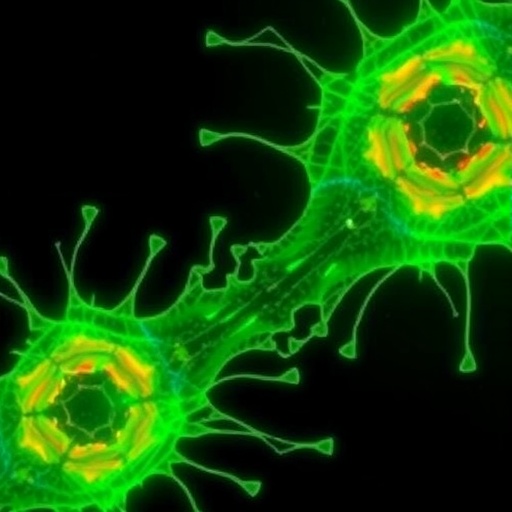
JERUSALEM, ISRAEL — Neuroblastoma, a cancer rooted deep in the earliest moments of human development, continues to confound clinicians and researchers alike. This malignancy originates when neural crest cells in the developing fetus deviate from their intended path, forming tumors that can remain undetected for months after birth. Representing approximately 28 percent of all infant cancers in Western countries, neuroblastoma presents a paradox: some cases spontaneously regress, while others metastasize aggressively, defying current treatment approaches. Alarmingly, the survival rates for high-risk cases have stagnated near 40 percent over decades, underscoring the urgent need for innovative therapeutic strategies.
In a groundbreaking study published in the journal Brain Medicine, researchers have unveiled a pivotal molecular mechanism sustaining neuroblastoma progression, with implications that could redefine therapeutic interventions. The focal point of their discovery is the intricate interplay between neuronal nitric oxide synthase (nNOS) and the mechanistic target of rapamycin (mTOR) signaling pathway—a critical regulator of cell growth and metabolism.
Nitric oxide (NO), a gaseous signaling molecule conserved across evolutionary history, orchestrates essential physiological functions such as vasodilation and neural communication. However, its dualistic role in cancer biology renders it a double-edged sword. While excessive NO concentrations can inflict DNA damage and trigger programmed cell death, chronic, moderate elevations promote tumor survival and metastatic potential via post-translational protein modifications known as S-nitrosylation. Building upon prior evidence linking NO to glioblastoma malignancy, the scientists explored whether nNOS, the neuronal-specific isoform responsible for NO generation in neuroblastoma cells, similarly manipulates tumor behavior by engaging downstream effectors.
Central to their findings is mTOR, a serine/threonine kinase acting as an intracellular hub for growth factor and nutrient signaling. Aberrant mTOR activation is a hallmark in numerous cancers, driving unchecked proliferation and metabolic rewiring. Using a dual approach targeting nNOS inhibition both pharmacologically—via a selective small molecule inhibitor dubbed BA-101—and genetically through small interfering RNA (siRNA), the investigators demonstrated marked suppression of neuroblastoma cell growth in vitro. Both tactics resulted in significant decreases in NADPH-diaphorase activity, a standard surrogate for NOS enzymatic function, and concomitant reduction in nitrite levels, reflecting diminished NO production.
Downstream biochemical analyses revealed a cascade of disrupted signaling events. Levels of 3-nitrotyrosine, an indicator of nitrosative stress, plummeted following nNOS blockade, correlating with diminished phosphorylation states of AKT and mTOR proteins. Importantly, the TSC2 protein, an intrinsic mTOR pathway inhibitor, was upregulated, suggesting restoration of cellular growth checkpoints. These molecular shifts resulted not only in arrested proliferative capacity—evident in the reduced number of tumor colonies—but also in decreased expression of synaptophysin, a neuroendocrine marker indicative of malignant phenotype. This phenotypic reversion underscores the therapeutic potential of targeting the nNOS–mTOR axis beyond mere cytostasis.
Reinforcing the specificity of these mechanistic insights, opposite perturbation experiments wherein neuroblastoma cells were exposed to SNAP, a potent NO donor, elicited reciprocal effects. Elevated nitrosative markers coincided with decreased TSC2 and enhanced phosphorylation of AKT, mTOR, and downstream ribosomal protein S6, thus amplifying oncogenic signaling. This symmetrical evidence strengthens the assertion that NO acts as a critical upstream modulator of mTOR activity in neuroblastoma cells.
Translating these findings from bench to bedside necessitated in vivo validation. Employing a xenograft model, human SH-SY5Y neuroblastoma cells were implanted subcutaneously into immunocompromised NOD-SCID mice. Treatment with BA-101 at 80 mg/kg/day for 22 days produced dramatic tumor growth suppression relative to vehicle controls. Treated animals exhibited significantly smaller tumor volumes and weights without accompanying systemic toxicity or weight loss, highlighting the potential safety and efficacy of this novel intervention strategy.
Prof. Haitham Amal, the study’s senior investigator based at Hebrew University of Jerusalem and affiliated with Boston Children’s Hospital, highlighted the translational promise of their work: “The robustness and consistency of the nNOS-mediated regulation of mTOR signaling across molecular, cellular, and in vivo models firmly establish this pathway as a key driver of neuroblastoma malignancy. Targeting this axis could circumvent the limitations currently encountered with direct mTOR inhibitors, which often trigger resistance via compensatory feedback.”
First author Dr. Shashank Kumar Ojha emphasized the methodological rigor underpinning the study’s conclusions: “Our combined use of pharmacologic inhibition alongside genetic silencing offers compelling evidence that the observed effects are inherent to the tumor biology rather than off-target drug actions. This paves the way for rational drug development efforts focused on nNOS.”
While these discoveries illuminate a promising therapeutic avenue, the authors acknowledge inherent caveats. The reliance on a single neuroblastoma cell line may not fully capture tumor heterogeneity or interactions within the tumor microenvironment. Furthermore, the precise chemical makeup of BA-101 remains confidential pending patents, delaying external replication. Whether nitrosative stress-mediated protein modifications alone drive the observed tumor suppression or additional intermediary pathways contribute remains an active area for future research.
Nevertheless, the implications of this study are profound. Current mTOR inhibitors used clinically, such as rapalogs, have yielded disappointing results when administered as monotherapies for neuroblastoma, typically due to compensatory activation of parallel signaling modules. By intercepting mTOR activation upstream at the level of nNOS and nitric oxide production, this research charts a compelling alternative approach that may overcome existing therapeutic barriers.
The translation from murine tumor regression to clinical success in human pediatric patients involves complex hurdles. However, with a newly mapped molecular door leading into neuroblastoma’s core signaling machinery, targeted nNOS inhibition offers a beacon of hope that could redefine treatment paradigms for one of childhood oncology’s most formidable foes. Ongoing studies will determine whether this promising strategy can be harnessed safely and effectively in the clinical arena, ultimately transforming outcome trajectories for affected children.
Cite Scienmag News
Nathaniel Bowman. (April 7, 2026). Scientists Discover How to Disable Key Enzyme That Sustains Neuroblastoma Cells. Scienmag. https://scienmag.com/scientists-discover-how-to-disable-key-enzyme-that-sustains-neuroblastoma-cells/
Nathaniel Bowman. "Scientists Discover How to Disable Key Enzyme That Sustains Neuroblastoma Cells." Scienmag, 7 April 2026, https://scienmag.com/scientists-discover-how-to-disable-key-enzyme-that-sustains-neuroblastoma-cells/. Accessed 3 September 2026.
Nathaniel Bowman. "Scientists Discover How to Disable Key Enzyme That Sustains Neuroblastoma Cells." Scienmag. April 7, 2026. https://scienmag.com/scientists-discover-how-to-disable-key-enzyme-that-sustains-neuroblastoma-cells/


