


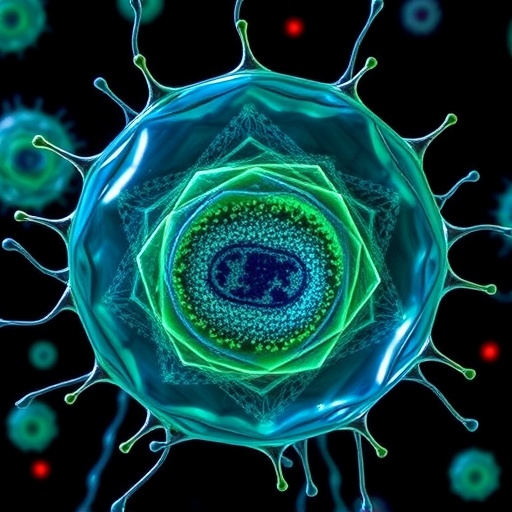
In the relentless battle against cancer, a new frontier is emerging—necrosis, specifically necroptosis, a programmed form of cell death that could revolutionize cancer treatment. A groundbreaking study by Liang, Tan, Li, and colleagues delves deep into this cellular phenomenon, uncovering the potential of necroptosis as a powerful weapon to kill tumor cells that have so far eluded conventional therapies.
Necroptosis stands at the crossroads of cell survival and death, a meticulously orchestrated process different from apoptosis, the more commonly studied programmed cell death. Unlike apoptosis, which features classic hallmarks like DNA fragmentation and cell shrinkage, necroptosis induces a more explosive demise, marked by cell swelling and membrane rupture. This form of death ignites potent inflammatory signals, which ironically could turn the tumor’s microenvironment against itself, aiding immune recognition and attack.
Understanding the molecular machinery behind necroptosis is pivotal to harnessing its power. The process pivots on the proteins RIPK1, RIPK3, and MLKL. These molecules interact in a cascade to initiate membrane disruption, a step that effectively dismantles the tumor cell from within. The study by Liang et al. meticulously outlines how triggering this pathway can bypass the sophisticated resistance mechanisms that many cancers deploy to avoid apoptosis, a common pitfall in current cancer therapies.
What sets necroptosis apart is not just its mechanism but its therapeutic promise. Many tumors develop evasion tactics to block apoptosis, enabling uncontrolled proliferation. By targeting necroptosis, researchers aim to activate a fail-safe cellular suicide pathway that these cancer cells cannot easily circumvent. This duality expands the therapeutic arsenal, potentially converting “undruggable” cancers into candidates for precision medicine interventions.
The inflammatory aftermath of necroptosis also has intriguing implications for immunotherapy. As necrotic cells release danger signals, they alert and activate immune cells within the tumor microenvironment. Liang and colleagues highlight how this immune activation can synergize with checkpoint inhibitors—drugs that have revolutionized cancer immunotherapy by unleashing the immune system against cancer cells. This synergy could amplify tumor destruction beyond the limits of either treatment alone.
Yet, the therapeutic induction of necroptosis commands caution. The inflammatory response, while beneficial in stimulating anti-tumor immunity, also risks causing collateral tissue damage or exacerbating systemic inflammation. The article thoughtfully addresses the challenge of calibrating necroptosis activation to maximize cancer cell killing while minimizing harm to healthy tissues—a balance crucial for safe and effective therapies.
The researchers further explore pharmacological agents capable of modulating necroptosis. Small-molecule inhibitors and activators that can selectively influence RIPK1 and RIPK3 activity represent a frontier in drug development. These compounds offer a blueprint for next-generation anti-cancer drugs that precisely target necroptotic pathways, opening avenues for combination therapies that enhance efficacy and overcome drug resistance.
Another exciting facet of this research is the identification of biomarkers to predict tumor susceptibility to necroptosis-inducing therapies. By profiling tumor expression of necroptosis regulators, clinicians could stratify patients according to their likelihood of responding, ushering in an era of truly personalized cancer treatment strategies aimed at necroptotic pathways.
Beyond direct tumor targeting, the study discusses the role of necroptosis in shaping the tumor microenvironment. It suggests that inducing necroptotic death could remodel the often immunosuppressive niche into one more receptive to immune cell infiltration and attack, effectively converting “cold” tumors, resistant to immunotherapy, into “hot,” immune-active lesions.
The complexity of necroptosis regulation in cancer cells also emerges as a crucial topic. The authors highlight the interplay between necroptosis and other cell death pathways, such as apoptosis and autophagy, underscoring a delicate balance that cancer cells manipulate to evade death. Disrupting this balance by selectively tipping the scale towards necroptosis could effectively unblock stubborn therapeutic resistance.
Intriguingly, Liang et al. discuss the potential of combining necroptosis-targeting agents with conventional therapies like chemotherapy and radiation. These traditional treatments may prime tumor cells for necroptotic death, while necroptosis activators boost their lethal efficiency. This combinatorial approach could enhance treatment outcomes and reduce necessary doses, potentially limiting side effects.
The article also addresses challenges in delivery mechanisms for necroptosis-targeted therapies. Ensuring that necroptosis modulators reach tumor sites in effective concentrations requires innovation in drug delivery systems, including nanotechnology and targeted vectors that can home in on tumors, sparing normal tissues and reducing systemic toxicity.
Future directions outlined in the study include the refinement of necroptosis pathways as therapeutic agents progress from bench to bedside. Clinical trials designed to explore dosage, safety, and efficacy will be critical milestones. Equally important is the ongoing research to understand tumor heterogeneity in necroptosis responsiveness, potentially guiding combinational approaches tailored to specific cancer subtypes.
This compelling foray into programmed necrosis reshapes our understanding of tumor biology and therapy. By co-opting the cell’s own death machinery in an inflammatory and immunogenic manner, necroptosis emerges as a dynamic, multifaceted approach to dismantling cancer’s defenses. The study by Liang and colleagues signals a paradigm shift toward new therapeutic horizons where the cell’s explosive end might be the key to beginning the end for cancer.
In summary, necroptosis represents a promising, yet complex target in oncology. Its interplay with immune activation, potential to bypass resistance mechanisms, and role in reshaping the tumor microenvironment marks it as a critical area for future therapeutic development. While challenges remain in safely and effectively harnessing this form of cell death, the insight provided by this research accelerates the trajectory toward innovative cancer treatments capable of delivering long-awaited breakthroughs.
Cite Scienmag News
Nathaniel Bowman. (April 6, 2026). Targeting Necroptosis to Kill Cancer Cells. Scienmag. https://scienmag.com/targeting-necroptosis-to-kill-cancer-cells/
Nathaniel Bowman. "Targeting Necroptosis to Kill Cancer Cells." Scienmag, 6 April 2026, https://scienmag.com/targeting-necroptosis-to-kill-cancer-cells/. Accessed 4 September 2026.
Nathaniel Bowman. "Targeting Necroptosis to Kill Cancer Cells." Scienmag. April 6, 2026. https://scienmag.com/targeting-necroptosis-to-kill-cancer-cells/


