


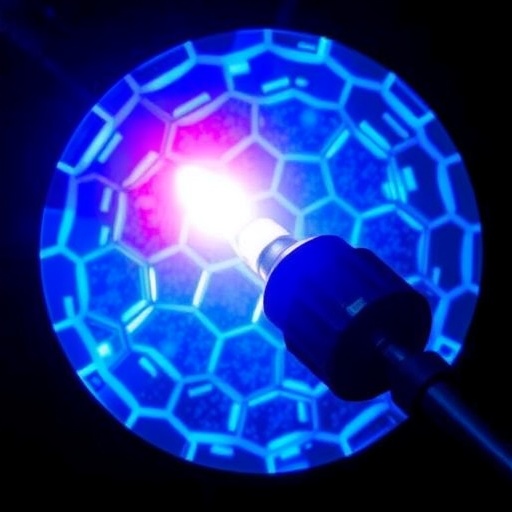
In a remarkable leap for imaging technology, the terahertz spectral domain, positioned uniquely between microwaves and infrared radiation, is emerging as a powerful frontier for a new generation of safe, high-resolution imaging applications. Terahertz waves owe their significance to a blend of physical properties: their low photon energy mitigates ionization damage to delicate biological tissues, while their pronounced sensitivity to polar molecules and the distinctive spectral fingerprints of complex macromolecules offer unprecedented potential for material identification and biomedical diagnostics. Recent advances have harnessed coherent detection techniques and sophisticated computational imaging to develop diverse terahertz imaging modalities, spanning from broad macroscopic fields down to nanoscale near-field resolutions.
The evolution of terahertz imaging modalities is marked by a rich timeline that encompasses continuous-wave digital holography, ptychography, computed tomography, focal-plane imaging, pulse time-domain holography, single-pixel imaging, and near-field techniques. Each of these modalities manifests specific trade-offs between resolution, acquisition speed, and information richness, demanding innovative approaches to optimize their respective capabilities. A newly published comprehensive review article in Opto-Electronic Technology meticulously synthesizes this progression, elucidating the fundamental working principles and practical applications underpinning each imaging technique.
Continuous-wave (CW) terahertz holography has witnessed significant breakthroughs through the marriage of algorithmic sophistication and refined optical configurations, vastly enhancing image resolution, reconstruction stability, and fidelity. This modality benefits from steady-state terahertz sources and phase-sensitive detection, allowing for precise amplitude and phase retrieval. The advances have paved the way for high-quality, real-time imaging, crucial for applications requiring stringent spatial resolution and dynamic response.
In parallel, terahertz ptychography has expanded its illumination strategies beyond traditional plane waves to include spherical wavefronts and customized beam probes. Coupled with powerful iterative reconstruction algorithms, these developments have enabled phase retrieval with high spatial resolution and expansive fields of view, operational in both transmission and reflection geometries. Such advances significantly enhance imaging throughput and enable detailed phase and amplitude mapping critical for material science and biomedical investigations.
Terahertz computed tomography (CT) has also transcended conventional resolution barriers by employing novel optical elements such as super-oscillatory lenses for lateral resolution and Bessel beams to boost axial resolving power. Moreover, advanced scanning methods involving sparse-angle reconstruction and two-dimensional galvanometer-based beam steering have accelerated volumetric imaging speed, enhancing the practicality of terahertz CT for industrial inspections and biological tissue visualization.
Focal-plane terahertz imaging has overcome its initial limitations related to signal-to-noise ratios through dynamic subtraction, differential detection techniques, and quasi-near-field enhancements. These refinements empower real-time wavefront characterization, verification of metasurface functionalities, and sophisticated polarization- and spectrally-resolved imaging of chemical and biological specimens. These imaging capabilities are particularly transformative in the rapid screening and non-destructive evaluation of materials.
Pulse time-domain holography leverages the broadband coherent detection attributes of ultrafast terahertz pulses, unlocking unique possibilities in material parameter extraction and the examination of complex structured beam propagation dynamics. Its ability to resolve temporal and spectral signatures makes it an indispensable modality for probing transient phenomena and intricate biological and chemical systems.
Single-pixel terahertz imaging marries spatial light modulation with computational algorithms, utilizing optically controlled materials like silicon, vanadium dioxide, and graphene for high-speed pattern encoding. This modality excels in dynamic real-time imaging, near-field super-resolution, and integration with spectral and time-of-flight imaging schemes, expanding the functional versatility of terahertz imaging in both scientific and industrial contexts.
Near-field terahertz microscopy presents three principal approaches: aperture-type, photoconductive probe, and scattering-type techniques. These methods have facilitated extraordinary breakthroughs such as mapping carrier distributions in two-dimensional materials, visualizing surface plasmon polaritons, characterizing dielectric contrasts in phase-change media, and conducting biomedical imaging with spatial resolution down to tens of nanometers. This spatial precision heralds new vistas in the study of nanoscale phenomena.
The inherent properties of terahertz radiation — non-ionizing nature, heightened sensitivity, and the capacity to reveal distinct spectral fingerprints — have firmly established terahertz imaging as a cutting-edge tool with distinctive advantages in security screening, biomedical diagnostics, and industrial non-destructive testing. Despite these advancements, technical challenges remain, especially concerning further resolution enhancement, faster image acquisition, and seamless system integration.
Future progress in terahertz imaging is poised to benefit exponentially from the synergistic integration of emerging deep learning algorithms, innovative hardware designs, and multimodal imaging approaches. These developments aim to deliver real-time, high-precision, and portable systems capable of broad deployment across diverse real-world applications. The promise is a transformative leap in how materials and biological tissues are inspected, characterized, and understood.
Leading research groups have been instrumental in pushing these frontiers forward. Prof. Lu Rong’s team focuses on optical information processing, digital holography, and biomedical imaging. Prof. Nikolay Petrov’s lab explores holography and femtosecond optics with terahertz applications. Prof. Xinke Wang investigates terahertz metamaterials and transient material processes. Prof. Liguo Zhu advances terahertz photonics and computational imaging. Prof. Min Hu concentrates on the development of terahertz sources and applications, while Prof. Yan Zhang’s research spans photonic crystal devices and surface plasmonic optics.
The comprehensive review published in Opto-Electronic Technology offers an authoritative and timely synthesis of the field’s advancements, serving as a crucial reference point for researchers, engineers, and end-users aiming to harness terahertz imaging’s full potential. As the technology matures, it stands on the cusp of revolutionizing industries ranging from security and healthcare to manufacturing quality control, revolutionizing how invisible wavebands are harnessed to reveal the hidden universe of materials and living tissues.
Cite Scienmag News
Denise Maddox. (April 6, 2026). Advancements and Applications of Terahertz Imaging Technology. Scienmag. https://scienmag.com/advancements-and-applications-of-terahertz-imaging-technology/
Denise Maddox. "Advancements and Applications of Terahertz Imaging Technology." Scienmag, 6 April 2026, https://scienmag.com/advancements-and-applications-of-terahertz-imaging-technology/. Accessed 3 September 2026.
Denise Maddox. "Advancements and Applications of Terahertz Imaging Technology." Scienmag. April 6, 2026. https://scienmag.com/advancements-and-applications-of-terahertz-imaging-technology/


