


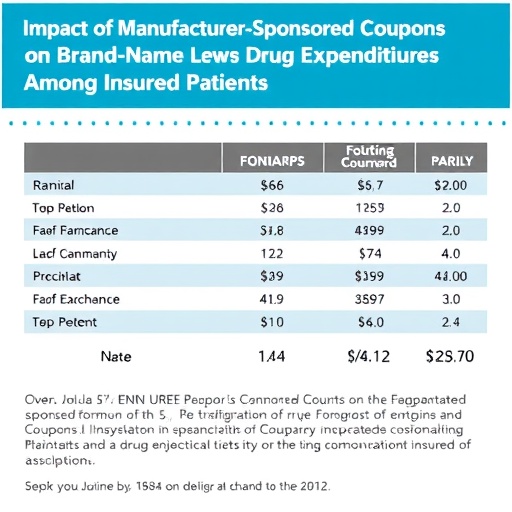
In the realm of pharmaceutical economics, a recent longitudinal study has illuminated shifting patterns in the utilization of manufacturer-sponsored coupons among commercially insured patients from 2017 through 2024. These pivotal findings underscore evolving market dynamics wherein coupon usage experienced a marked decline, even as the per-claim value of these coupons escalated. The investigation offers profound insights into how pharmaceutical manufacturers may be navigating the increasingly complex landscape of insurance formularies and patient cost-sharing obligations.
Over the seven-year span, data reveal a substantive contraction in the breadth of coupon distribution. This reduction in coupon incidence suggests a strategic recalibration by manufacturers, who appear to be directing larger, more targeted incentives toward a narrower patient population or specific drug portfolios. Such a shift may be reflective of heightened formulary restrictions imposed by insurers, as well as the proliferation of copay accumulator programs designed to limit the financial impact of coupons on patients’ insurance cost-sharing.
Copay accumulator programs, which prevent coupon payments from counting toward patients’ deductibles or out-of-pocket maximums, introduce a significant barrier for cost relief seekers. As these mechanisms gain traction within insurance frameworks, manufacturers likely face pressure to increase coupon amounts to maintain patient adherence and competitive positioning. Consequently, the study’s observation of rising average coupon values per claim may mirror this compensatory strategy in response to amplified patient financial liability.
Moreover, the broader economic context of escalating drug prices and healthcare costs compounds the significance of these findings. Higher underlying cost-sharing requirements from insurers translate into increased financial burdens for patients, which in turn could necessitate augmented coupon incentives. The nuanced interplay between manufacturer coupon strategy and insurer cost containment efforts reveals the complexity of balancing patient affordability with sustainable healthcare financing.
The strategic concentration of coupon programs also raises important considerations regarding access equity. While larger coupons targeted at select patients might enhance adherence for some, the overall decline in coupon availability could inadvertently widen disparities for others who face unaffordable copays without manufacturer assistance. This facet of the evolving coupon ecosystem warrants further examination, particularly in relation to patient outcomes and healthcare utilization patterns.
Technological advancements and data analytics may further influence manufacturer decision-making in deploying coupons. By leveraging real-world evidence and insurance claims data, pharmaceutical companies can identify patient subsets most likely to benefit from or respond to coupon support. This precision approach aligns with emerging trends in personalized medicine and market segmentation, potentially optimizing resource allocation amidst increasing cost pressures.
Regulatory scrutiny also shapes the landscape in which these coupon programs operate. Policy debates continue regarding the ethical implications and impact of manufacturer coupons on drug pricing transparency and overall healthcare expenditure. As copay assistance becomes a focal point for policy intervention, manufacturers must navigate a regulatory environment that balances patient access with systemic cost control.
From a macroeconomic perspective, examining financial incentives through manufacturer coupons offers a lens into broader market economics within healthcare. The shifting patterns observed articulate the responses of private sector participants to institutional pressures, evolving reimbursement models, and patient affordability concerns. These dynamics in pharmaceutical commerce exemplify the intricate choreography of incentives and regulations characteristic of contemporary health economics.
This analysis illuminates the consequences of formulary management strategies, which employ tiered drug pricing and preferred drug lists to steer utilization. By increasing barriers to access via copay accumulators, insurers effectively shift cost burdens to patients, compelling manufacturers to adjust coupon offerings upwards. The resultant tension between payer cost containment and manufacturer patient acquisition strategies encapsulates enduring challenges in the pharmaceutical marketplace.
In sum, this comprehensive study articulates a complex narrative of adaptation and strategy within drug manufacturer coupon programs in the context of commercial insurance. The significant decrease in coupon use juxtaposed with increased per-claim coupon investment delineates manufacturers’ tactical response to formulary restrictions and escalating patient cost-sharing. The findings provoke critical reflection on the implications for patient access, health equity, and market sustainability.
Future research avenues may focus on the longitudinal effects of these trends on patient adherence, clinical outcomes, and overall healthcare costs. Additionally, rigorous evaluation of policy interventions targeting copay assistance programs will be integral in shaping equitable and effective healthcare financing strategies. As digital health tools and data analytics evolve, they will further refine manufacturer approaches, amplifying the need for dynamic analysis in this sector.
Ultimately, this study presents a vital contribution to our understanding of financial incentives in healthcare, the operational realities faced by pharmaceutical manufacturers, and the intricate balance among stakeholders in optimizing patient affordability and system-wide cost-efficiency.
News Publication Date: Not specified (study embargoed; pending release)
Web References: Not provided
References: doi:10.1001/jama.2026.2620
Cite Scienmag News
Courtney Benton. (April 6, 2026). Impact of Manufacturer-Sponsored Coupons on Brand-Name Drug Expenditures Among Insured Patients. Scienmag. https://scienmag.com/impact-of-manufacturer-sponsored-coupons-on-brand-name-drug-expenditures-among-insured-patients/
Courtney Benton. "Impact of Manufacturer-Sponsored Coupons on Brand-Name Drug Expenditures Among Insured Patients." Scienmag, 6 April 2026, https://scienmag.com/impact-of-manufacturer-sponsored-coupons-on-brand-name-drug-expenditures-among-insured-patients/. Accessed 3 September 2026.
Courtney Benton. "Impact of Manufacturer-Sponsored Coupons on Brand-Name Drug Expenditures Among Insured Patients." Scienmag. April 6, 2026. https://scienmag.com/impact-of-manufacturer-sponsored-coupons-on-brand-name-drug-expenditures-among-insured-patients/


