


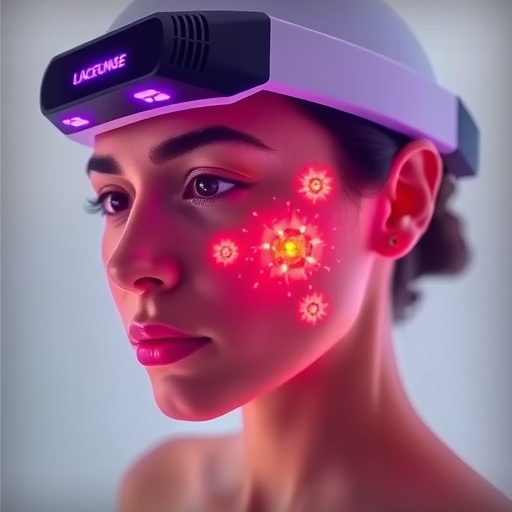
A groundbreaking advancement in dermatological diagnostics has emerged from the collaborative efforts of Abugabah, Shukla, Mishra, and their team, culminating in a smart medical system designed to revolutionize skin cancer detection. Published in Scientific Reports in 2026, this innovative platform integrates complex clinical workflows with cutting-edge artificial intelligence to achieve unparalleled accuracy in diagnosing skin cancer across a wide array of heterogeneous pathologies. By harnessing vast datasets and sophisticated algorithms, this system is poised to transform not only diagnostic precision but also patient management strategies on a global scale.
At the heart of this technology lies an intelligent framework capable of assimilating heterogeneous data inputs—ranging from dermoscopic images and histopathological slides to patient clinical histories and demographic information. The integration of such diverse data types is a defining feature, as skin cancer manifestations vary considerably across patient populations and pathological subtypes. Traditional diagnostic methods, often constrained by human subjectivity and limited data sources, struggle to maintain consistency when faced with this variability. The new system addresses these challenges by employing a multi-modal approach, where disparate data streams are fused, allowing for exhaustive analysis that supports robust decision-making.
The system’s architecture is underpinned by advanced machine learning techniques, including convolutional neural networks (CNNs) designed for image processing and transformer-based models adept at managing sequential and textual data. These models are trained on expansive, annotated datasets containing millions of labeled skin lesion images, biopsy results, and patient records. Through supervised learning paradigms and reinforcement learning loops, the system continuously improves its diagnostic acuity. It dynamically adapts to emerging data, ensuring ongoing refinement reflective of real-world clinical trends and novel pathological insights.
Clinical workflow integration is a pivotal component that differentiates this platform from existing diagnostic aids. Unlike isolated analytical tools, this smart system is embedded within electronic health record (EHR) systems, facilitating seamless access and real-time collaboration among multidisciplinary care teams. Physicians, dermatologists, oncologists, and pathologists benefit from synchronized data visualization, automated reporting, and decision support mechanisms that streamline patient evaluations. Such integration not only accelerates diagnostic turnaround times but also enhances communication efficiency, critical for timely intervention in malignant cases.
In real-world validation studies, the system demonstrated remarkable performance metrics, achieving sensitivity and specificity values surpassing 95% across multiple skin cancer subtypes including melanoma, basal cell carcinoma, and squamous cell carcinoma. These results were consistent despite variations in lesion morphology, patient skin types, and image acquisition conditions. This robustness highlights the system’s superior generalizability compared to traditional diagnostic methods, which can falter in less standardized environments, such as rural clinics or under-resourced hospitals.
A particularly innovative aspect of this technology is its ability to interpret subtle micro-anatomical features that often elude human observers. Utilizing deep feature extraction algorithms, the system identifies textural patterns, vascularization signatures, and cellular atypia indicative of malignant transformation at early stages. This pre-symptomatic diagnostic potential could lead to earlier therapeutic interventions, significantly improving patient prognoses and survival rates while reducing the need for invasive biopsies in borderline cases.
Moreover, the platform advances personalized medicine by incorporating patient-specific risk factors into its predictive models. Factors such as genetic predispositions, prior history of skin cancer, ultraviolet exposure, and immunological status are algorithmically weighted to tailor diagnostic outputs and prognostic assessments. This personalized angle empowers clinicians to craft individualized monitoring schedules and preventive strategies, aligning with contemporary trends toward precision oncology.
The deployment of this system also promises transformative impacts on public health surveillance. Aggregated anonymized data from multiple institutions can be leveraged for epidemiological tracking of skin cancer incidence and prevalence. Real-time analytics enable identification of emerging hotspots and temporal trends, providing policymakers and public health officials with actionable intelligence to target screening programs and allocate resources more effectively.
Importantly, the developers have foregrounded ethical considerations and data security within the system’s design. Patient privacy is safeguarded through advanced encryption protocols and alignment with global data protection regulations, including GDPR and HIPAA. Transparency in algorithmic decision-making was prioritized, with explainability modules offering clinicians insight into the rationale behind diagnostic suggestions, addressing concerns regarding the “black-box” nature of AI systems.
Integration challenges related to hardware variability, image standardization, and clinician training were systematically addressed during pilot implementations. The team developed adaptive preprocessing pipelines capable of normalizing images from diverse dermatoscopes and smartphones, ensuring consistent input quality. Comprehensive user training modules and intuitive user interfaces were introduced to facilitate clinician adoption, minimizing disruption in routine practice and maximizing the system’s utility.
Beyond diagnosis, this system is envisioned to serve as an educational tool for medical trainees and practitioners. Interactive case libraries curated within the platform expose users to a broad spectrum of pathology presentations, enriched with expert annotations and longitudinal outcome data. Such resources promote continuous learning and skill enhancement, vital in a field marked by evolving diagnostic criteria and emerging variants of skin cancers.
Future directions outlined by the researchers include the expansion of the system’s capability to encompass other dermatological disorders, such as autoimmune skin diseases and rare neoplasms. Combining dermatopathology with genomics and proteomics data streams could augment the system’s discriminatory power, fostering a holistic understanding of cutaneous diseases. Additionally, integration with teledermatology platforms could extend the reach of specialized diagnostics to underserved populations worldwide.
The implications of this smart medical system resonate beyond dermatology. Its foundational principles of heterogeneous data fusion and intelligent workflow integration offer a blueprint applicable to various medical domains where diagnostic complexity and data multiplicity challenge clinical efficacy. Oncology, pathology, radiology, and even cardiology stand to benefit from similar AI-driven integrative solutions, marking a new era in digital medicine.
In summary, the innovation introduced by Abugabah, Shukla, Mishra, and their colleagues represents a significant leap forward in skin cancer diagnostics. By bridging artificial intelligence with practical clinical workflows and addressing the intricacies of heterogeneous pathological features, this smart medical system paves the way for enhanced diagnostic accuracy, personalized patient care, and improved outcomes. As the healthcare community increasingly embraces AI-augmented strategies, such pioneering platforms will be central to realizing the promise of precision medicine in dermatology and beyond.
Cite Scienmag News
Nathaniel Bowman. (April 6, 2026). Smart System Enhances Skin Cancer Detection Accuracy. Scienmag. https://scienmag.com/smart-system-enhances-skin-cancer-detection-accuracy/
Nathaniel Bowman. "Smart System Enhances Skin Cancer Detection Accuracy." Scienmag, 6 April 2026, https://scienmag.com/smart-system-enhances-skin-cancer-detection-accuracy/. Accessed 4 September 2026.
Nathaniel Bowman. "Smart System Enhances Skin Cancer Detection Accuracy." Scienmag. April 6, 2026. https://scienmag.com/smart-system-enhances-skin-cancer-detection-accuracy/


