


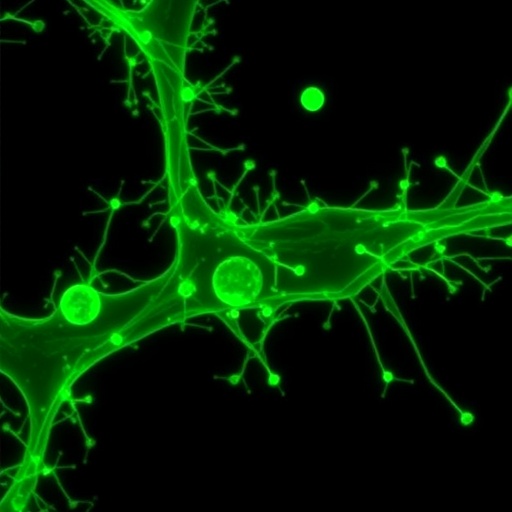
In a groundbreaking development that reshapes our understanding of Toxoplasma gondii’s pathogenicity, researchers have unveiled the critical role of a previously elusive gene, MIC11, in facilitating the parasite’s egress from host cells. This discovery, detailed in the upcoming 2026 issue of Nature Communications, elucidates the molecular mechanics underpinning Toxoplasma’s exit strategy, which hinges on PLP1, a pore-forming protein central to host cell membrane disruption. The study represents a significant leap forward in parasitology, offering new avenues for therapeutic interventions targeting this ubiquitous and often underestimated protozoan parasite.
Toxoplasma gondii, an obligate intracellular parasite, thrives by invading and then exiting host cells in a finely tuned cycle that ensures its survival, replication, and propagation. While considerable research has focused on the invasion phase, the molecular orchestrators governing egress have remained enigmatic. The recently identified fitness gene MIC11 emerges as a linchpin in this critical phase, mediating the activation and function of PLP1, which disrupts host cell membranes and facilitates parasite escape.
The research team, led by Tachibana, Y., Gu, X., and Sasai, M., employed cutting-edge in vivo genetic screening combined with advanced molecular biology techniques to map the role of MIC11. Their approach involved creating targeted gene disruptions and assessing the impact on Toxoplasma’s life cycle within live hosts, a methodology that sets this study apart from previous in vitro-centric investigations. This in vivo focus has provided unprecedented insight into the physiological relevance of MIC11 during infection.
Mechanistically, MIC11 functions as a crucial regulator that ensures PLP1 is appropriately localized and activated at the moment when egress is necessary. The pore-forming activity of PLP1 disrupts the host cell’s plasma membrane, a forced exit strategy allowing the parasite to rapidly disseminate. Without MIC11, the researchers noted an almost complete abrogation of effective egress, resulting in significantly impaired parasite fitness and propagation. This demonstrates the gene’s essential role in the Toxoplasma life cycle and its potential vulnerability as a drug target.
Microneme proteins (MICs) have long been implicated in Toxoplasma host cell interaction, playing roles in adhesion and invasion, but MIC11’s association with egress extends their functional portfolio. The study highlights MIC11’s unique contributions that integrate signaling and structural processes, coordinating the precise deployment of PLP1 during the parasite’s exit. These insights challenge previous models that treated egress as a passive consequence of intracellular stress or host cell apoptosis.
Utilizing high-resolution live-cell imaging and state-of-the-art fluorescence microscopy, the team meticulously tracked the spatiotemporal patterns of MIC11 and PLP1 within infected cells. Observations revealed that MIC11 localizes to discrete microneme vesicles and migrates toward the parasite periphery just prior to egress, suggesting an inducible secretion mechanism responsive to intracellular cues. This dynamic localization underscores a tightly controlled secretory process dependent on environmental signals that trigger parasite exit.
Biochemical assays provided further evidence that MIC11 interacts directly or indirectly with PLP1, promoting its conformational activation necessary for pore formation. Post-translational modifications of PLP1 were markedly reduced in the absence of MIC11, indicating a regulatory cascade with MIC11 as an upstream modulator. These findings shed light on the complexity of protein-protein interactions that govern parasitic egress, an area previously shrouded in mystery.
The consequences of MIC11 disruption extended beyond mere egress failure. Parasites lacking MIC11 exhibited markedly diminished virulence in animal models, nonproductive infections, and an impaired ability to disseminate to distal tissues. This phenotype suggests that MIC11 is a vital determinant of in vivo fitness, influencing not only cellular escape but also systemic infection dynamics. Understanding this gene’s full spectrum of influence may redefine strategies for controlling toxoplasmosis, particularly in immunocompromised patients.
What makes this discovery particularly compelling is its translational potential. By targeting MIC11, pharmaceutical interventions could theoretically hinder Toxoplasma’s ability to exit host cells, trapping the parasite intracellularly and preventing further tissue damage. Given the limited arsenal of effective anti-toxoplasma drugs and increasing concerns about resistance and toxicity, MIC11-directed therapies present a novel and promising frontier.
Furthermore, the study’s approach combining genetic perturbation in animal models with thorough mechanistic dissection sets a precedent for infectious disease research at large. It exemplifies how focusing on in vivo fitness genes rather than just in vitro phenotypes can yield insights that are more relevant to natural infection processes. This paradigm shift could inspire future research across a broad range of intracellular pathogens.
The implications are also significant for our understanding of host-pathogen interactions. Toxoplasma’s ability to manipulate its environment to facilitate exit is now clearer, involving an orchestrated secretion of key proteins coordinated by MIC11. This opens new questions about how host cell signaling and immune responses might be modulated or countered by these proteins during egress, hinting at a sophisticated evolutionary arms race.
Moreover, exploration of MIC11’s structural biology may soon reveal the detailed three-dimensional conformations vital to its function. Such structural insight would enhance the rational design of inhibitors that could disrupt MIC11-PLP1 interactions without affecting host cell proteins. The refinement of such specific interventions represents an aspirational goal in anti-parasitic drug development.
As the parasitology community digests this pivotal study, ongoing research will focus on the regulatory networks surrounding MIC11, including upstream signaling pathways and downstream effects. The identification of interacting partners, potential phosphorylation events, and gene expression regulation will illuminate a broader landscape of molecular governance in Toxoplasma’s lifecycle.
With an estimated one-third of the global human population infected by Toxoplasma gondii, advances in understanding egress mechanisms hold considerable public health importance. While toxoplasmosis is often asymptomatic, it can cause severe disease in immunocompromised individuals and congenital infections leading to devastating outcomes. Insights gleaned from the MIC11 studies may ultimately improve diagnostic, therapeutic, and preventative strategies.
In the context of evolutionary biology, the study also poses fascinating questions about how Toxoplasma has evolved complex egress mechanisms involving specialized proteins like MIC11. Comparative genomics with related apicomplexans might uncover conserved mechanisms that could broaden the impact of these findings and potentials for cross-species drug targets.
Looking ahead, the integration of multi-omics approaches including transcriptomics, proteomics, and metabolomics will likely unravel the broader physiological context in which MIC11 operates. Coupling this with advanced imaging and gene editing technologies such as CRISPR/Cas9 will accelerate the unraveling of intricate life cycle events central to parasitic survival and pathogenicity.
In summary, the identification of MIC11 as an essential in vivo fitness gene critical for PLP1-mediated egress heralds a new chapter in Toxoplasma research. This work not only deepens our mechanistic understanding of parasite biology but also spotlights promising molecular targets for future therapeutic intervention. As research pushes forward, the clinical burden of toxoplasmosis may be more effectively mitigated by exploiting vulnerabilities unveiled by such innovative molecular insights.
Cite Scienmag News
Juliet Wilcox. (April 4, 2026). MIC11 Essential for PLP1-Driven Toxoplasma Egress. Scienmag. https://scienmag.com/mic11-essential-for-plp1-driven-toxoplasma-egress/
Juliet Wilcox. "MIC11 Essential for PLP1-Driven Toxoplasma Egress." Scienmag, 4 April 2026, https://scienmag.com/mic11-essential-for-plp1-driven-toxoplasma-egress/. Accessed 3 September 2026.
Juliet Wilcox. "MIC11 Essential for PLP1-Driven Toxoplasma Egress." Scienmag. April 4, 2026. https://scienmag.com/mic11-essential-for-plp1-driven-toxoplasma-egress/


