


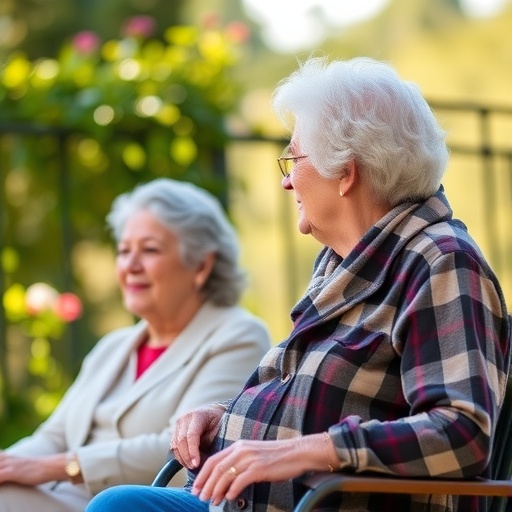
In an era where global populations are aging rapidly, understanding how to maintain quality of life in the elderly has never been more critical. A groundbreaking randomized controlled trial, recently published in BMC Geriatrics, sheds new light on the potential of health-promotion interventions to sustain leisure participation among individuals aged 80 and older. This study, led by Østby, Dahlin-Ivanoff, Najar, and colleagues, offers compelling evidence supporting targeted health-promotion strategies as a means to combat the decline in leisure activities within this vulnerable demographic, challenging prevailing notions on aging and activity engagement.
Leisure participation is widely recognized as a hallmark of healthy aging, encompassing activities that promote physical, social, and cognitive well-being. Yet, as individuals progress into their ninth decade and beyond, barriers such as declining health, mobility issues, and psychosocial challenges often precipitate a reduction in leisure activity engagement. The study under discussion interrogated whether structured health-promotion programs could effectively counteract these trends, thereby preserving an active and enriched lifestyle.
The trial recruited elderly individuals identified as being in the “risk zone,” defined by frailty indicators and decreased leisure engagement, to assess the impact of health-promotion interventions tailored specifically for this age group. Employing rigorous randomization, participants were divided into intervention and control groups, with the former receiving comprehensive health-promotion support designed to encourage continued participation in leisure activities. This included personalized counseling, physical exercise regimens, and cognitive engagement techniques, adapted to individual capabilities and preferences.
Over the course of the study, researchers meticulously tracked leisure involvement, health markers, and psychosocial well-being among participants. The results revealed that those exposed to health-promotion interventions exhibited a statistically significant retention and even an increase in leisure participation, compared to controls whose engagement declined as expected with advancing age. This underscores the malleability of aging trajectories and the promising role of proactive health-promotion in older populations.
This trial challenges the cynical outlook that aging necessarily entails inevitable withdrawal from active social and recreational life. Instead, it reveals that, with appropriate support and targeted interventions, even the oldest segments of the population can maintain vibrant engagement in leisure activities. This is not merely about prolonging activity but enhancing overall life satisfaction, psychological resilience, and physical health through sustained participation.
Moreover, the study delves into the mechanistic underpinnings of how health-promotion fosters leisure participation. Physical exercises designed to improve mobility and reduce pain, cognitive exercises to sustain mental acuity, and psychological support to tackle feelings of isolation or depression synergistically contribute to the ability and motivation of elderly persons to remain active. These multidimensional approaches indicate that addressing health in a holistic manner is vital for sustaining leisure participation.
The implications of these findings extend beyond individual well-being to broader public health and societal contexts. Encouraging leisure participation through health-promotion could reduce the burden on healthcare systems by minimizing disability, delaying institutionalization, and improving mental health outcomes among the elderly. Policymakers and geriatric care providers are thus prompted to integrate such interventions into standard old-age care protocols.
Importantly, the study also explored the sustainability of leisure participation over time, revealing that the benefits of health-promotion interventions persisted well beyond the immediate intervention period. This suggests that these programs instill lasting behavioral and health changes, which could have compound effects on longevity and quality of life in older adults.
The trial’s design, focusing specifically on individuals aged 80 and above — a group often underrepresented in clinical research — marks a significant advance in gerontological studies. By demonstrating that even very old adults can derive meaningful benefits from health-promotion, this research advocates for more inclusive and tailored approaches in healthcare research and practice.
As we enter a demographic landscape where nonagenarians and centenarians are increasingly common, the question of how to ensure these advanced age stages are characterized not by decline but by sustained engagement and vitality is paramount. This study provides a hopeful blueprint, evidencing that health-promotion is not just a theoretical ideal but an empirically validated pathway to sustain active leisure participation and enhance the lived experience in old age.
Furthermore, the recognized interplay between leisure activities and cognitive health suggests that maintaining leisure participation through health-promotion may have downstream effects on reducing the incidence or severity of neurodegenerative conditions. While this study did not explicitly test cognitive outcomes, its findings open avenues for future research that could further elucidate these critical linkages.
The societal narrative often marginalizes the elderly as passive recipients of care; however, these findings advocate for a paradigm shift wherein older adults are empowered to actively participate in their own health and happiness. Health-promotion interventions can serve as catalysts, promoting autonomy, social connection, and a sense of purpose, which are essential for emotional and psychological well-being.
This paper also highlights the importance of individualized approaches in geriatric interventions, acknowledging that one-size-fits-all solutions are inadequate. By calibrating health-promotion activities to personal interests, physical abilities, and psychosocial circumstances, the interventions maximize adherence and efficacy, offering a model for personalized medicine in aging populations.
While this research lays substantial groundwork, future inquiries might explore the integration of technological aids such as digital health platforms or wearable sensors to further enhance health-promotion strategies and leisure participation among the elderly. The scalability and accessibility of such interventions remain important considerations as the demand for elderly care services escalates worldwide.
The findings from this randomized controlled trial resonate deeply in the contemporary discourse on aging, health equity, and quality of life. They reinforce that chronological age should not be the sole determinant of activity levels or health status and that with deliberate and evidence-based interventions, the later stages of life can be redefined.
In conclusion, Østby and colleagues have contributed a significant piece of evidence to geriatric health science by demonstrating that health-promotion can effectively sustain leisure participation among individuals 80 years and older. Their work paves the way for future aging research and public health policies aimed at fostering active, fulfilling, and healthy aging experiences, ensuring that the golden years remain vibrant and meaningful.
Cite Scienmag News
Beatrice Stafford. (April 3, 2026). Health Promotion Boosts Leisure in 80+ Elderly. Scienmag. https://scienmag.com/health-promotion-boosts-leisure-in-80-elderly/
Beatrice Stafford. "Health Promotion Boosts Leisure in 80+ Elderly." Scienmag, 3 April 2026, https://scienmag.com/health-promotion-boosts-leisure-in-80-elderly/. Accessed 6 September 2026.
Beatrice Stafford. "Health Promotion Boosts Leisure in 80+ Elderly." Scienmag. April 3, 2026. https://scienmag.com/health-promotion-boosts-leisure-in-80-elderly/


