


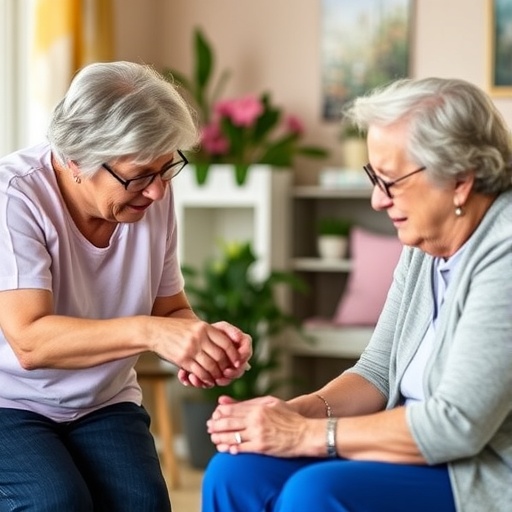
In the evolving landscape of geriatric care, understanding the psychological and emotional needs of older adults in nursing homes is becoming increasingly vital. A groundbreaking qualitative study conducted by Xing, Zhang, Liu, and their colleagues delves deeply into the growth needs of elderly residents, framed through the lens of Maslow’s hierarchy of needs. This research, published in BMC Geriatrics in 2026, offers a compelling insight into how the principles of human motivation relate to the well-being and development of seniors living in institutionalized settings.
Maslow’s hierarchy, traditionally applied to general human behavior, is here adapted to a demographic often overlooked in growth-related studies: older adults residing in nursing homes. By examining their growth needs beyond basic physical and safety requirements, the study challenges conventional perspectives and highlights the complex interplay of psychological, social, and self-fulfillment needs. It presents a qualitative exploration of how these needs manifest and interact within the context of long-term care environments.
The study’s methodological design involved in-depth interviews and observational data collection among nursing home residents, emphasizing qualitative approaches to capture nuanced experiences. Participants included seniors with varying degrees of physical dependence but who were cognitively capable of expressing their inner experiences and aspirations. This careful selection enabled the researchers to focus on the subjective side of aging and institutionalization—areas often masked by purely quantitative metrics.
One of the critical revelations involves the positioning of “growth needs” in the hierarchy, which traditionally includes self-actualization and esteem. The study found that older adults in nursing homes do not merely struggle with survival or safety concerns but actively seek opportunities for personal growth, social recognition, and autonomy. This contradicts the outdated assumption that aging inevitably leads to diminished aspirational needs or diminished capacity for psychological development.
The research underscores that fulfilling these higher-level needs substantially contributes to a person’s quality of life and psychological resilience. Participants expressed desires to maintain dignity, achieve a sense of purpose, and engage meaningfully with their environment and community. Nursing home protocols often prioritize physical care, but this study calls attention to the critical importance of nurturing these more sophisticated human motivations—a compelling challenge for caregivers and policy makers.
Further technical analysis reveals that the psychological mechanisms driving these growth needs are deeply intertwined with cognitive and emotional processes. The study suggests that engagement in creative activities, decision-making opportunities, and social interactions stimulates neuroplasticity and reinforces a positive self-concept among older adults. This neurobiological perspective adds an important layer to existing psychosocial theories and encourages a more integrative approach to care.
Moreover, the paper explicates the role of environmental factors in facilitating or hindering these growth needs. Architectural design, communal spaces, and institutional culture can either foster a sense of belonging and empowerment or contribute to feelings of isolation and neglect. The researchers advocate for a re-evaluation of nursing home environments based on psychological principles, aiming to enhance residents’ autonomy and encourage continual personal development.
Ethical considerations also feature prominently in the study, particularly concerning autonomy and consent. Elderly patients often face diminished agency due to physical impairments or institutional routines. However, the qualitative data highlight the residents’ profound awareness and desire to participate actively in decisions affecting their lives. Respecting these preferences aligns with ethical imperatives and supports the hierarchical framework by promoting esteem and self-actualization.
The implications of this research extend into clinical practices, suggesting that geriatric care professionals adopt a more holistic approach. Integrating mental health support aimed at fostering growth needs can mitigate issues like depression, social withdrawal, and cognitive decline. Tailored interventions focusing on self-improvement and community engagement emerge as powerful tools to enrich the daily lives of nursing home residents.
Additionally, the study offers a practical typology of growth needs observed in the nursing homes, encompassing emotional (love and belonging), cognitive (curiosity and learning), and creative (artistic expression and legacy) domains. This comprehensive categorization equips caregivers with actionable knowledge, enabling them to design more meaningful activities that acknowledge and enhance each resident’s individuality and growth potential.
The research further contemplates the societal implications of neglecting the growth needs of older adults. By recognizing nursing home residents as active agents with evolving aspirations, this study advocates for a cultural shift in attitudes toward aging and institutional care. It critiques societal tendency to marginalize the elderly and calls for policies that promote inclusivity, respect, and continuous personal development.
Technologically, the authors suggest leveraging digital platforms and assistive technologies to support the growth needs of residents. Virtual reality experiences, tailored online educational programs, and communication tools can create new avenues for self-expression and social connection, despite physical limitations or geographic separation from family and friends.
In conclusion, the study by Xing and colleagues reframes aging in nursing homes—not as a period of decline solely focused on maintenance and survival but as an ongoing journey of growth and self-realization. This paradigm opens up new possibilities for transforming geriatric care practices worldwide, emphasizing the humanity and potential within each older adult. As societies globally face increasing aging populations, this research is a timely and essential contribution to the discourse on dignity, care, and fulfillment in the later stages of life.
Given these profound insights, future research is encouraged to explore intervention models that systematically incorporate growth needs into nursing home care plans. Quantitative studies can also build on this foundation to measure the impact of such interventions on mental health outcomes and life satisfaction among elderly populations. By bridging qualitative experiences with empirical data, the field can develop evidence-based practices that honor the full spectrum of human needs articulated by Maslow’s model.
Ultimately, this study is a clarion call to reimagine the care of older adults, recognizing them not just as recipients of services but as individuals with vibrant inner lives and growth trajectories. Its blend of psychological theory, qualitative rigor, and practical implications ensures its relevance to healthcare professionals, policymakers, and society at large, driving forward an agenda of respectful, enriched aging.
Cite Scienmag News
Ophelia Keating. (April 2, 2026). Exploring Growth Needs of Nursing Home Elders. Scienmag. https://scienmag.com/exploring-growth-needs-of-nursing-home-elders/
Ophelia Keating. "Exploring Growth Needs of Nursing Home Elders." Scienmag, 2 April 2026, https://scienmag.com/exploring-growth-needs-of-nursing-home-elders/. Accessed 3 September 2026.
Ophelia Keating. "Exploring Growth Needs of Nursing Home Elders." Scienmag. April 2, 2026. https://scienmag.com/exploring-growth-needs-of-nursing-home-elders/


