


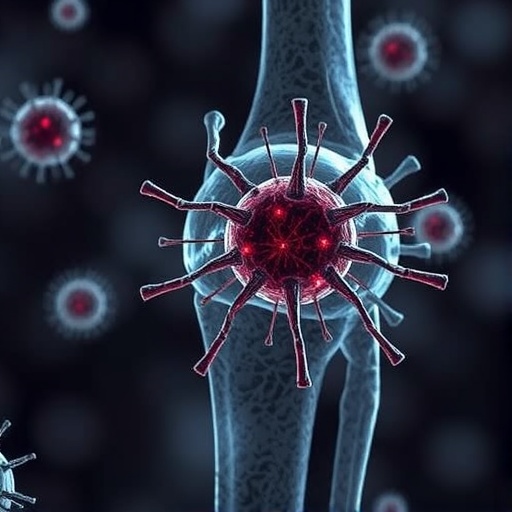
In a groundbreaking study published in Nature Microbiology, researchers unveil compelling evidence that the chikungunya virus (CHIKV) can persistently inhabit joint-associated macrophages, fundamentally altering our understanding of chronic chikungunya disease mechanisms. This discovery shines a crucial light on why patients often suffer from debilitating joint pain long after acute infection resolution, bridging significant gaps in the virological and immunopathological landscape of this emerging viral threat.
Chikungunya virus is an arthropod-borne alphavirus transmitted mainly by Aedes mosquitoes, notorious for outbreaks characterized by fever, rash, and severe polyarthritis or polyarthralgia. While acute symptoms typically resolve within weeks, a substantial subset of patients experience chronic joint inflammation and pain that can persist for months or even years, dramatically impairing quality of life. Until now, the underlying persistence of virus reservoirs within host tissues remained largely speculative, hindering the development of effective treatments targeting chronic sequelae.
Zarrella and colleagues deployed an array of cutting-edge virological and immunohistochemical techniques in a murine model to track the localization and longevity of CHIKV infection within joint tissues. Their approach incorporated single-cell RNA sequencing alongside multiplex immunofluorescence microscopy, enabling spatially resolved identification of viral RNA within specific cell populations in the joints. This led to the remarkable finding that macrophages residing within the synovial and periarticular spaces serve as a niche for long-term viral persistence.
These macrophages, which perform critical functions in tissue homeostasis and immune defense, appear to be co-opted by CHIKV as a viral reservoir. The researchers observed that viral genomes and replication intermediates were present in these cells well beyond the acute phase, supporting a model of chronic infection at the cellular level. This contrasts with prior paradigms that presumed viral clearance following resolution of viremia and acute symptoms, instead revealing an insidious viral survival strategy within immune-privileged or immune-modulated joint microenvironments.
Intriguingly, the persistence of CHIKV in joint macrophages correlated with sustained inflammatory gene expression signatures, including cytokines and chemokines known to drive arthritic pathology. This suggests that the virus-induced macrophage activation contributes directly to ongoing tissue inflammation and damage, perpetuating the clinical manifestations of chronic chikungunya arthropathy. These insights reposition joint macrophages as pivotal players in the chronic disease process, implicating them as promising therapeutic targets for intervention.
This study also provides a crucial platform for re-examining antiviral strategies against chronic chikungunya disease. Current treatment regimens focus predominantly on symptom alleviation through anti-inflammatory drugs and do not address the persistence of viral reservoirs. By elucidating the cellular sanctuaries that harbor CHIKV, this research opens avenues for developing novel therapeutics aimed at eradicating persistent infection within joint macrophages, potentially halting the chronic inflammatory cycle at its root.
Furthermore, the findings hold broader implications for understanding chronic arthritogenic alphavirus infections in general. The identification of macrophages as a viral reservoir may apply to related diseases caused by other alphaviruses, such as Ross River virus or Mayaro virus, which similarly provoke protracted joint symptoms. This cross-applicability underscores the value of these insights in guiding future research and drug development aimed at chronic viral arthropathies worldwide.
The methodological rigor embedded in this investigation warrants particular emphasis. The use of single-cell transcriptomics allowed the team to dissect the heterogeneity of joint cell populations infected by CHIKV and characterize virus-induced gene expression perturbations with unprecedented resolution. Combined with advanced imaging to spatially confirm viral RNA presence, this integrative approach solidifies the evidence base for the persistent infection paradigm and underscores the power of multimodal analysis in infectious disease research.
Beyond the immediate pathological insights, this work also provides critical clues about viral evasion mechanisms enabling persistence within immunologically dynamic joint environments. The capacity of CHIKV to survive within macrophages without triggering effective clearance reveals viral adaptations facilitating chronicity. Deciphering the molecular interplay between viral factors and host immune responses in this setting could provide fundamental knowledge applicable to other persistent viral infections.
The implications for patient care and public health policy are considerable. Recognizing persistent viral infection as a driver of chronic chikungunya disease calls for revised clinical management guidelines that incorporate monitoring and targeting of viral reservoirs. Moreover, these findings highlight the urgent need for antiviral drug development specifically addressing persistent alphavirus infection to mitigate long-term disability burdens in endemic and epidemic regions.
Importantly, the study also addresses a critical gap in preclinical animal modeling of chikungunya arthritis. By establishing a robust murine model that recapitulates viral persistence within joint macrophages and chronic inflammation, the researchers create a valuable platform for testing new therapeutics and exploring pathophysiological mechanisms. This model improves upon previous systems by explicitly demonstrating viral and immunological dynamics over extended periods post-infection, thus enhancing translational relevance.
In conclusion, the work by Zarrella and colleagues represents a major advance in comprehending the biology of chikungunya virus chronicity. By pinpointing joint-associated macrophages as viral sanctuaries that fuel ongoing inflammation and disease, this research reframes our understanding and sets the stage for innovative therapeutic strategies. As chikungunya continues to expand geographically and impact global health, these insights are timely and critical, offering hope for mitigating the prolonged suffering experienced by many patients.
The study resonates beyond the realm of chikungunya, inviting reevaluation of chronic infection models in viral diseases with persistent clinical sequelae. Unlocking viral persistence mechanisms within immune niches is a frontier with profound clinical ramifications, and this research exemplifies the kind of integrative, high-resolution science necessary to tackle such complex challenges. Going forward, collaboration between virologists, immunologists, and clinical researchers will be essential to translate these findings into clinically effective interventions.
Overall, the identification of joint macrophages as persistent reservoirs of chikungunya virus marks a paradigm shift in infectious disease research and clinical management for this globally relevant pathogen. The demonstrated link between viral persistence and chronic joint pathology provides a foundation for new diagnostic, therapeutic, and preventive strategies, which could transform outcomes for millions affected by this debilitating arboviral disease.
—
Cite Scienmag News
Kristina Jarvis. (April 1, 2026). Chikungunya Virus Lingers in Joint Macrophages, Causes Chronic Disease. Scienmag. https://scienmag.com/chikungunya-virus-lingers-in-joint-macrophages-causes-chronic-disease/
Kristina Jarvis. "Chikungunya Virus Lingers in Joint Macrophages, Causes Chronic Disease." Scienmag, 1 April 2026, https://scienmag.com/chikungunya-virus-lingers-in-joint-macrophages-causes-chronic-disease/. Accessed 4 September 2026.
Kristina Jarvis. "Chikungunya Virus Lingers in Joint Macrophages, Causes Chronic Disease." Scienmag. April 1, 2026. https://scienmag.com/chikungunya-virus-lingers-in-joint-macrophages-causes-chronic-disease/


