


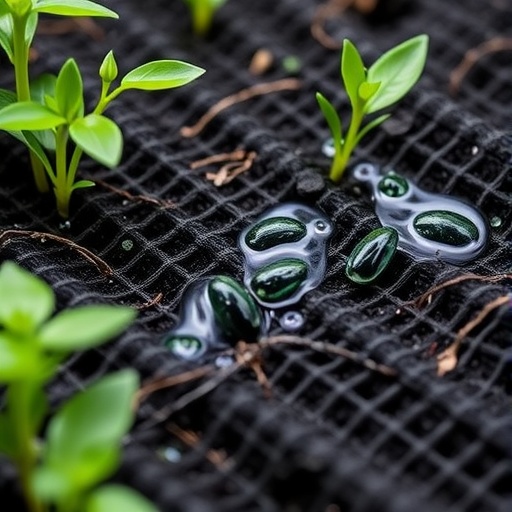
In recent years, the contamination of water systems by emerging pollutants—including pharmaceuticals, microplastics, and industrial chemicals—has emerged as a critical environmental and public health challenge. These contaminants resist traditional water treatment techniques, posing ongoing risks to ecosystems and human populations worldwide. A groundbreaking study now explores how the synergy between artificial intelligence and biochar engineering can revolutionize the removal of these persistent pollutants, offering a scalable and cost-effective solution for safeguarding water quality.
Biochar, a highly porous carbonaceous material derived from the pyrolysis of biomass such as agricultural residues, has garnered significant attention in environmental remediation due to its extensive surface area and adsorptive capabilities. Its low production cost—typically around 144 dollars per ton—contrasts starkly with the exorbitant expenses associated with advanced nanomaterials, which may exceed thousands to millions of dollars per ton. Despite its promise, conventional biochar exhibits inherently moderate pollutant removal efficiencies, reliant predominantly on physical adsorption phenomena, such as pore filling and hydrophobic interactions.
To transcend these limitations, researchers have proposed a hierarchical framework distinguishing pristine biochar from more sophisticated variants, including chemically modified biochar and advanced biochar composites. Pristine biochar operates primarily via electrostatic attraction and pore diffusion mechanisms, while its modified counterparts employ surface functionalization strategies—such as the introduction of oxygen-containing groups and heteroatom doping—to amplify affinity for targeted contaminants. At the apex of this spectrum, biochar composites incorporate functional nanomaterials like graphene and metallic nanoparticles, enabling catalytic degradation and photocatalytic pathways that chemically transform pollutants rather than merely adsorbing them.
The implementation of such advanced biochar composites, however, is tempered by concerns about scalability, economic feasibility, and potential environmental impacts, such as ecotoxicity of introduced nanomaterials. Addressing this, the study advocates a strategic balance wherein simpler biochar variants are prioritized for pollutants amenable to adsorption, reserving complex composites for recalcitrant and high-risk contaminants. This tiered approach not only aligns with principles of green chemistry but also optimizes resource allocation for real-world water treatment systems.
Central to this transformative approach is the integration of artificial intelligence (AI) and machine learning methodologies in biochar design. By harnessing expansive datasets encompassing feedstock properties, pyrolysis parameters, and surface chemistry characteristics, AI algorithms can predict and optimize the interactions between engineered biochar materials and diverse pollutants. This data-driven paradigm minimizes reliance on laborious empirical testing, accelerating the innovation cycle and enabling the rational design of biochar tailored to specific water contaminants—including notoriously persistent compounds like per- and polyfluoroalkyl substances (PFAS) and pharmaceutical residues.
Machine learning models elucidate how subtle variations in pyrolysis temperature or precursor biomass composition influence pore structure, surface functional groups, and overall adsorption capacity. Such insights facilitate predictive tailoring of biochar microstructure to enhance selectivity and capacity for targeted emerging contaminants under realistic environmental conditions, thereby maximizing treatment efficacy.
Beyond material performance, the study underscores the importance of translating laboratory-scale successes to pilot and full-scale applications. Factors such as production energy requirements, cost-effectiveness, robustness of biochar under varying water chemistries, and lifecycle environmental impacts must be rigorously evaluated. The researchers emphasize the necessity for standardized, high-quality datasets to ensure reproducibility and effective benchmarking across studies, alongside the adoption of sustainable synthesis routes that minimize carbon footprint and the generation of secondary pollutants.
The convergence of AI-guided biochar innovation with principles of scalability and environmental stewardship presents a compelling pathway to address water pollution challenges that conventional treatments have struggled to overcome. The research envisions next-generation biochar-based filtration and remediation technologies that are not only ecologically sound and economically viable but also adaptable to the diverse and evolving spectrum of waterborne pollutants worldwide.
As emerging contaminants continue to threaten global water security, this AI-driven approach represents a paradigm shift, combining the versatility of biochar materials with the predictive power of machine learning to engineer smarter, more effective pollutant removal systems. The potential for customized solutions tailored to local water quality profiles could democratize access to advanced water treatment, benefiting both developed and resource-limited regions.
Despite these promising developments, the authors caution that continued interdisciplinary collaboration is essential. Integration of environmental chemistry, materials science, data analytics, and process engineering is required to refine biochar formulations, validate AI models experimentally, and ensure that deployment practices align with regulatory and public health goals. Only through such concerted efforts can the full promise of AI-driven biochar engineering be realized in contemporary water treatment landscapes.
In sum, this pioneering work charts a comprehensive roadmap for advancing biochar research from fundamental understanding to practical impact. By bridging computational intelligence with sustainable materials science, it lays the foundation for a new generation of water treatment technologies poised to mitigate the persistent threat posed by emerging pollutants, ensuring cleaner and safer water resources for future generations.
Cite Scienmag News
Ophelia Keating. (March 31, 2026). AI-Driven Biochar Design Paves the Way for Combating Emerging Water Pollutants. Scienmag. https://scienmag.com/ai-driven-biochar-design-paves-the-way-for-combating-emerging-water-pollutants/
Ophelia Keating. "AI-Driven Biochar Design Paves the Way for Combating Emerging Water Pollutants." Scienmag, 31 March 2026, https://scienmag.com/ai-driven-biochar-design-paves-the-way-for-combating-emerging-water-pollutants/. Accessed 3 September 2026.
Ophelia Keating. "AI-Driven Biochar Design Paves the Way for Combating Emerging Water Pollutants." Scienmag. March 31, 2026. https://scienmag.com/ai-driven-biochar-design-paves-the-way-for-combating-emerging-water-pollutants/


