


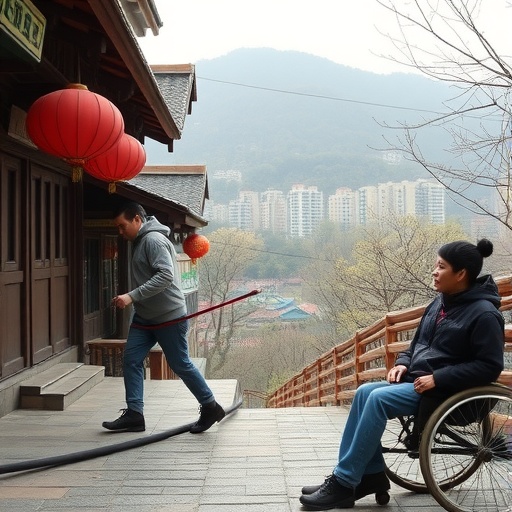
In the rapidly aging demographic landscape of China, a new study has shed light on a pressing and nuanced issue: the intersection of functional disability and depressive symptoms among older adults, viewed through the complex lens of urban-rural disparities. Published in BMC Geriatrics in 2026, this groundbreaking research by Zhao et al. offers a comprehensive analysis that not only deepens our understanding of geriatric mental health in one of the world’s largest aging populations but also challenges existing paradigms about how environment and physical health coalesce to influence mental well-being.
China’s demographic shift presents one of the most significant social challenges of our time. By 2050, it is estimated that over 26% of China’s population will be over the age of 65. This shift amplifies the urgency to understand factors that contribute to mental health, especially depressive symptoms, which are notoriously prevalent but under-recognized in older adults. What sets this study apart is its dual focus on functional disability—a condition marked by difficulties in performing basic activities of daily living—and how it correlates with depression in both urban and rural settings.
Functional disability often leads to reduced mobility, dependence on caregivers, and a diminished quality of life. Previous studies have identified a strong association between physical limitations and depressive symptoms, but Zhao and colleagues dive deeper, focusing on the crucial variable of geographical residence. China’s urban and rural areas differ dramatically in healthcare infrastructure, social services, economic opportunities, and cultural perceptions of aging, all factors that can modulate the psychological impacts of disability.
The methodology employed in this study is both robust and innovative. Utilizing a nationally representative sample of older adults across diverse provinces, the researchers employed standardized diagnostic tools to assess depressive symptoms alongside validated measures for functional disability. Such rigorous data collection allows for a granular analysis that accounts for confounding variables including socioeconomic status, education, and chronic health conditions, painting a statistically sound picture of the mental health landscape.
One of the critical revelations is the disparity in depressive symptoms among disabled elders in urban versus rural contexts. Older adults with functional disabilities living in rural regions exhibited significantly higher rates of depressive symptoms compared to their urban counterparts. This disparity is attributed to multiple intersecting factors such as limited access to healthcare, fewer social support networks, and greater economic hardship prevalent in rural settings. The study’s findings emphasize how environmental and societal structures critically influence mental health outcomes, beyond individual physical health status.
The research also highlights the particular vulnerability of rural older adults due to insufficient healthcare resources. In rural China, the shortage of mental health professionals, lack of community-based services, and long distances to medical facilities exacerbate barriers to effective diagnosis and treatment of depression. Furthermore, traditional stigma surrounding mental illness remains more entrenched in rural communities, causing additional reluctance in seeking help.
In urban areas, although physical disability still strongly correlates with depressive symptoms, the presence of better medical infrastructure, social welfare programs, and community engagement partly mitigates the mental health burden. Urban older adults often have comparatively greater access to social activities and family support, which can buffer against the psychological impact of functional limitations.
This research is particularly salient given China’s ongoing healthcare reforms aiming to reduce urban-rural disparities. The data presented by Zhao et al. points toward the need for policy interventions tailored to rural regions, focusing on integrating mental health screening into primary healthcare and enhancing accessibility to disability support services. Such targeted strategies could alleviate the compounded effects of disability and depression, ultimately improving quality of life for millions.
Additionally, the study provocatively challenges mental health professionals and policymakers to reconsider one-size-fits-all approaches. The urban-rural divide underscores the necessity of culturally and contextually sensitive mental health frameworks that acknowledge the stark realities facing rural elderly populations. Integrating traditional community support structures with modern medical care frameworks could hold promise for innovative solutions.
The implications extend beyond China, serving as a blueprint for aging societies worldwide where urban-rural disparities exist. By establishing a clear link between environmental contexts and mental health outcomes in the presence of disability, this research advocates for a more holistic approach to geriatric care—one that seamlessly integrates physical health with psychosocial well-being.
Furthermore, the study touches on the psychosocial mechanisms underlying the observed disparities. Social isolation, a known risk factor for depression, is disproportionately experienced in rural environments, particularly for those with mobility impairments. The lack of accessible transportation and community programs intensifies feelings of loneliness and helplessness, establishing a vicious cycle that fuels depressive symptomatology.
Innovatively, Zhao and colleagues also explore gender variations within their sample, finding nuanced differences in how men and women experience depression in relation to functional disability and environment. These insights highlight the intersectionality of gender, physical health, and geographic context, paving the way for more personalized mental health interventions.
Moreover, the research reflects on the role of cognitive decline as an overlapping dimension with functional disability, exacerbating risks for depression. Older adults experiencing both physical and cognitive impairments represent a particularly high-risk group, underscoring the need for multifaceted healthcare approaches that do not isolate health issues individually but treat them comprehensively.
In sum, the study by Zhao et al. offers a pivotal contribution to global gerontology and mental health discourse. By unraveling how functional disability and depression interrelate distinctly across urban and rural divides, it prompts a paradigm shift toward place-based health strategies. The findings call for robust investment in rural health infrastructure, community support, and innovative care models that address both physical and mental health in tandem.
As China strides forward in preparing for an aging future, this research stands as an urgent reminder: addressing depression among older adults requires more than medical treatment—it demands a transformation in how society supports and values its elders, particularly those navigating the dual burdens of disability and social disadvantage in rural settings. The insights from this study could well ignite a broader conversation globally, positioning functional disability as a critical determinant of mental health that necessitates structurally embedded responses.
Cite Scienmag News
Glenn Wilkins. (March 28, 2026). Urban-Rural Gaps: Disability, Depression in Older China. Scienmag. https://scienmag.com/urban-rural-gaps-disability-depression-in-older-china/
Glenn Wilkins. "Urban-Rural Gaps: Disability, Depression in Older China." Scienmag, 28 March 2026, https://scienmag.com/urban-rural-gaps-disability-depression-in-older-china/. Accessed 3 September 2026.
Glenn Wilkins. "Urban-Rural Gaps: Disability, Depression in Older China." Scienmag. March 28, 2026. https://scienmag.com/urban-rural-gaps-disability-depression-in-older-china/


