

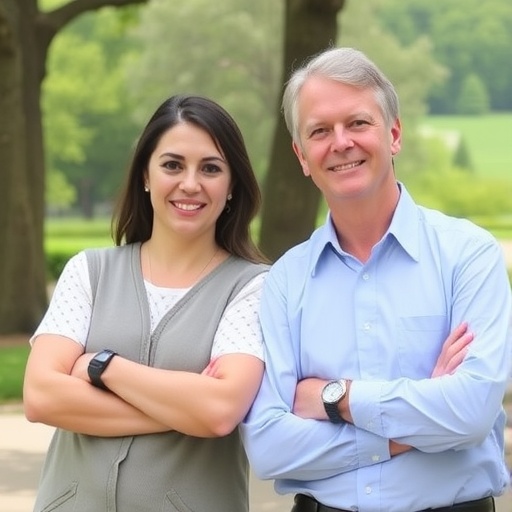
Baylor University proudly announces the election of two of its esteemed faculty members, Dr. Dwayne D. Simmons and Dr. Samuel S. Urlacher, to the prestigious rank of 2025 Fellows of the American Association for the Advancement of Science (AAAS). This distinction, representing a lifetime honor, celebrates their exceptional contributions to science and their enduring impact on research and education. The AAAS, renowned as the world’s largest general scientific society and publisher of the influential Science journals, confers this fellowship to individuals who have demonstrated excellence in advancing science and its applications. The recognition of Simmons and Urlacher places them among an elite group of nearly 500 scientists, engineers, and innovators internationally acknowledged for their groundbreaking work.
Dr. Dwayne D. Simmons, holding the Cornelia Marschall Smith Endowed Chair of Biology at Baylor University, is a distinguished cell biologist whose research centers on the intricate cellular and molecular foundations of auditory neuroscience. His laboratory meticulously investigates the mechanisms driving sensory system aging and development within the inner ear and brain, particularly focusing on how disruptions in sensory cells, neurons, and immune components lead to hearing loss and vestibular dysfunction. This work addresses critical challenges in sensory health, integrating cellular biology with translational research aimed at therapeutic innovation.
The Simmons Auditory Research Lab’s focus extends to the study of neuroimmune interactions in sensory organs, revealing how immune responses influence neuronal health and function during auditory decline. Importantly, Dr. Simmons has devoted significant efforts to the mentorship and development of young scientists, particularly undergraduate students engaged in biomedical research. His leadership in directing NIH-funded undergraduate programs at UCLA and now expanding STEM engagement through Baylor’s CityLab exemplifies his commitment to cultivating the next generation of researchers by providing substantial hands-on laboratory experience.
In complement to his research, Dr. Simmons administers the Baylor Transdisciplinary Research Undergraduate Experience (B-TRUE), an intensive summer program that immerses undergraduates in research training across disciplines. His efforts not only propel scientific discovery but also emphasize broadening participation and inclusivity in STEM education, reflecting a holistic approach to science as a collaborative and educational endeavor. This dedication to scholarly excellence and student development has earned him notable accolades, including a Fulbright U.S. Scholar Award and Baylor’s Excellence in Research Leadership Award.
Dr. Samuel S. Urlacher, an associate professor of anthropology and director of the graduate program at Baylor, brings a multidimensional perspective through his expertise in biological anthropology and human evolutionary biology. His research traverses multiple continents, engaging in field studies and laboratory analyses that probe the bioenergetic strategies underpinning human growth, metabolism, and immune function. The Urlacher lab’s innovative work elucidates how children worldwide allocate scarce energetic resources among competing physiological demands, such as immune defense, somatic growth, and neural development.
Central to Urlacher’s investigations is the concept of life history trade-offs, particularly within contexts of early-life adversity, which impose lasting influences on metabolic health and disease susceptibility. By leveraging advanced biomarker analyses and longitudinal cohort studies, Urlacher and his team reveal pivotal insights into how subclinical immune activation can stunt growth trajectories, thus connecting evolutionary biology with public health challenges. His research has profound implications for understanding global patterns of childhood development, malnutrition, and the etiology of metabolic syndromes.
Supported by funding from prestigious agencies including the National Institutes of Health and National Science Foundation, Urlacher’s projects emphasize translational anthropological science through integrative methodologies. His exploration of gut health’s role in childhood growth failures represents a frontier linking microbiome science with evolutionary medicine. Additionally, Urlacher’s work on global variation in caloric expenditure and the impact of modern dietary shifts sheds light on the mechanisms underlying the global obesity epidemic and chronic disease risk in diverse populations.
The election of these two scholars as AAAS Fellows marks a significant milestone for Baylor University, positioning Simmons and Urlacher as the institution’s third and fourth faculty members honored in recent years with this elite recognition. Their induction follows the election of Dr. Julie A. Hoggarth and Dr. Bryan W. Brooks, reflecting Baylor’s fostering of an intellectually vibrant environment that advances both fundamental and applied science. Baylor’s provost, Dr. Nancy Brickhouse, highlighted their outstanding contributions to scholarship and pedagogy, emphasizing the unique opportunities their presence provides to students and the academic community alike.
AAAS Fellowships, established in 1874, symbolize not only scientific excellence but also a commitment to ethical standards and the integrity of research. This community of fellows includes luminaries such as Nobel laureates, pioneering engineers, and influential science communicators, underscoring the honor’s distinguished legacy. Dr. Simmons and Dr. Urlacher join this legacy, recognized for their dedication to advancing knowledge and applying science to enhance human well-being.
The 2025 class of AAAS Fellows, including Simmons and Urlacher, will receive ceremonial recognition featuring certificates and symbolic gold-and-blue rosette pins, representing the disciplines of science and engineering. They will take part in the annual Fellows Forum held in Washington, D.C., a vital congregation for knowledge exchange and advocacy in science policy. Their achievements will also be showcased in the News & Notes section of Science magazine, thereby amplifying the reach and impact of their scientific contributions.
This distinguished recognition underscores the evolving landscape of interdisciplinary research where biology, anthropology, and health sciences intersect to address complex real-world problems. The work of Dr. Simmons and Dr. Urlacher exemplifies how rigorous scientific inquiry paired with educational leadership can foster innovation while nurturing future scientific leaders. Their election as AAAS Fellows not only honors their past achievements but also propels their ongoing efforts to deepen understanding of human biology and sensory function in health and disease.
Baylor University itself, as a prominent private Christian institution and a nationally ranked Research 1 university, embraces a mission to integrate high-impact research with transformative education. Hosting over 20,000 students and representing an international academic community, Baylor remains steadfast in promoting discovery, innovation, and scholarly excellence. The election of these faculty members further cements its reputation as a fertile ground for producing world-class scientists committed to societal advancement.
In conclusion, the conferral of AAAS Fellow status upon Dr. Dwayne D. Simmons and Dr. Samuel S. Urlacher is a testament to their scientific rigor, mentorship, and contribution to the broader understanding of biology and anthropology. Their fellowship highlights the essential role of academic research institutions in fostering discoveries that elucidate the complexities of human health and development. As these scholars continue to push the boundaries of knowledge, they also inspire a new generation of scientists to engage passionately in research that spans molecular neuroscience to evolutionary bioenergetics, signaling exciting possibilities for the future of science.
Subject of Research: Auditory neuroscience and human evolutionary biology focusing on sensory system aging, hearing loss mechanisms, and bioenergetic trade-offs in human physiology.
Article Title: Baylor University Professors Elected 2025 AAAS Fellows for Pioneering Research in Auditory Neuroscience and Evolutionary Biology
News Publication Date: March 26, 2026
Web References:
- https://biology.artsandsciences.baylor.edu/person/dwayne-simmons-phd
- https://anthropology.artsandsciences.baylor.edu/person/samuel-s-urlacher-phd
- https://www.aaas.org/
- https://news.web.baylor.edu/news/story/2021/changing-diets-not-lower-physical-activity-or-infectious-disease-burden-may-best
- https://news.web.baylor.edu/news/story/2024/baylor-anthropologist-receives-prestigious-early-career-award-human-biology
- https://news.web.baylor.edu/news/story/2020/baylor-researcher-selected-join-prestigious-cifar-azrieli-global-scholars-program
Image Credits: Robert Rogers/Baylor University
Keywords: AAAS Fellow, auditory neuroscience, sensory aging, hearing loss, vestibular dysfunction, metabolism, bioenergetics, growth trade-offs, immune function, evolutionary biology, Baylor University, STEM education


