

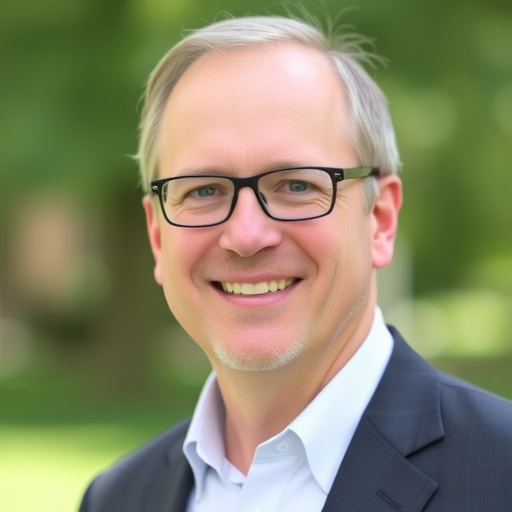
In a groundbreaking recognition that underscores the pivotal advancements in neuroscience, Paul Tesar, a distinguished professor and neuroscientist at Case Western Reserve University, has been elected as a 2025 Fellow of the American Association for the Advancement of Science (AAAS). This honor celebrates his exceptional contributions to translational neuroscience, particularly his innovative work unraveling the complex genetic and environmental mechanisms underlying oligodendrocyte dysfunction. His research has significantly propelled the development of regenerative therapies targeting multiple sclerosis and pediatric leukodystrophies, signaling a transformative leap in neurological medicine.
Tesar holds the title of Pavey Family Eminent Professor in the Department of Genetics and Genome Sciences and is the founding director of the Institute for Glial Sciences at Case Western Reserve School of Medicine. His distinguished career path, which began with scientific training at Case Western Reserve and peaked with doctoral research at the University of Oxford and the National Institutes of Health, reflects a relentless pursuit to demystify the biology of glial cells—non-neuronal cells that constitute approximately half of the human nervous system. These cells, though historically overlooked, are now recognized as crucial players in neural function and disease.
Central to Tesar’s scientific breakthroughs is the elucidation of oligodendrocytes’ role in neurological disorders. Oligodendrocytes are specialized glial cells responsible for producing myelin, the insulating sheath essential for efficient neuronal signaling. When these cells malfunction or are lost, as in diseases like multiple sclerosis, the resultant demyelination severely impairs nervous system function. Tesar’s work has illuminated the pathways leading to oligodendrocyte degeneration and identified both genetic mutations and environmental factors that disrupt their function, paving the way for targeted therapeutic interventions.
One of the most remarkable impacts of Tesar’s research is the pioneering of glia-targeted therapies that promote remyelination—the process of restoring myelin sheaths around neurons. This represents a paradigm shift from symptom management to disease modification, particularly in multiple sclerosis, a condition that affects millions worldwide and currently has limited treatment options. Through collaboration and entrepreneurial initiative, Tesar co-founded Convelo Therapeutics, a biopharmaceutical company progressing remyelination therapies derived from his laboratory discoveries into clinical trials.
Beyond multiple sclerosis, Tesar’s insights extend to rare pediatric leukodystrophies, a group of devastating genetic disorders characterized by widespread myelin loss. His contributions are instrumental in the development of antisense oligonucleotide therapies, exemplified by clinical testing efforts at Ionis Pharmaceuticals for Pelizaeus-Merzbacher disease. These therapies aim to correct aberrant gene expression at the RNA level, offering hope for previously untreatable conditions.
The establishment of the Institute for Glial Sciences in 2024 epitomizes Tesar’s vision to pioneer a new frontier in neuroscience research focused exclusively on glial biology. The institute serves as a hub for interdisciplinary efforts to decode glial contributions to neurodevelopmental and neurodegenerative diseases, fostering innovation in therapeutic discovery. This initiative is poised to catalyze a novel category of ‘glial medicines’ that could address a broad spectrum of neurological disorders.
Tesar’s election as an AAAS Fellow not only recognizes his scientific ingenuity but also celebrates his commitment to mentorship and collaborative research culture. His laboratory’s achievements are integrally linked to the collective effort of trainees, collaborators, and mentors who share a dedication to high professional and ethical standards. The fellowship, dating back to 1874, places Tesar among a prestigious lineage of scientific leaders, including Nobel laureates, further emphasizing the significance of his contributions.
The implications of Tesar’s research resonate beyond academia, influencing clinical practice and pharmaceutical development. His work bridges the critical gap between fundamental biological discovery and translational application, embodying the promise of precision medicine in neurology. As remyelination therapies advance through clinical pipelines, there is tangible optimism for altering the natural course of chronic neurodegenerative diseases, significantly improving patient outcomes.
The global neuroscience community eagerly anticipates the formal recognition of the 2025 AAAS Fellows, including Tesar, at the association’s annual meeting in Washington, D.C. This occasion highlights leading scientists who are charting new scientific territories and pushing the boundaries of knowledge in their respective disciplines. For Case Western Reserve University, Tesar’s accolade enhances the institution’s reputation as a hub for cutting-edge biomedical research and innovation.
In summary, Paul Tesar’s distinguished career and visionary research have profoundly reshaped our understanding of glial cell biology and its therapeutic potential. His leadership at the Institute for Glial Sciences and entrepreneurial ventures signify a committed stride towards developing regenerative treatments that address some of the most challenging neurological diseases. The AAAS Fellowship not only honors past achievements but also marks the beginning of a new chapter in the quest to harness glial cells for neurological health.
Subject of Research: Translational neuroscience focused on genetic and environmental mechanisms of oligodendrocyte dysfunction and development of regenerative therapies for neurological diseases.
Article Title: Case Western Reserve Neuroscientist Paul Tesar Elected 2025 AAAS Fellow for Pioneering Glial Science Research
News Publication Date: 2025 (Upcoming formal recognition on May 29)
Web References:
– https://www.aaas.org/
– https://tesarlab.com/about/
– https://case.edu/medicine/glialsciences/
Image Credits: Case Western Reserve University
Keywords: glial cells, oligodendrocytes, translational neuroscience, multiple sclerosis, remyelination therapies, pediatric leukodystrophies, regenerative medicine, neuroscience, genetic mechanisms, AAAS Fellow, Paul Tesar, Institute for Glial Sciences


