


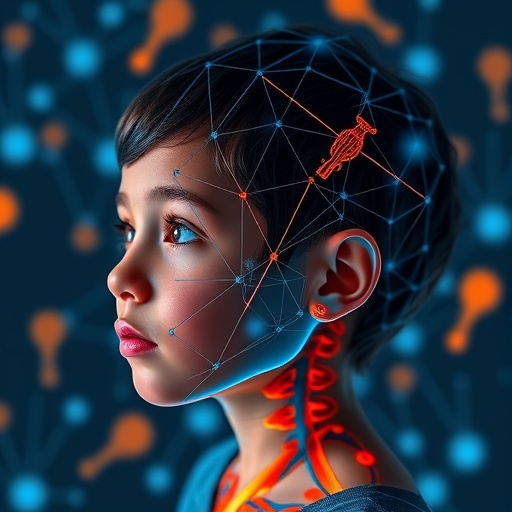
A pioneering research initiative led by the Keck School of Medicine at the University of Southern California (USC) has garnered up to $6.8 million in funding to drastically advance the development and accessibility of cell and gene therapies for children grappling with rare diseases. This ambitious two-year project, under the auspices of the UNIfying Cell Therapy Outcome prediction and Regulatory Navigation (UNICORN) framework, seeks to harness the power of artificial intelligence (AI) and sophisticated computational models to transform how these innovative therapies are developed, studied, and brought to patients.
At the core of this initiative lies a novel approach that integrates comprehensive biological data from cell and gene therapies with patient response profiles. This integration aims to illuminate the complex interplay between therapy characteristics and clinical outcomes, an endeavor critical to overcoming the unique challenges posed by personalized medicine. Unlike traditional pharmaceuticals, which are manufactured in mass-produced batches, cell and gene therapies are bespoke products — crafted meticulously one patient at a time within highly controlled laboratory environments. This intricate production process restricts the scale of clinical trials and data availability, rendering conventional drug development models inadequate.
UNICORN addresses these challenges by innovating smarter methodologies for therapy design and regulatory evaluation. The project leverages state-of-the-art cell analysis technology established by USC researchers, combined with machine learning algorithms. This fusion enables the identification of subtle biological signatures and attributes of therapeutic cells that correlate strongly with treatment efficacy. The outcome is the creation of a regulatory decision-support system crafted specifically to operate effectively even when confronted with limited datasets — a frequent reality in rare pediatric diseases. Such a tool promises to expedite patient access to critical therapies while maintaining rigorous standards of safety and efficacy.
Dr. Mohamed Abou-el-Enein, MD, PhD, principal investigator and executive director of the USC/Children’s Hospital Los Angeles Cell Therapy Program, underscores the transformative nature of this work. He emphasizes how the project reimagines therapeutic development by translating complex biological signals into actionable insights, thereby refining treatment creation and clinical management. His laboratory’s prior work laid the groundwork by developing an advanced cell-analysis platform focused on chimeric antigen receptor (CAR) T cell therapies. CAR T cells, engineered to reprogram the immune system’s T cells to recognize and eliminate certain blood cancers, represent a landmark in personalized medicine.
The analytical platform developed by Abou-el-Enein’s team measures a broad spectrum of protein markers simultaneously on individual CAR T cells, capturing both functional and physical properties during the manufacturing process. This rich, multidimensional data enables the identification of key cellular characteristics predictive of therapeutic potency and durability. This foundational work was instrumental in securing ARPA-H funding and now serves as the backbone for expanding the platform’s application to a wider variety of cell and gene therapy products, broadening the potential patient impact.
One of the major technical challenges UNICORN confronts is the development of robust AI models from small, heterogeneous patient populations characteristic of rare diseases. The team’s approach involves longitudinal data collection—gathering patient samples and clinical information at multiple time points throughout treatment. This strategy alleviates data scarcity by creating richer datasets per individual patient and improving model training, ultimately enabling the system to learn dynamically and enhance predictive accuracy over time.
In collaboration with several academic partners across the United States, USC researchers will systematically collect and analyze data on manufacturing processes, therapy product attributes, and detailed patient outcomes spanning a spectrum of pediatric diseases. The therapies under study include CAR T cell treatments, hematopoietic stem cell-derived interventions which modify the progenitor cells responsible for generating the body’s array of blood cells, and gene-edited products designed to correct genetic defects directly within a child’s cells. This comprehensive approach aims to unify disparate data sources into a cohesive, interpretable framework.
The UNICORN project also incorporates Bluecord, a sophisticated electronic quality and data management system previously supported by the California Institute for Regenerative Medicine (CIRM). Bluecord facilitates standardized tracking of samples, secure integration of multicenter clinical and product data, and structured linkage crucial for rigorous data analysis. This infrastructure is critical in ensuring data integrity and enables seamless collaboration across institutions, vital for generating generalizable insights from limited datasets and heterogeneous patient groups.
Artificial intelligence plays a pivotal role in distilling the vast and complex datasets into models capable of identifying biologically meaningful patterns that predict treatment success and risk. By continuously absorbing new patient data, the framework evolves as a living, learning system — effectively becoming smarter with every additional case. This unique characteristic promises transformative implications for regulatory science, enabling more nuanced decision-making and fostering rapid iteration cycles in therapy development.
The implications of this work transcend the laboratory, reflecting an urgent real-world need: for children with rare diseases, delays in therapy access can be life-threatening. By establishing a robust scientific foundation and regulatory roadmap, UNICORN aims to ensure that when a child’s life hangs in the balance, clinicians and regulators can move forward confidently, armed with clearer evidence and more reliable predictive tools. This paradigm shift not only benefits patients and families but also sets a replicable standard for the broader field of personalized, small-batch learning systems in therapeutic development.
Moreover, the project’s innovative synergy of cell biology, advanced cytometry, gene editing technologies, and machine learning exemplifies the frontier of precision medicine. It represents a critical step towards overcoming the inherent complexity and variability of living-cell therapies and accelerates the translation of cutting-edge scientific discoveries into tangible clinical benefits. The research has recently been highlighted in a Nature Medicine Correspondence, which articulates the ambitious scientific vision and underscores the transformative potential of the UNICORN framework within the landscape of pediatric rare disease treatment.
In conclusion, the Keck School of Medicine’s UNICORN project stands as a beacon of hope and innovation in pediatric medicine, merging computational power with biological insight to redefine the future of cell and gene therapies. Supported by ARPA-H funding, this initiative is poised to not only change the way therapies are developed and regulated but also markedly improve outcomes for some of the most vulnerable patients. By charting this new course, the researchers envision a world where life-saving, personalized treatments are available faster and with greater certainty — a true revolution in rare disease medicine.
News Publication Date: Not explicitly provided; inferred as recent (2024)
Web References:
- https://keck.usc.edu/faculty-search/mohamed-abou-el-enein/
- https://keck.usc.edu/cell-therapy-program/
- https://arpa-h.gov/
- http://dx.doi.org/10.1038/s41591-025-04115-6
References:
- Nature Medicine Correspondence DOI: 10.1038/s41591-025-04115-6
Cite Scienmag News
Harold Sullivan. (March 25, 2026). USC Secures Funding to Develop AI Tool Enhancing Treatment of Rare Pediatric Diseases. Scienmag. https://scienmag.com/usc-secures-funding-to-develop-ai-tool-enhancing-treatment-of-rare-pediatric-diseases/
Harold Sullivan. "USC Secures Funding to Develop AI Tool Enhancing Treatment of Rare Pediatric Diseases." Scienmag, 25 March 2026, https://scienmag.com/usc-secures-funding-to-develop-ai-tool-enhancing-treatment-of-rare-pediatric-diseases/. Accessed 3 September 2026.
Harold Sullivan. "USC Secures Funding to Develop AI Tool Enhancing Treatment of Rare Pediatric Diseases." Scienmag. March 25, 2026. https://scienmag.com/usc-secures-funding-to-develop-ai-tool-enhancing-treatment-of-rare-pediatric-diseases/


