


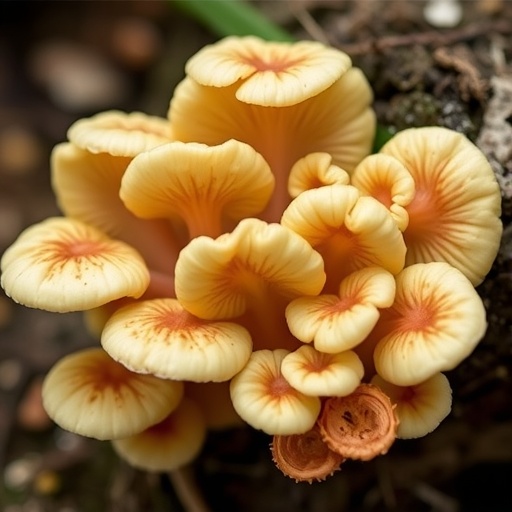
In a groundbreaking publication set to reshape our understanding of fungal biology and evolution, researchers have employed large-scale multi-omics profiling to unravel the intricate environmental and evolutionary forces molding fungal phylogeography and metabolic diversity. This study, authored by Xie, Hu, Zhao, and colleagues, pushes the frontier of fungal research beyond traditional genomic studies by integrating multiple layers of omics data, opening a new era of holistic insight into fungal biodiversity and adaptation mechanisms.
Fungi, often overshadowed in biodiversity discussions, play pivotal ecological roles encompassing decomposition, symbiosis, and pathogenesis. Their unparalleled metabolic versatility allows fungi to inhabit a staggering range of environments, from arid deserts to deep-sea vents. Yet, the drivers that govern their global distribution patterns—phylogeography—and their metabolic capacities have remained partially obscure due to the complexity of fungal genomes and the ecological variables influencing them.
Leveraging cutting-edge sequencing technologies and computational analyses, the research team assembled an unprecedented multi-omics dataset including genomics, transcriptomics, proteomics, and metabolomics from fungal isolates sampled across varied geographical climes. This integrative approach allowed a nuanced examination of how environmental gradients such as temperature, humidity, soil composition, and host availability sculpt fungal genetic diversity and metabolic repertoires.
Their findings reveal that environmental factors exert a profound influence not merely on the presence or absence of fungal species, but crucially on the configuration of metabolic gene clusters and secondary metabolite production pathways. This metabolic plasticity, governed by both gene content and expression regulation, is a key factor enabling fungal survival and ecological success across heterogeneous habitats.
Evolutionary analyses within the study underscore that phylogeographic patterns are deeply intertwined with historical climatic shifts and geological events, which have catalyzed divergence and convergence in fungal lineages. The multi-omics data illuminate signatures of adaptive evolution particularly in genes linked to stress responses and nutrient acquisition, emphasizing the evolutionary pressures fungi face in fluctuating ecosystems.
One of the most remarkable aspects showcased is the correlation between metabolic diversity and phylogeographic structuring. The researchers documented that metabolic traits are not randomly distributed but often correspond closely with phylogenetic relationships shaped by geographic barriers and environmental niches, suggesting co-evolutionary dynamics between fungal metabolism and ecosystem parameters.
This comprehensive mapping of fungal biodiversity at the molecular level provides critical insight into the potential for metabolic innovation in fungi, which has profound implications for biotechnology, agriculture, and medicine. By decoding the genetic and metabolic underpinnings of fungal adaptation, new biochemical paths may be discovered for novel antibiotics, enzymes, and bioactive compounds.
The study’s multidisciplinary methodology integrates advanced machine learning algorithms for pattern detection across the voluminous multi-omics datasets. This facilitates the prediction of functional traits from genetic markers, enhancing the resolution of phylogeographic inferences and expanding the toolkit available for fungal biologists and ecologists.
Moreover, the implications of this research extend beyond academic curiosity. Environmental changes spurred by anthropogenic activities raise urgent questions about the resilience and adaptability of fungi—key players in ecosystem stability. Understanding these drivers at the molecular level equips scientists with predictive capabilities about how fungal communities might shift under climate change scenarios.
Innovatively, the research team also explored how fungal metabolic features interrelate with microbiome constituents in their habitat, uncovering evidence of metabolic cross-talk and co-dependence that influence community assembly dynamics. This ecological dimension adds layers of complexity to fungal niche specialization and evolutionary trajectories.
In synthesis, the study presents a compelling narrative of fungi as not only passive inhabitants but dynamic architects of their ecological milieus, sculpted by evolutionary history and environmental forces manifested at multiple molecular scales. Their diverse metabolic toolkit is a living archive of adaptation strategies honed over millions of years.
This publication sets a new benchmark for multi-omics driven ecological and evolutionary studies, demonstrating the transformative power of integrating diverse molecular layers to decode life’s complexity. It invites the scientific community to embrace systems-level perspectives to understand biodiversity and adaptation, where fungi set a fascinating example.
As the world seeks solutions for sustainability and health, harnessing fungal metabolic potential through informed ecological and evolutionary knowledge becomes increasingly vital. This pioneering research is a crucial step forward, promising to catalyze innovations across multiple sectors reliant on fungal biology.
Looking ahead, the study’s framework may serve as a blueprint for similar multi-omics approaches in other kingdoms of life, signaling a broader revolution in how we study life’s diversity on Earth. In doing so, it underscores the inextricable linkage between environment, evolution, and metabolism as fundamental drivers shaping the living world.
In conclusion, Xie and colleagues have illuminated a hidden dimension of fungal life, transforming scattered genomic curiosities into a coherent picture of environmentally and evolutionarily driven diversity. Their work not only enriches our scientific understanding but also beckons a new era where the mysteries of fungal ecology and metabolism become fundamental components of the biosciences.
Cite Scienmag News
Gavin Prescott. (March 18, 2026). Multi-Omics Unveil Fungal Evolution and Environmental Impact. Scienmag. https://scienmag.com/multi-omics-unveil-fungal-evolution-and-environmental-impact/
Gavin Prescott. "Multi-Omics Unveil Fungal Evolution and Environmental Impact." Scienmag, 18 March 2026, https://scienmag.com/multi-omics-unveil-fungal-evolution-and-environmental-impact/. Accessed 6 September 2026.
Gavin Prescott. "Multi-Omics Unveil Fungal Evolution and Environmental Impact." Scienmag. March 18, 2026. https://scienmag.com/multi-omics-unveil-fungal-evolution-and-environmental-impact/


