


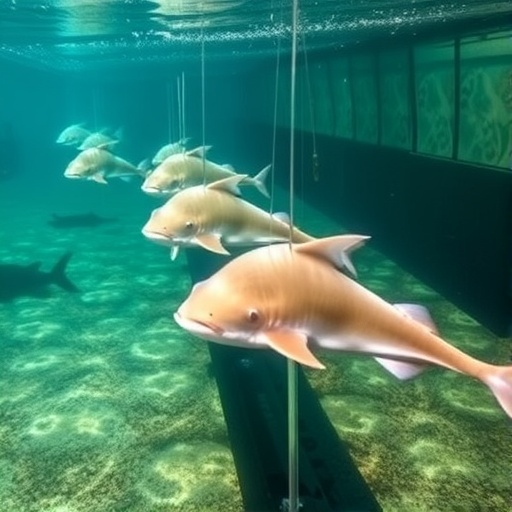
In recent years, a disconcerting ecological event termed “spinning fish” phenomena has emerged in the Florida Keys, profoundly impacting marine biodiversity and threatening the stability of vulnerable species. This bizarre behavior, characterized by fish swimming in tight, disoriented circles, accompanied by loss of equilibrium and occasional mortality, has swept through over eighty marine species during the winters of 2024 and 2025. Of particular concern is the devastating effect on the endangered smalltooth sawfish (Pristis pectinata), a species already grappling with severe population declines. Scientists suspect that this phenomenon stems from environmental stressors, potentially neurotoxins produced by harmful algal blooms, underscoring the precarious state of marine ecosystems in the region.
The smalltooth sawfish, one of the most imperiled marine fishes in the Atlantic, has experienced one of the most significant range contractions documented for any species, now largely confined to isolated habitats in the southeastern United States and The Bahamas. Although federally protected under the U.S. Endangered Species Act since 2003, their presence in historic nurseries like Florida’s Indian River Lagoon (IRL) disappeared by the 1970s, primarily due to bycatch in commercial fisheries, especially through the use of gill nets. Recovering this species hinges on safeguarding critical nursery habitats, particularly shallow mangrove-lined waters, which function as essential refuges for juvenile sawfish during their formative years.
A beacon of hope has surfaced through pioneering research conducted by Florida Atlantic University’s Harbor Branch Oceanographic Institute (HBOI), in collaboration with the Florida Fish and Wildlife Conservation Commission (FWC). Their groundbreaking study leverages cutting-edge acoustic telemetry to investigate the potential reestablishment of smalltooth sawfish nurseries within the IRL. By tagging seven juvenile individuals and meticulously tracking their movements for periods extending up to two years, researchers obtained nuanced data delineating spatial usage, seasonal residency, and environmental preferences critical to juvenile survival in this historically significant ecosystem.
This research methodology integrated several independent data streams — long-term acoustic receiver monitoring across the southern IRL and Saint Lucie River, alongside verified citizen science reports submitted via the U.S. Sawfish Recovery Hotline. Such comprehensive data accumulation facilitated a multifaceted analysis that extended beyond mere movement patterns, encompassing environmental parameters including salinity, temperature, dissolved oxygen levels, and freshwater inflows. Positioning these findings within the broader contexts of estuarine dynamics and water management enabled a holistic understanding of habitat suitability and the potential impacts of anthropogenic alterations.
Critically, the study adhered to robust ecological criteria established for elasmobranch nursery habitats, assessing site fidelity, spatial distribution, and environmental dependencies. Results confirmed an extraordinary degree of site fidelity, with juvenile smalltooth sawfish exhibiting prolonged residence times—up to 87% of recorded days—within a confined 0.4-square-kilometer area of the South Fork of the Saint Lucie River. Furthermore, juvenile presence correlated predominantly with moderate freshwater conditions, favoring water temperatures between 75°F and 84°F and salinity ranging from 15 to 30 parts per thousand, slightly lower than typical ocean salinity levels.
These empirical observations provide compelling evidence that the IRL, once considered devoid of sawfish nurseries, is indeed supporting young individuals at a vital stage in their lifecycle. This resurgence underscores the fundamental importance of habitat protection, particularly preserving red mangroves which stabilize shorelines, filter water, and create complex structural refuges. Compared to other coastal elasmobranchs, such as juvenile bull sharks that utilize more expansive estuarine nurseries, the smalltooth sawfish exhibits unique behavioral fidelity to precisely demarcated zones within the nursery habitat, suggesting specialized habitat requirements during early ontogeny.
Seasonal environmental fluctuations wield a measurable influence on juvenile sawfish spatial ecology. Stable salinity facilitated extended residency within preferred nursery areas, while episodic deviations characterized by extreme temperatures or abnormally low salinity prompted temporary downstream displacement. Such behavioral plasticity indicates potential vulnerability to altered freshwater inflow regimes—largely the product of anthropogenic water management practices—which could precipitate physiological stress and increased predation risks, ultimately undermining juvenile survivorship and recruitment success.
Despite historical underrepresentation, the IRL now emerges as a critical habitat supporting multiple cohorts of smalltooth sawfish, warranting formal recognition and enhanced protection. According to Matt Ajemian, Ph.D., associate research professor at FAU Harbor Branch and co-author of the study, the preservation of these nursery areas is paramount, relying fundamentally on maintaining water quality and structural habitat integrity. The findings advocate for management strategies that integrate ecological data within water resource planning to mitigate habitat degradation and facilitate species recovery.
The study’s pinpointing of spatially restricted nursery sites reveals a paradox: while favorable habitats exist, their limited extent heightens vulnerability to localized disturbances such as shoreline development, pollution, and hydrological alterations. Because juvenile sawfish cluster within these confined environments during early developmental stages, even minor environmental perturbations can cascade into disproportionate impacts on their population dynamics, highlighting the need for precision-targeted conservation interventions.
Gregg R. Poulakis, Ph.D., a senior researcher at FWC and senior author of the paper, emphasized the practical implications of the research, noting that identification of specific high-use juvenile nurseries equips conservationists and resource managers with tangible targets for protection. Enacting informed waterway management policies that consider early life stage requirements may be pivotal in reversing population declines and enabling a tentative yet hopeful recovery pathway for this iconic endangered species.
Collaborative efforts involving multiple scientists—ranging from doctoral candidates to postdoctoral researchers at FAU Harbor Branch and FWC personnel—have been instrumental in generating this comprehensive knowledge base. Their work, published in the “Fishery Bulletin,” was supported by funding from the National Marine Fisheries Service under provisions of the Endangered Species Act, exemplifying successful integration of academic research with governmental conservation mandates.
The implications of this research extend beyond the smalltooth sawfish, serving as a model for other endangered aquatic species inhabiting dynamic estuarine ecosystems. The integration of acoustic telemetry, citizen science, and environmental monitoring sets a benchmark for ecological investigations seeking to unravel complex habitat relationships and inform adaptive management in the face of escalating anthropogenic pressures and climate-driven environmental variability.
Cite Scienmag News
Margaret Porter. (March 17, 2026). Endangered Smalltooth Sawfish Return to Historic Florida Nursery, Study Finds. Scienmag. https://scienmag.com/endangered-smalltooth-sawfish-return-to-historic-florida-nursery-study-finds/
Margaret Porter. "Endangered Smalltooth Sawfish Return to Historic Florida Nursery, Study Finds." Scienmag, 17 March 2026, https://scienmag.com/endangered-smalltooth-sawfish-return-to-historic-florida-nursery-study-finds/. Accessed 3 September 2026.
Margaret Porter. "Endangered Smalltooth Sawfish Return to Historic Florida Nursery, Study Finds." Scienmag. March 17, 2026. https://scienmag.com/endangered-smalltooth-sawfish-return-to-historic-florida-nursery-study-finds/


