


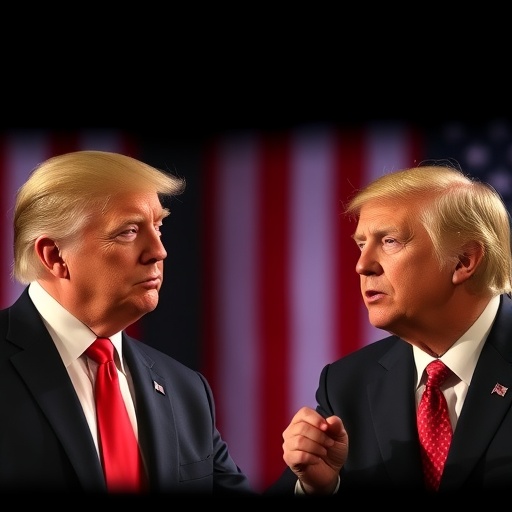
American political discourse in recent years has seen a marked increase in polarization and the use of divisive rhetoric, even as public opinion surveys consistently reveal a strong voter preference for civility and substantive debate. In an effort to unravel the underlying motivations for such acrimonious communication, a team of researchers led by Sean J. Westwood conducted an extensive study analyzing the public statements of the 118th United States Congress. This inquiry harnessed the power of advanced natural language processing techniques, including a large language model, to systematically parse and classify over two million statements, offering a granular view of how and when personal attacks surface in political communication.
The research methodology involved segmenting floor speeches, press releases, newsletters, and social media posts into concise units averaging roughly two sentences each. The key analytic challenge was to differentiate between critiques targeting policies or official actions and those that constituted personal attacks — defined here as statements aimed at discrediting individuals based on personal attributes, motivations, or ethical integrity. By applying this rigorous classification to the corpus, the researchers could quantify the prevalence of personal attacks across various communication channels and among different legislators.
A striking revelation from the study is the identification of a minority category of legislators dubbed “conflict entrepreneurs.” These individuals disproportionately engage in personal attacks, far exceeding the average frequency observed among their peers. While the majority of lawmakers maintain a relatively civil tone, this subgroup actively employs divisive rhetoric as a strategic tool within their communication repertoire. Importantly, the data reveal that conflict entrepreneurs are not evenly distributed across party lines — Republican members of Congress are more likely to fit this profile, although such behavior is evident on both sides of the aisle.
One of the more nuanced findings concerns the platforms where these personal attacks most frequently occur. Social media, notably the platform formerly known as Twitter (referred to as X in the study), emerges as a hotspot for such rhetoric, with a rate approximately three times higher than more traditional, formal channels such as floor speeches or press releases. This suggests that the immediacy, informality, and wide reach afforded by social media may incentivize legislators to engage in more incendiary, less restrained forms of expression.
From a political science perspective, the emergence of conflict entrepreneurs raises critical questions about the incentives and trade-offs associated with divisive rhetorical strategies. The study investigated whether personal attacks translated into tangible political gains such as increased fundraising, wider electoral margins, legislative influence, or personal financial enrichment. Surprisingly, despite the boost in media visibility conferred by such attacks, these benefits do not appear to extend beyond increased public attention.
This disjunction between enhanced visibility and concrete political or financial rewards suggests a more complex motivational landscape. According to the authors, for this particular subset of legislators, the pursuit of media celebrity and notoriety may have eclipsed traditional political objectives like policy advocacy, electoral security, or personal wealth accumulation. This phenomenon points to a shifting paradigm wherein media exposure itself has become an end goal, reflecting broader trends in political communication and media ecosystems.
The implications of these findings resonate deeply in the context of American democracy, where the quality of political discourse is both a reflection and a driver of institutional trust and governance efficacy. The strategic use of personal attacks, primarily by a small faction of conflict entrepreneurs, contributes to an environment of heightened polarization and public cynicism. Yet, the absence of significant electoral or legislative payoffs for such behavior challenges assumptions that divisive rhetoric is an unequivocally rational or effective electoral strategy.
Furthermore, the differential uptake of conflict entrepreneurship by party affiliation adds a layer of complexity to partisan dynamics. The tendency of Republican representatives to more frequently adopt this face of divisive politics raises questions about the cultural, institutional, and media factors that foster such behavior within specific political milieus. Understanding these underpinnings may be key to designing interventions aimed at mitigating the corrosive effects of personal attacks on political norms and democratic deliberation.
Technically, the research underscores the value of large-scale, computational text analysis to dissect the subtleties of political language. By deploying a sophisticated large language model to classify nuanced rhetorical features across millions of data points, the study exemplifies the integration of machine learning tools in social science. Such methodologies enable scholars to move beyond anecdotal or small-scale assessments, uncovering patterns and behaviors previously obscured within vast textual datasets.
Moreover, the study highlights the importance of contextualizing personal attacks not merely as isolated verbal occurrences but as strategic elements embedded within broader political agendas and media environments. The concept of “conflict entrepreneurs” frames these behaviors as calculated, identity-driven activities that exploit media dynamics for personal or political gain, reflecting broader shifts in the incentives structuring political careers.
Looking ahead, these insights invite further exploration into how media structures, audience reception, and institutional rules shape the contours of political rhetoric. They also emphasize the potential for reform initiatives aimed at improving the incentives for constructive engagement and reducing the allure of celebrity-driven conflict. Given the enduring challenges posed by polarization and incivility, understanding the behavioral and systemic drivers underpinning divisive political communication remains a vital endeavor.
In summary, the study by Westwood and colleagues sheds light on a critical aspect of contemporary American politics: the selective but impactful use of personal attacks by a small group of legislators who appear motivated more by media attention than by traditional measures of political success. This phenomenon both reflects and contributes to the evolving landscape of political communication, posing questions about the health and future trajectory of democratic discourse in the United States.
News Publication Date: 17-Mar-2026.
Cite Scienmag News
Courtney Benton. (March 17, 2026). The Impact of Polarizing Political Rhetoric and Celebrity Culture on Public Discourse. Scienmag. https://scienmag.com/the-impact-of-polarizing-political-rhetoric-and-celebrity-culture-on-public-discourse/
Courtney Benton. "The Impact of Polarizing Political Rhetoric and Celebrity Culture on Public Discourse." Scienmag, 17 March 2026, https://scienmag.com/the-impact-of-polarizing-political-rhetoric-and-celebrity-culture-on-public-discourse/. Accessed 4 September 2026.
Courtney Benton. "The Impact of Polarizing Political Rhetoric and Celebrity Culture on Public Discourse." Scienmag. March 17, 2026. https://scienmag.com/the-impact-of-polarizing-political-rhetoric-and-celebrity-culture-on-public-discourse/


