


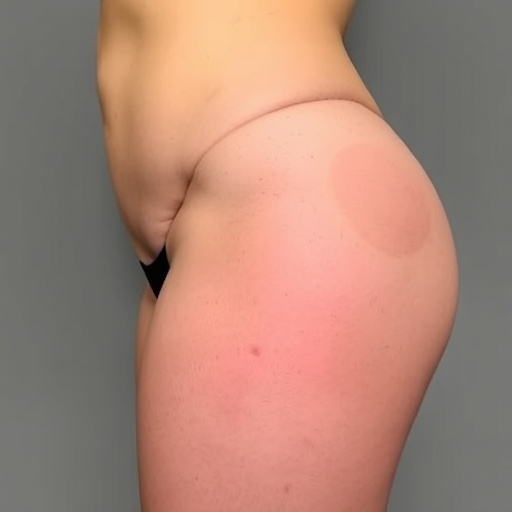
Lipedema, a chronic and progressively debilitating adipose tissue disorder, continues to challenge both patients and medical professionals due to its elusive nature and the distressing symptoms it imposes. Characterized primarily by an abnormal accumulation of subcutaneous fat, lipedema most often affects the legs and sometimes the arms, leading to disfigurement and significant discomfort. Among the many symptoms that characterize this condition, pain remains the most debilitating, severely impacting patients’ quality of life. Recent advances in medical imaging have opened new horizons in understanding the biomechanical properties of lipedematous tissue, providing critical insights into the link between tissue changes and pain manifestation.
At the forefront of this innovative research is the utilization of ultrasound shear-wave elastography (SWE), a cutting-edge imaging technology designed to quantitatively measure tissue stiffness. Unlike traditional ultrasound methods, SWE leverages the propagation of shear waves through biological tissues to assess their elasticity with outstanding spatial resolution and precision. This noninvasive technique offers clinicians and researchers an unprecedented window into the biomechanical state of pathological tissues, thereby fostering a better understanding of disease mechanisms at a micro and macroscopic level.
The recent study published by Yaman and Mansız-Kaplan investigates the relationship between the elasticity of lipedematous tissue and the presence of pain in patients suffering from lipedema. By employing SWE, they aimed to discern whether alterations in tissue stiffness, potentially indicative of fibrosis or other structural changes, correlate with patients’ pain experiences. Fibrosis, marked by excessive collagen deposition and tissue hardening, has been widely implicated in various chronic pain syndromes, yet its role in lipedema remained inadequately explored prior to this research.
Through meticulous methodological design, the researchers assessed tissue elasticity in affected regions of lipedema patients using SWE. They quantified stiffness values across multiple sites to map the elastic heterogeneity within the diseased tissue. This approach enabled a precise characterization of tissue biomechanical properties, allowing for the elucidation of patterns potentially linked with clinical manifestations such as pain. Their analysis revealed notable differences in shear-wave velocity measures, reflecting increased stiffness in lipedematous tissue compared to unaffected areas or control subjects.
The implications of these findings extend beyond diagnostic refinement, offering new perspectives on the pathophysiology of lipedema. Tissue stiffening due to fibrosis or altered extracellular matrix composition could directly stimulate mechanosensitive nociceptors, thereby intensifying pain perception. This mechanistic insight bridges the gap between structural abnormalities and functional symptoms, fostering more targeted therapeutic interventions aimed at modulating tissue characteristics rather than merely addressing symptomatology.
Moreover, SWE’s ability to provide a quantitative biomarker of tissue stiffness might aid clinicians in stratifying disease severity, monitoring progression, and evaluating therapeutic efficacy over time. This technological advancement could revolutionize the current clinical management framework of lipedema, which largely relies on subjective assessment and lacks objective indicators to guide personalized treatment strategies. Consequently, incorporating elastographic evaluation into clinical practice might enhance patient outcomes by facilitating early and accurate diagnosis coupled with tailored interventions.
Beyond its diagnostic utility, the study underscores the significance of interdisciplinary research blending imaging technology, tissue biomechanics, and clinical symptomatology. By integrating these distinct domains, the investigation offers a holistic understanding of lipedema, transcending conventional paradigms focused solely on adipose tissue accumulation. It encourages further exploration into molecular and histological correlates of increased tissue stiffness, potentially unveiling novel molecular targets for antifibrotic therapies or pain modulators.
Another compelling aspect of this research lies in its potential for patient empowerment. Chronic pain and progressive disability often isolate lipedema patients, fostering frustration due to limited therapeutic options. The advent of objective imaging tools like SWE can validate patients’ experiences through measurable parameters, mitigating stigma and promoting patient-centered care. Enhanced diagnostic clarity might also propel advocacy for increased research funding and public awareness, ultimately transforming the landscape of lipedema management.
The study’s rigorous statistical analysis adds robustness to its conclusions, confirming the significant association between elastographic measures and reported pain intensity. This strengthens the hypothesis that biomechanical alterations in subcutaneous tissue are not merely byproducts of lipedema but might actively contribute to its symptomatic burden. Such evidence paves the way for clinical trials investigating antifibrotic pharmacotherapy or novel physical therapies aimed at modifying tissue elasticity, thereby providing tangible hope for symptom relief.
Despite these promising advancements, challenges remain in standardizing SWE protocols and interpreting elastographic data across diverse patient populations. Variability in tissue composition, disease stages, and technical factors necessitate validation studies to optimize SWE’s clinical applicability. Furthermore, longitudinal research is essential to unravel the temporal dynamics between tissue stiffness changes and pain evolution, guiding timely interventions tailored to disease progression.
In conclusion, the innovative application of shear-wave elastography in lipedema research represents a paradigm shift in understanding this complex disorder. By revealing the link between tissue stiffness and pain, the study by Yaman and Mansız-Kaplan paves a novel pathway for diagnostic precision, mechanistic insight, and therapeutic innovation. As technology advances, integrating quantitative elasticity measurement into routine clinical assessment promises to transform patient care, offering renewed hope to those grappling with the painful realities of lipedema.
Future research must continue to delineate the multifaceted interactions among adipose tissue abnormalities, fibrosis, and nociceptive signaling in lipedema. Combining elastographic data with molecular diagnostics and patient-reported outcomes could yield comprehensive models to predict disease trajectories and optimize individualized treatment strategies. This multidisciplinary approach holds the potential to finally conquer the elusive challenge of pain management in lipedema, enhancing quality of life and functional capacity for millions of affected individuals worldwide.
Lipedema, though historically under-recognized, is gradually emerging into the medical spotlight through such pioneering investigative efforts. The integration of technologies like ultrasound shear-wave elastography symbolizes a broader trend toward precision medicine in adipose tissue disorders. By embracing objective measurement and rigorous scientific inquiry, the medical community can transform lipedema from a misunderstood ailment into a treatable condition with clearly delineated pathology and effective therapeutic pathways.
This research thus marks a milestone in lipedema scholarship, setting a benchmark for future studies aimed at untangling the complex interplay between tissue biomechanics and clinical symptomatology. As the scientific and medical communities rally around these insights, patients stand to benefit from innovations that not only decode their pain but ultimately alleviate it. The journey from bench to bedside has been accelerated by quantitative imaging, heralding a new era of hope for those afflicted with this chronic adipose tissue disorder.
Yaman, A., Mansız-Kaplan, B. Assessment of the elasticity of lipedematous tissue and the examination of the relationship between pain and fibrosis in lipedema.
Int J Obes (2026). https://doi.org/10.1038/s41366-026-02049-8
Cite Scienmag News
Ophelia Keating. (March 17, 2026). Assessing Lipedema: Tissue Elasticity and Pain Links. Scienmag. https://scienmag.com/assessing-lipedema-tissue-elasticity-and-pain-links/
Ophelia Keating. "Assessing Lipedema: Tissue Elasticity and Pain Links." Scienmag, 17 March 2026, https://scienmag.com/assessing-lipedema-tissue-elasticity-and-pain-links/. Accessed 3 September 2026.
Ophelia Keating. "Assessing Lipedema: Tissue Elasticity and Pain Links." Scienmag. March 17, 2026. https://scienmag.com/assessing-lipedema-tissue-elasticity-and-pain-links/


